
iMedix Medical Content Engine 3.13.37

Hello,

Sign up to join our community!

Welcome Back,

Please sign in to your account!

Forgot Password,

Lost your password? Please enter your email address. You will receive a link and will create a new password via email.

Sorry, you do not have permission to ask a question, You must login to ask a question.

Desyrel (Trazodone): Uses, dosage, side effects, warnings & patient reviews

Desyrel (Trazodone)

Desyrel (Trazodone)

Desyrel (Trazodone)

Trazodone hydrochloride
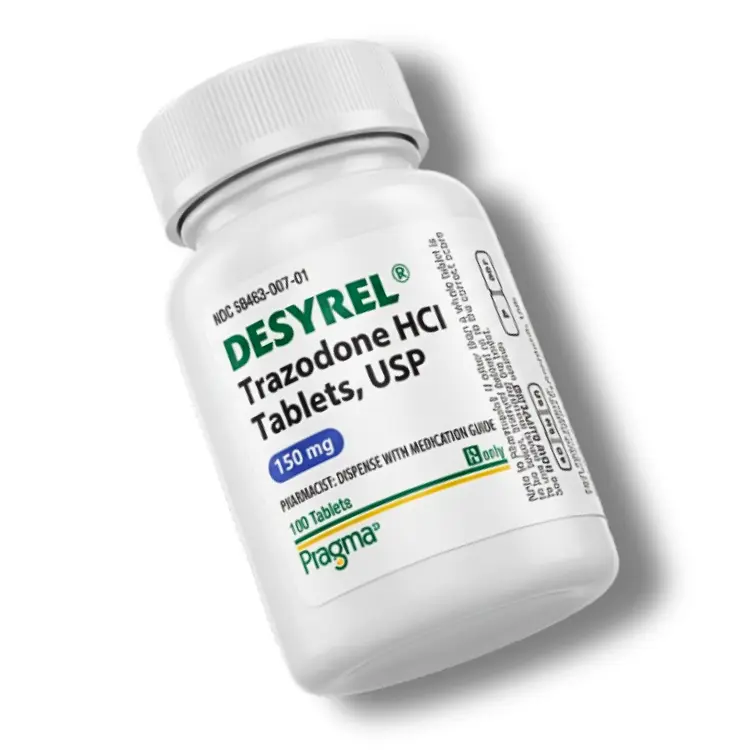
Desyrel is the brand name for the antidepressant medication trazodone hydrochloride. It belongs to the serotonin antagonist and reuptake inhibitor (SARI) class and is indicated for the treatment of major depressive disorder (MDD).
  • ActiveIngredient: Trazodone hydrochloride
  • DosageForm: Oral tablets
  • Dosage: 50 mg, 100 mg, 150 mg, 300 mg.
  • Indications: Treatment of Major Depressive Disorder (MDD).
  • Manufacturer: Various Generic Manufacturers (The brand name Desyrel was originally developed by Bristol-Myers Squibb).
  • Storage: Store at room temperature 20°C–25°C (68°F–77°F); protect from light and moisture.
  • Drug Status: Prescription Only

What is Desyrel (Trazodone)?

Desyrel is a prescription medication containing the active ingredient trazodone hydrochloride. It is classified as a serotonin antagonist and reuptake inhibitor (SARI). This unique mechanism means it works by both inhibiting the reuptake of serotonin (increasing its availability) and blocking certain serotonin receptors in the brain.

It is FDA-approved for the treatment of major depressive disorder (MDD). The therapeutic antidepressant effect for depression typically requires several weeks of consistent use. For a broader understanding of depression treatment, please refer to our caring guide to antidepressants.

At lower doses, trazodone is commonly used off-label under medical supervision for the treatment of insomnia due to its potent sedative effects, which occur much more rapidly than its antidepressant action.

Available Forms and Generic Status

Desyrel is available in tablet form in various strengths, including Desyrel 50 mg, Desyrel 100 mg, and Desyrel 150 mg. Generic trazodone is widely available and contains the identical active ingredient.

How to Take Desyrel

Administration of Desyrel must be precisely directed by a prescribing physician. The following are general guidelines.

Dosage and Administration

The dosage is highly individualized based on the condition being treated, patient response, and tolerance to side effects. For depression, treatment is usually initiated at a low dose, taken in divided doses daily, and gradually increased as needed and tolerated.

The tablets should be swallowed whole with a sufficient amount of water. Taking Desyrel shortly after a meal or light snack may help reduce the incidence of dizziness or lightheadedness.

Important Precautions

  • Consistency is Key: Take this medication exactly as prescribed. Do not abruptly stop taking Desyrel, as this can lead to withdrawal symptoms. Any discontinuation should be managed by a doctor through a gradual dose reduction.
  • Time to Effect: The full antidepressant effect may not be evident for 2 to 4 weeks. The medication should be taken consistently, even if immediate mood improvement is not noticed.
  • Symptom Monitoring: Patients, families, and caregivers should monitor for any emergence or worsening of depression, suicidal thoughts or behavior, or unusual changes in mood or behavior, especially during the initial few months of treatment or after a dose change, and report these immediately to a healthcare provider.

Side Effects of Desyrel

Trazodone therapy is associated with a range of adverse effects, primarily related to its actions on the central nervous and cardiovascular systems.

Common and Serious Side Effects of Desyrel (Trazodone)
Frequency CategoryReported Side EffectsClinical Notes
Common
  • Drowsiness, sedation
  • Dizziness, lightheadedness
  • Dry mouth
  • Blurred vision
  • Headache
  • Nausea
These effects are often dose-related and may diminish with continued use. Drowsiness and dizziness pose a significant risk for activities like driving. Chronic dry mouth can increase the risk of dental and oral health issues.
Serious (Require Immediate Medical Attention)
  • Priapism (prolonged, painful erection in males)
  • Symptoms of Serotonin Syndrome (agitation, hallucinations, fever, rapid heart rate, muscle stiffness)
  • Suicidal thoughts or behaviors
  • Severe dizziness or fainting upon standing (orthostatic hypotension)
  • Irregular heart rhythm (palpitations, arrhythmias)
  • Allergic reactions (rash, hives, swelling, difficulty breathing)
Priapism is a urological emergency that can lead to permanent tissue damage if not treated promptly. Orthostatic hypotension, particularly in the elderly, increases the risk of falls and related injuries.

What is Desyrel Used For?

Desyrel (trazodone) has defined medical applications, which include both FDA-approved indications and common off-label uses managed by physicians.

FDA-Approved Indication

Major Depressive Disorder (MDD): Desyrel is indicated for the treatment of MDD. Its efficacy in treating depression is based on its serotonergic activity. Improvement in depressive symptoms is not immediate and requires sustained administration.

Common Off-Label Use

Insomnia: Trazodone is frequently prescribed off-label at lower doses (e.g., 25-100 mg at bedtime) for the management of insomnia. This use is based on its potent sedative effect, which occurs due to its antihistaminic and alpha-adrenergic blocking properties. This application is not FDA-approved for the trazodone formulation marketed as Desyrel but represents a widespread clinical practice. Other sedating medications, such as quetiapine (Seroquel), may also be considered by physicians for similar purposes.

Important Limitations

  • Desyrel is not approved for use in children and adolescents for depression due to an increased risk of suicidal thoughts and behaviors.
  • It is not indicated as a monotherapy for bipolar disorder, as it may induce manic episodes.

Interactions Alcohol:

Unsafe
Consuming alcohol while taking Desyrel is contraindicated. Alcohol potentiates the central nervous system (CNS) depressant effects of trazodone, leading to severe sedation, dizziness, and significantly impaired cognitive and motor function. The combination dangerously increases the risk of accidents and overdose.

Interactions Other Medications:

Consult your doctor
Desyrel has numerous potentially serious drug interactions. It must not be combined with monoamine oxidase inhibitors (MAOIs) due to the risk of serotonin syndrome. Concurrent use with other CNS depressants (e.g., benzodiazepines, opioids, other sedatives like hydroxyzine (Atarax)) increases sedation and respiratory depression risk. Combining it with other serotonergic drugs (e.g., sertraline (Zoloft), tramadol) raises serotonin syndrome risk. It may also increase bleeding risk when taken with NSAIDs like ketorolac (Toradol). A complete review of all medications and supplements with a doctor is essential.

Special Groups Pregnancy:

Consult your doctor
Data on trazodone use in pregnancy is limited. It should be used during pregnancy only if the potential benefit justifies the potential risk to the fetus. The decision requires careful discussion with a healthcare provider.

Special Groups Breastfeeding:

Consult your doctor
Trazodone is excreted in human milk. The effects on a nursing infant are unknown. Caution is advised, and the use of Desyrel in breastfeeding women should be decided by a physician after considering the importance of the drug to the mother.

Special Groups Elderly:

Use with caution
Elderly patients are often more sensitive to the sedative and hypotensive effects of trazodone. They are at increased risk of dizziness, syncope (fainting), and falls. Lower starting doses are typically recommended, with careful dose titration.

Special Groups Children:

Consult your doctor
Desyrel is not approved for use in pediatric depression. Its use in children and adolescents for any condition requires extreme caution and close supervision by a specialist due to the increased risk of suicidal ideation and behavior associated with antidepressants in this age group.

Effects on Activities Driving:

Use with caution
Desyrel can cause substantial drowsiness, dizziness, and blurred vision. Patients should not drive, operate complex machinery, or engage in any potentially hazardous activity requiring full alertness until they are certain the medication does not impair them. This effect can be significantly worse with alcohol or other sedatives.

Effects on Activities Operating Machinery:

Use with caution
The same stringent precautions as for driving apply to operating machinery. Impairment can lead to serious injury.

Important Safety Concerns and Considerations

Suicidality and Antidepressant Drugs

Desyrel carries a Boxed Warning, the FDA’s most serious caution. Antidepressants may increase the risk of suicidal thinking and behavior in children, adolescents, and young adults (ages 18-24) during the initial treatment period. Patients of all ages must be monitored closely for clinical worsening, suicidality, or unusual changes in behavior, especially when starting therapy or changing the dose.

Priapism

Although rare, trazodone can cause priapism—a painful erection lasting more than 4 hours unrelated to sexual stimulation. This is a medical emergency requiring immediate intervention to prevent permanent damage to erectile tissue and potential long-term erectile dysfunction. Patients should be instructed to discontinue the drug and seek emergency care if this occurs.

Cardiovascular Effects

Trazodone can cause orthostatic hypotension (a sudden drop in blood pressure upon standing) and has been associated with cardiac arrhythmias, including ventricular ectopy and tachycardia. It can also prolong the QT interval in some patients. Caution is required in patients with pre-existing cardiovascular disease or those taking other QT-prolonging drugs.

Activation of Mania/Hypomania

In patients with bipolar disorder, treating a depressive episode with an antidepressant alone may precipitate a manic or hypomanic episode. Desyrel is not approved for use in treating bipolar depression and should generally be avoided unless used in combination with a mood stabilizer under psychiatric supervision.

Critical Warnings for Desyrel Use

Serotonin Syndrome

The concomitant use of Desyrel with other serotonergic drugs (including SSRIs, SNRIs, triptans, tramadol, lithium, and St. John’s Wort) increases the risk of serotonin syndrome, a potentially life-threatening condition. Symptoms include mental status changes, autonomic instability, neuromuscular abnormalities, and gastrointestinal symptoms. Combination therapy requires close monitoring and should only be undertaken with awareness of this risk.

CNS Depression

Desyrel produces dose-related CNS depression. When combined with other CNS depressants such as alcohol, sedatives, hypnotics, or opioid pain medications, the depressant effects are additive, increasing the risk of profound sedation, respiratory depression, coma, and death.

Screening for Bipolar Disorder

Prior to initiating treatment with an antidepressant, patients should be adequately screened for a personal or family history of bipolar disorder, mania, or hypomania. Desyrel is not indicated for treating bipolar depression.

Discontinuation Syndrome

Abrupt discontinuation of Desyrel after prolonged use may lead to withdrawal symptoms such as anxiety, agitation, insomnia, nausea, and flu-like symptoms. A gradual taper under medical supervision is recommended when discontinuing treatment.

Potential for Cognitive and Motor Impairment

As Desyrel can impair judgment, thinking, and motor skills, patients should be cautioned about performing tasks that require mental alertness until they are reasonably certain the medication does not adversely affect them.

Desyrel Dosage Information

Dosage must be individualized and initiated at the lowest possible level. The following table outlines general dosage ranges. The prescribing physician’s instructions must be followed precisely.

Desyrel (Trazodone) General Dosage Guidelines
IndicationInitial Adult DoseUsual Therapeutic RangeMaximum Recommended Dose
Major Depressive Disorder (MDD)150 mg per day in divided doses150 mg to 400 mg per day in divided doses400 mg per day (outpatient)
600 mg per day (inpatient)
Off-label: Insomnia25 mg to 50 mg at bedtime25 mg to 100 mg at bedtimeDose is limited by sedation; typically does not exceed 200 mg for sleep.

Important Administration Notes

  • Dose Titration: For depression, the dose may be increased by 50 mg per day every 3 to 4 days based on response and tolerance.
  • Divided Dosing: The total daily dose for depression is typically divided into two or more doses, with a larger portion often given at bedtime to utilize sedative effects.
  • Elderly/Debilitated Patients: A lower starting dose (e.g., 25-50 mg at bedtime) is recommended, with gradual increases.
  • Hepatic/Renal Impairment: Use with caution; lower doses and slower titration may be necessary.
  • Missed Dose: If a dose is missed, it should be taken as soon as remembered unless it is close to the time for the next dose. Do not double the dose.

Drug Interactions with Desyrel

Desyrel (trazodone) interacts with many medications. The following table highlights significant interactions. A comprehensive review of all concomitant medications with a healthcare provider is mandatory.

Significant Drug Interactions with Desyrel (Trazodone)
Interacting Substance Class/DrugPotential Effect of InteractionPrecaution/Recommendation
Monoamine Oxidase Inhibitors (MAOIs)
(e.g., phenelzine, selegiline, linezolid)
High risk of severe serotonin syndrome, hyperthermia, rigidity, myoclonus, autonomic instability.Contraindicated. A minimum 14-day washout period is required between discontinuing an MAOI and starting trazodone, and vice versa.
Other Serotonergic Drugs
(SSRIs, SNRIs, triptans, tramadol, lithium)
Increased risk of serotonin syndrome.Use with extreme caution and close monitoring for symptoms. Combination therapy should only be undertaken with physician awareness.
CNS Depressants
(Alcohol, benzodiazepines, opioids, barbiturates, sedating antihistamines)
Additive CNS depression, leading to profound sedation, respiratory depression, and increased risk of accident or overdose.Avoid concomitant use. If combination is unavoidable, extreme caution and dose reduction of one or both agents may be necessary.
Strong CYP3A4 Inhibitors
(e.g., ketoconazole, itraconazole, ritonavir, clarithromycin)
May significantly increase trazodone plasma levels, increasing the risk of adverse effects (sedation, dizziness, hypotension).Consider a lower dose of trazodone if co-administration is required.
Antihypertensives & VasodilatorsMay potentiate hypotensive effects, increasing the risk of orthostatic hypotension and syncope.Blood pressure should be monitored, especially during initial therapy and dose increases.
Drugs that Prolong QT Interval
(e.g., certain antiarrhythmics, antipsychotics, antibiotics)
Additive effect on QT prolongation, potentially increasing the risk of serious cardiac arrhythmias.Use with caution. Electrolyte levels should be monitored and corrected if abnormal.

FAQs

Yes. Generic trazodone contains the same active ingredient (trazodone hydrochloride) in the same strength and dosage form as the brand-name Desyrel. Generic drugs must demonstrate bioequivalence to the brand-name product to receive FDA approval, meaning they are expected to have the same clinical effect and safety profile. For more information, see our article on generic medicines.
Unlike many SSRIs, trazodone is less commonly associated with sexual dysfunction such as decreased libido or anorgasmia, and it may sometimes be used to counteract such side effects caused by other antidepressants. However, the rare but serious side effect of priapism in males is a critical concern. For a broader discussion on antidepressants and sexual health, see this guide.
The sedative effect of Desyrel, which is utilized for off-label treatment of insomnia, typically occurs within 30 to 60 minutes of taking a dose at bedtime. In contrast, the full antidepressant effect for the treatment of major depressive disorder may take 2 to 4 weeks of consistent daily dosing to become apparent, with continued improvement possible over several weeks.
Morning drowsiness or a "hangover" effect is a common side effect, especially when starting treatment or after a dose increase. This often improves with time as the body adjusts. Do not drive or operate machinery if impaired. Taking the medication earlier in the evening or discussing a potential dose adjustment with your doctor can help manage this effect. Never adjust your dose without medical consultation.
No. Do not abruptly discontinue Desyrel. Suddenly stopping an antidepressant can lead to withdrawal-like symptoms and increase the risk of depression relapse. If you and your doctor decide to stop treatment, a gradual tapering schedule under medical supervision is necessary to minimize these risks.

Additional Information

Storage and Handling

Store Desyrel tablets at room temperature between 20°C to 25°C (68°F to 77°F), in a tightly closed container, and protect from light, moisture, and excessive heat. Keep all medications out of the reach of children and pets.

Overdose Information

Overdose of trazodone can be severe and potentially fatal. Symptoms may include excessive sedation, vomiting, respiratory depression, seizures, priapism, and cardiac arrhythmias. In case of suspected overdose, immediate medical attention must be sought, or a poison control center contacted.

Reporting Side Effects

Patients and healthcare professionals are encouraged to report negative side effects of prescription drugs to the FDA MedWatch program. Reporting helps the FDA monitor drug safety and identify new risks.

References and Medical Sources

The information on this page is compiled from authoritative medical sources and prescribing information.

  1. U.S. Food and Drug Administration (FDA). Desyrel (trazodone hydrochloride) Tablets Prescribing Information. [Revised 2017]. https://www.accessdata.fda.gov/drugsatfda_docs/label/2017/018207s032lbl.pdf
  2. MedlinePlus. Trazodone. U.S. National Library of Medicine; [Updated 2022]. https://medlineplus.gov/druginfo/meds/a681038.html
  3. American Psychiatric Association. Practice Guideline for the Treatment of Patients with Major Depressive Disorder, Third Edition. 2010. [Amended 2015].
  4. Drugs.com. Trazodone Professional Monograph. Drugs.com; [Updated 2024]. https://www.drugs.com/monograph/trazodone.html

Disclaimer: The information on this site is provided for informational purposes only and is not medical advice. It does not replace professional medical consultation, diagnosis, or treatment. Do not self-medicate based on the information presented on this site. Always consult with a doctor or other qualified healthcare professional before making any decisions about your health.

You must login to add a comment.

Popular Questions

Top Members

Join the discussion

Comments are published after moderation. User opinions do not constitute medical advice.

We sincerely appreciate you taking the time to share your feedback. Every user's perspective is valuable to us.

Ask to get answers.