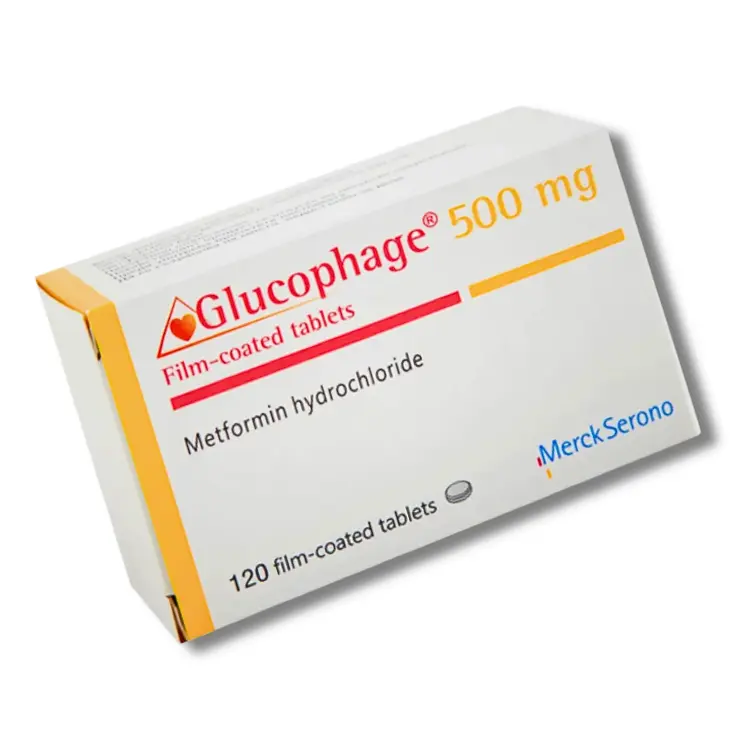
Glucophage: Uses, Dosage & Safety Information

Glucophage

Glucophage

Glucophage

Metformin
Original biguanide brand, sold from 1995 with a longer-acting XR version from 2000, both discontinued for non-safety reasons and replaced by generics for grown-ups whose blood sugar runs high. The longer-acting pill is swallowed whole, and acid build-up is a rare danger.
  • ActiveIngredient: Metformin
  • DosageForm: Extended-release tablet
  • Dosage: 500 mg, 750 mg
  • Indications: Type 2 diabetes mellitus
  • Manufacturer: Multiple ANDA holders
  • Storage: 20–25°C (68–77°F)
  • Drug Status: Discontinued

What is Glucophage?

Glucophage was the original brand of metformin, sold as immediate-release tablets and as Glucophage XR, an extended-release form, for adults with type 2 diabetes. Both are listed as discontinued for reasons other than safety or effectiveness, and metformin is now supplied as generic tablets in both forms. Extended-release metformin must be swallowed whole, never crushed, cut or chewed. Like all metformin products, it carries a boxed warning about rare but serious lactic acidosis, and kidney function decides whether it can be used.1

Glucophage and Glucophage XR discontinued; generics available
Glucophage (NDA 020357, approved March 1995) and Glucophage XR (NDA 021202, approved October 2000) are listed as discontinued, with Federal Register determinations that they were not withdrawn for safety or effectiveness reasons; generic immediate- and extended-release metformin remain FDA-approved.2

Approved products and generic therapeutic-equivalence ratings are listed in the FDA Orange Book.3

Glucophage XR followed the original Glucophage tablets five years later, in 2000, and both forms remain available as generics from multiple manufacturers.2

In a 24-week placebo-controlled trial of extended-release metformin, HbA1c fell by 0.6 points while it rose 0.2 on placebo in people not controlled by diet and exercise.1

In placebo-controlled trials of the extended-release form, diarrhoea affected 10% versus 3% on placebo and nausea or vomiting 7% versus 2%.

The inactive shell of the extended-release tablet can occasionally pass in the stool as a soft mass that looks like the original tablet.

Glucophage is one of the diabetes medicines; generic metformin covers the same active ingredient, and Glumetza is another extended-release metformin.

How to Take Glucophage

Once a day with the evening meal

Take extended-release metformin once a day with your evening meal.1

Swallow whole

Swallow the tablet whole; never crush, cut or chew it.

Tablet shell in the stool

You may occasionally see a soft mass in your stool that looks like the tablet; this is the empty shell of inactive ingredients.

Signs of lactic acidosis

Seek urgent care for unusual muscle pain, trouble breathing, unusual sleepiness, stomach pain, or feeling cold, dizzy or light-headed.

Before scans or surgery

Tell the team you take metformin before any scan with contrast dye or any surgery.

Stomach upset

Diarrhoea, nausea and wind are most likely early on and after dose increases; tell your doctor if they persist.

Vitamin B12

Long-term metformin can lower vitamin B12; your doctor may check your levels every few years.

Heavy drinking

Avoid binge or heavy drinking while taking metformin, because it raises the risk of lactic acidosis.

What Are the Side Effects of Glucophage?

With the extended-release form, gastrointestinal effects were less frequent in its own placebo-controlled trials than reported for immediate-release metformin in separate trials, but they remain the most common reactions.

Metformin ER vs Placebo: GI Effects
FrequencyEffectNotes
Very common — 10% (placebo 3%)DiarrhoeaPlacebo-controlled ER trials
Common — 7% (placebo 2%)Nausea or vomitingPlacebo-controlled ER trials
Common — more than 5%Flatulence, weakness, indigestion, abdominal discomfort, headacheMost common ER reactions
Frequency not established (labelled)Lactic acidosisBoxed warning
Frequency not established (labelled)Vitamin B12 deficiencyWarnings

Source: 1

Seek immediate medical attention if:
  • Muscle pain, trouble breathing or unusual sleepiness
  • Feeling cold, dizzy or with a slow or irregular heartbeat
  • Severe vomiting or diarrhoea with dehydration
  • Confusion or shakiness from low blood sugar
Clinical details

Extended-release and immediate-release trials were run separately, so their side-effect rates are not a direct head-to-head comparison.

What is Glucophage Used For?

Extended-release metformin tablets are indicated as an adjunct to diet and exercise to improve glycaemic control in adults with type 2 diabetes; unlike immediate-release metformin, the extended-release form is not approved for children.1

Switching from immediate-release tablets

People taking immediate-release metformin can switch to the extended-release form at the same total daily dose, up to its labelled maximum, taken once daily with the evening meal.

Dose and effect

Treatment starts low and increases weekly. In a 16-week dose-response study, extended-release metformin was compared at several once-daily doses and a twice-daily regimen against placebo, and in a 24-week study HbA1c fell by 0.6 points versus a 0.2-point rise on placebo.1

Stomach side effects

In placebo-controlled trials of the extended-release form, diarrhoea affected 10% and nausea or vomiting 7%, compared with 3% and 2% on placebo; the most common reactions overall were diarrhoea, nausea or vomiting, flatulence, weakness, indigestion, abdominal discomfort and headache.

Combination treatment

Combining metformin with insulin or an insulin secretagogue raises the risk of low blood sugar, and the dose of the other medicine may need lowering.

Kidney and liver

Kidney function is checked before starting: metformin is contraindicated below an eGFR of 30, not started between 30 and 45, and reassessed if eGFR falls below 45; it is avoided in liver impairment.

Interactions Alcohol:

Unsafe
Excessive alcohol raises the risk of metformin-associated lactic acidosis.

Interactions Other Medications:

Use with caution
Topiramate, ranolazine, dolutegravir, cimetidine, insulin and sulfonylureas need care.

Special Groups Pregnancy:

Consult your doctor
Limited data have not shown a clear risk; discuss diabetes treatment in pregnancy with your doctor.

Special Groups Breastfeeding:

Use with caution
Metformin is present in human milk; effects on the infant are not well established.

Special Groups Elderly:

Use with caution
Kidney function is assessed more often in older adults.

Special Groups Children:

Unsafe
The extended-release form is not established as safe or effective in children.

Effects on Activities Driving:

Use with caution
Low blood sugar is possible with insulin or sulfonylureas; check your sugar before driving.

Effects on Activities Operating Machinery:

Use with caution
Do not operate dangerous machinery if you feel shaky or light-headed.

Discontinued, not withdrawn for safety

Both Glucophage and Glucophage XR are listed as discontinued, but Federal Register determinations state they were not withdrawn for safety or effectiveness reasons, so generic versions referencing them remain approvable.2

Extended-release handling

The extended-release tablet must be swallowed whole; crushing, cutting or chewing it is not permitted, and its empty shell may appear in the stool.1

Generic and brand

Generic metformin must contain the same active ingredient and be bioequivalent to its reference product.4

Where it comes from

Metformin is prescription-only in the US; the FDA’s BeSafeRx guidance lists four signs of a lawful pharmacy website.5

Critical Warnings for Glucophage Use

Contraindications

Metformin is contraindicated with an eGFR below 30, hypersensitivity to metformin, and acute or chronic metabolic acidosis including diabetic ketoacidosis.1

Lactic acidosis (boxed warning)

Rare, potentially fatal lactic acidosis is more likely with kidney impairment, age 65 or over, contrast imaging, surgery, hypoxic states, excessive alcohol intake and liver impairment.

Vitamin B12

Metformin may lower vitamin B12 levels, so blood counts and B12 are checked periodically.

Low blood sugar

Combining metformin with insulin or an insulin secretagogue increases the risk of hypoglycaemia.

Liver impairment

Liver impairment is associated with lactic acidosis, so metformin is avoided in that setting.

See Interactions for the full list of drug combinations.

Dosage

Glucophage Products
FormulationActive IngredientsClinical Note
ER tabletsMetformin ER500, 750 mg
StartMetformin ER500 mg once daily with the evening meal
TitrationMetformin ER+500 mg weekly; maximum 2,000 mg once daily
Switching from IRMetformin ERSame total daily dose once daily, up to 2,000 mg
Kidney: eGFR <30Metformin ERContraindicated
Kidney: eGFR 30–45Metformin ERDo not start; reassess if already on it
Liver impairmentMetformin ERAvoid

Source: 1

Exceeding the dose
Overdoses of metformin above 50 grams have occurred, with lactic acidosis reported in about a third of cases; metformin is removed by haemodialysis, which may help in suspected overdose.1

Marketed strengths and their labelers are listed in the FDA National Drug Code Directory.6

What Does Glucophage Interact With?

Interactions by Severity
Interacting SubstanceEffect and RiskSeverityDocumentation
Carbonic anhydrase inhibitors (topiramate, zonisamide, acetazolamide)Higher lactic acidosis riskModerateGood — labelled
Ranolazine, vandetanib, dolutegravir, cimetidineMetformin accumulationModerateGood — labelled
AlcoholPotentiates effect on lactateMajorGood — labelled
Insulin, sulfonylureasHypoglycaemiaModerateGood — labelled

Source: 1

The Glucophage and Glucophage XR brands are listed as discontinued, but the FDA determined they were not withdrawn for safety or effectiveness reasons. Generic metformin is available in both immediate-release and extended-release tablets. If your pharmacy supplies a generic, it must contain the same active ingredient and be bioequivalent; check whether your prescription is for the immediate- or extended-release form.
Glucophage XR, approved in 2000, is the extended-release form of metformin and is taken once a day with the evening meal. People already on immediate-release metformin can switch to the extended-release form at the same total daily dose, up to 2,000 mg once daily. The extended-release tablet must be swallowed whole, and it is not approved for children, unlike the immediate-release form.
The inactive shell of an extended-release metformin tablet can occasionally pass in the stool as a soft mass that looks like the original tablet. The labelling tells patients to expect this from time to time. If you are worried that your blood sugar control has changed, check your readings and tell your prescriber, but do not take an extra dose on your own.
In placebo-controlled trials of extended-release metformin, diarrhoea affected 10% versus 3% on placebo and nausea or vomiting 7% versus 2%. Separate trials of immediate-release metformin reported higher rates, but the studies were not head-to-head comparisons. Starting at 500 mg with the evening meal and increasing weekly helps limit stomach upset.
It depends on kidney function. Metformin is contraindicated when eGFR is below 30, is not started when eGFR is between 30 and 45, and is reassessed if eGFR falls below 45. Kidney function is checked before starting and at least yearly. Tell the team before any scan with iodinated contrast, as metformin may need to be paused.

Evidence scope

What we know
  • Glucophage and Glucophage XR were not withdrawn for safety reasons.
  • Extended-release metformin lowered HbA1c by 0.6 points in 24 weeks.
  • Diarrhoea affected 10% versus 3% on placebo with the extended-release form.
  • The extended-release form is not approved for children.
What remains uncertain
  • Safety and effectiveness of the extended-release form in children.
  • A direct head-to-head side-effect comparison of the two forms; the trials were separate.
  • Effects on the breastfed infant; metformin is present in human milk.

Source: 1

What has been reported to the FDA

Reports to the FDA naming metformin are summarised on the metformin page.7

Who was this medicine studied in?

Placebo-controlled trials of extended-release metformin included 781 patients on the drug and 195 on placebo.1

Who this is and is not appropriate for

Not for eGFR below 30, metabolic acidosis including diabetic ketoacidosis, hypersensitivity to metformin, or children (extended-release form).

Adults with type 2 diabetes and adequate kidney function, including those who prefer once-daily dosing.

Where to report and verify

Routing to Official Registries
What you needWhere to go
Report a side effectFDA MedWatch
Pregnancy-specific dataMotherToBaby
Full prescribing informationDailyMed
Verify a pharmacy websiteFDA BeSafeRx · LegitScript

References

  1. FDA label, Metformin Hydrochloride Extended-Release Tablets USP 500, 750 mg (Sun Pharmaceutical Industries; ANDA 077336)
    Revised 2026-06 · Accessed 2026-10-24
    Used for: boxed warning, indication, extended-release dosing and switching, contraindications, warnings, adverse reactions, interactions, specific populations, overdose, clinical studies.
    dailymed.nlm.nih.gov — metformin ER SPL
  2. Drugs@FDA
    Record accessed 2026-10-24
    Used for: application and marketing status.
    accessdata.fda.gov — Drugs@FDA
  3. FDA Orange Book
    Accessed 2026-10-24
    Used for: reference and generic listings.
    accessdata.fda.gov — Orange Book
  4. FDA — Generic Drugs: Questions & Answers
    Accessed 2026-10-24
    Used for: requirements for generic equivalence (same active ingredient, strength, bioequivalence).
    fda.gov — Generic Drugs Q&A
  5. FDA BeSafeRx — signs of a safe pharmacy website (flyer)
    Accessed 2026-10-24
    Used for: four signs of a lawful pharmacy website.
    fda.gov — BeSafeRx
  6. FDA National Drug Code Directory
    Directory accessed 2026-10-24
    Used for: marketed products and strengths.
    accessdata.fda.gov — NDC Directory
  7. FDA Adverse Event Reporting System (openFDA)
    Data cut 2026-07-30 · Accessed 2026-10-24
    Used for: report totals and the ten most frequent terms.
    open.fda.gov — drug adverse event API

How this page was sourced

Clinical, dosing and safety facts come from current FDA labelling for generic metformin extended-release tablets.

Brand status comes from Drugs@FDA; the report summary is on the metformin page.

Disclaimer: The information on this site is provided for informational purposes only and is not medical advice. It does not replace professional medical consultation, diagnosis, or treatment. Do not self-medicate based on the information presented on this site. Always consult with a doctor or other qualified healthcare professional before making any decisions about your health.