
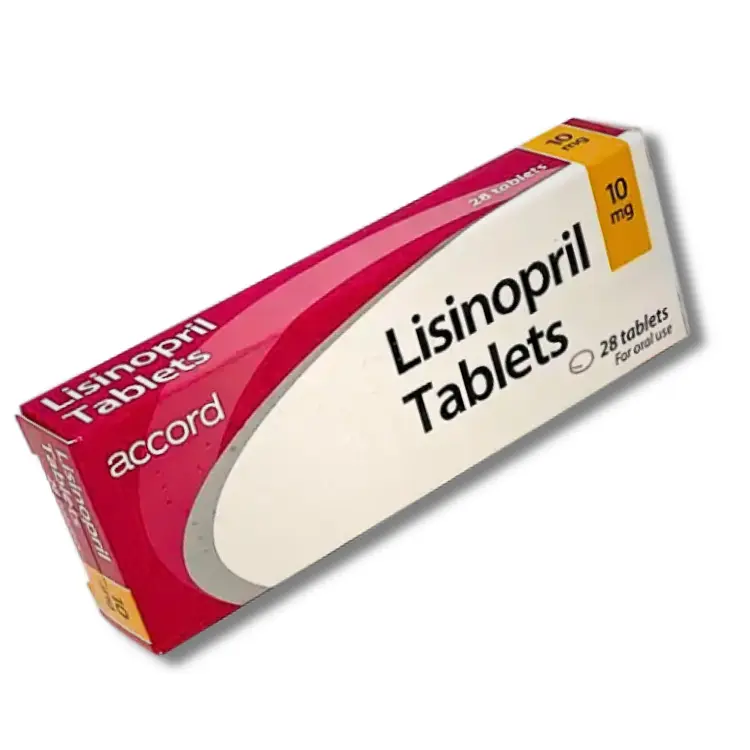
What is Lisinopril?
Lisinopril is an ACE inhibitor used for high blood pressure in adults and children aged 6 or older, as add-on treatment for heart failure, and within 24 hours of a heart attack in stable patients. It is sold as generic tablets, as the brand Zestril and as an oral solution, Qbrelis. Lisinopril is not metabolised and leaves the body unchanged through the kidneys, so the starting dose is halved when kidney function is markedly reduced. It carries a boxed warning against use in pregnancy.1
Approved products and generic therapeutic-equivalence ratings are listed in the FDA Orange Book.3
Lisinopril inhibits angiotensin-converting enzyme, lowering angiotensin II and aldosterone; blood pressure falls through reduced peripheral resistance, with little or no change in cardiac output or heart rate.1
It is not metabolised and is excreted unchanged in the urine, so exposure rises as kidney function declines, and it can be removed by haemodialysis.
Food does not alter how much lisinopril is absorbed, so it can be taken with or without meals.
In controlled studies it lowered blood pressure similarly in younger and older patients but was less effective in Black patients than in White patients when used alone.1
An oral solution, Qbrelis, is available for people who cannot swallow tablets.4
Lisinopril is one of the blood pressure medicines; ramipril and enalapril are other ACE inhibitors.