Nimodipine: Uses, Dosage & Safety Information

Nimodipine

Nimodipine

Nimodipine

Nimodipine
Nimodipine is a calcium channel blocker given by mouth for 21 days after subarachnoid haemorrhage to improve neurological outcome. It carries a boxed warning against intravenous use: deaths and life-threatening events have occurred when the liquid inside the capsules was injected. Nimodipine is a prescription-only medicine.
  • ActiveIngredient: Nimodipine
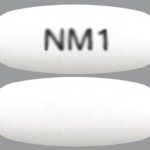
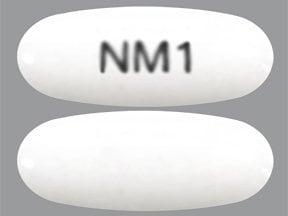
  • DosageForm: Soft gelatin capsule
  • Dosage: 30 mg
  • Indications: Subarachnoid haemorrhage from ruptured intracranial aneurysm
  • Manufacturer: Multiple ANDA holders
  • Storage: Store below 25°C, protect from light and moisture
  • Drug Status: Prescription Only

What is Nimodipine?

Boxed warning: oral route only
The labelling states in capital letters that nimodipine must not be given intravenously or by any other parenteral route, and records that deaths and serious, life-threatening events have followed parenteral injection of capsule contents.
If it does reach a vein, the labelling directs cardiovascular support with pressor agents and prompt treatment for calcium channel blocker overdose.1

Nimodipine is a dihydropyridine calcium channel blocker, the same chemical family as amlodipine and nifedipine, but it is not used for blood pressure. It is lipophilic enough to cross into the central nervous system, and that property is the reason it has a neurological indication rather than a cardiovascular one.1

Its oral bioavailability averages 13 per cent because of extensive first-pass metabolism through CYP3A4 — a figure that matters more here than in most drugs, since it explains both the contraindications and the dose reduction in liver disease.1

Where a patient cannot swallow, the ready-made oral solution removes the step that the boxed warning is about.

How to Take Nimodipine

Swallow the capsules whole, not with food. The labelling specifies at least one hour before a meal or two hours after, because food substantially blunts the peak concentration.1

Every four hours, around the clock, for 21 days. The schedule includes the night; doses are not skipped and bunched.

Start within 96 hours of the bleed. Treatment begun later sits outside the studied window.

If the patient cannot swallow, the capsule is opened — and this is where the fatal error happens. The labelling directs making a hole in both ends with an 18-gauge needle and drawing the contents into a syringe, then states that the liquid must always be transferred to a syringe that cannot accept a needle, designed for oral or nasogastric use, and that the syringe should be labelled for the oral route.1 A parenteral syringe holding nimodipine is one connection away from a death.

Where swallowing is expected to be a problem, ask about the ready-made oral solution, which is supplied as a liquid and skips the extraction step entirely.

What Are the Side Effects of Nimodipine?

Among 823 patients with subarachnoid haemorrhage, 11.2% reported an adverse experience on nimodipine against 6.1% of 479 on placebo. The commonest was a fall in blood pressure.1

At the Approved Dose of 60 mg Every
Frequency (60 mg)Effect60 mg (n = 494)90 mg (n = 172)Placebo (n = 479)
CommonFall in blood pressure3.8%8.1%1.2%
CommonHeadache1.2%0%0.2%
CommonNausea1.2%0.6%0%
CommonSlow heart rate1.0%0.6%0%
UncommonRash0.6%1.2%0.6%
UncommonSwelling (oedema)0.4%1.2%0.6%
UncommonAbnormal liver function test0.4%0.6%1.5% — higher on placebo

Source: 1

Not an Adverse Reaction Rate
FrequencyEventWhat the labelling says
Not quantifiedDeaths and serious, life-threatening events after the capsule contents were injectedThe subject of the boxed warning: do not administer intravenously or by other parenteral routes

Source: 1

Seek immediate medical attention if:
  • Any dose has been given by injection or into a drip line — treat as an emergency even if the patient looks well
  • Blood pressure falls sharply, or the patient faints or cannot be roused
  • Chest pain or a marked change in heart rate develops
  • Jaundice appears — yellowing of the skin or eyes

What is Nimodipine Used For?

Nimodipine is approved to improve neurological outcome after subarachnoid haemorrhage from a ruptured intracranial berry aneurysm — bleeding into the space around the brain. It reduces the incidence and severity of ischaemic deficits that follow such a bleed, and the indication applies regardless of how severe the patient’s neurological condition is at presentation, across Hunt and Hess grades I to V.1

The treatment is not given to control blood pressure and not given to stop the bleeding. In the days after the bleed, arteries in the brain can narrow and cause delayed ischaemic deficits.

Timing is part of the indication

Treatment is to begin within 96 hours of the onset of the haemorrhage and continue for 21 consecutive days.1 Those two numbers define the therapy as much as the dose does: started late it falls outside what was studied, and stopped early it leaves the risk window uncovered.

▶Clinical detailstechnical detail

The benefit demonstrated in the approval programme is on neurological outcome rather than on the calibre of the arteries, and the distinction is genuine. Nimodipine reduces ischaemic deficits without reliably reversing the arterial narrowing visible on angiography, which is why its mechanism is usually described as protection of neural tissue rather than as relief of vasospasm.

Interactions Alcohol:

Consult your doctor
The labelling does not list an alcohol interaction; in practice this treatment is given in hospital after a brain haemorrhage.

Interactions Other Medications:

Unsafe
The most serious combination listed is with macrolides such as clarithromycin and telithromycin (contraindicated): inhibit CYP3A4. Every other combination, with its effect, is in the Interactions table.

Special Groups Pregnancy:

Consult your doctor
Discuss with the treating team; there are no adequate studies in pregnant women.

Special Groups Breastfeeding:

Consult your doctor
It is not known whether nimodipine passes into human milk; it appears in rat milk at levels higher than in maternal plasma.

Special Groups Elderly:

Use with caution
No separate dose is specified by age, but hypotension is the commonest adverse effect and is less well tolerated with age. Blood pressure is monitored throughout.

Special Groups Children:

Consult your doctor
Safety and effectiveness in children have not been established for this indication.

Effects on Activities Driving:

Consult your doctor
Not a practical question during the 21-day course, which follows a brain haemorrhage. Return to driving is decided by the neurological team, not by the drug.

Effects on Activities Operating Machinery:

Consult your doctor
The same applies — the limiting factor is recovery from the haemorrhage rather than the medicine.

Why the route of administration dominates this drug

Most medicines with a boxed warning are limited by what they do in the body. Nimodipine is limited by how it gets there.

The problem is structural rather than careless. A patient who has just bled into the space around the brain is frequently unconscious or unable to swallow, so the drug has to be delivered through a tube — and the only presentation available for decades was a capsule whose contents had to be drawn out with a needle. The labelling still describes that procedure, because it is sometimes the only option available.

That is a preparation step that ends with a syringe of liquid drug in a critical care unit, where syringes routinely go into lines. The instruction to transfer the contents into a syringe that physically cannot accept a needle exists because the alternative has killed people.1

the oral solution was developed to remove that step, and its existence is the clearest statement of how seriously the hazard is taken.

Critical Warnings for Nimodipine Use

Never give nimodipine by any parenteral route

Intravenous or other parenteral administration has caused deaths and serious, life-threatening events. This applies to the liquid extracted from a capsule exactly as it applies to the capsule.1

Extracted capsule contents must go into an oral-only syringe

A syringe that can accept a needle must never hold this drug. The labelling requires transfer to a syringe designed for oral or nasogastric administration and recommends labelling it for the oral route.1

Strong CYP3A4 inhibitors are contraindicated

Co-administration is barred because it can raise nimodipine concentrations substantially.

Reduce the dose in hepatic cirrhosis

Peak concentration is roughly double that in people with normal liver function.1

Do not begin later than 96 hours after the haemorrhage

Treatment outside that window was not what the approval programme studied.1

See Interactions for the full list.

Dosage

Nimodipine Formulations and Dosing
FormulationActive ingredientClinical note
Soft gelatin capsule, 30 mgNimodipineTwo capsules (60 mg) at 4-hour intervals for 21 consecutive days
Oral solutionNimodipineSupplied ready to give; avoids extraction from a capsule
Hepatic cirrhosis—Dose reduction required: peak concentration is about double that in people with normal liver function
Any parenteral route—Contraindicated absolutely — see the boxed warning
Renal impairment—No labelled dose adjustment; clearance is predominantly hepatic

Source: 1

Exceeding the dose is not neutral
Low blood pressure was the commonest adverse effect in the approval programme and it tracked the dose: 3.8 per cent at 60 mg every four hours against 8.1 per cent at 90 mg.1
▶Clinical detailstechnical detail

Two pharmacokinetic facts drive the whole dosing scheme. Oral bioavailability averages 13 per cent because most of an absorbed dose is removed by CYP3A4 on first pass, so the 60 mg written on the chart is not the amount that reaches the circulation. In hepatic cirrhosis that clearance is impaired and peak concentration roughly doubles, which is why the labelling calls for a lower dose in that group rather than the same dose less often.1

The food effect runs the same way. A standard breakfast lowered the peak plasma concentration by 68 per cent in healthy volunteers, and that is the reason for the fasting instruction rather than any concern about stomach upset.1

What Does Nimodipine Interact With?

Interacting Substances
Interacting substanceEffect and riskSeverityDocumentation
Macrolides such as clarithromycin and telithromycinInhibit CYP3A4; nimodipine concentrations rise, with hypotensionContraindicatedExcellent — named in the labelled contraindication
HIV protease inhibitors such as ritonavir, indinavir, nelfinavir, saquinavirSame mechanismContraindicatedExcellent — named in the labelled contraindication
Azole antifungals including ketoconazole, itraconazole, voriconazoleSame mechanismContraindicatedExcellent — named in the labelled contraindication
NefazodoneSame mechanismContraindicatedExcellent — named in the labelled contraindication
Other blood-pressure lowering medicinesAdditive fall in blood pressureMajorGood — labelled precaution
Food taken with the dosePeak concentration reduced by 68 per cent in healthy volunteersModerateExcellent — measured in a labelled study

Source: 1

The first four rows share one mechanism. Nimodipine survives first pass so poorly that most of a dose never reaches the circulation; block that enzyme and the share that survives rises sharply, which is why these are contraindications rather than dose adjustments.

Because deaths and serious, life-threatening events have followed injection of the liquid taken from its capsules. The labelling states in capital letters that it must not be given intravenously or by any other parenteral route.
The labelling directs making a hole in both ends of the capsule with an 18-gauge needle, drawing the contents into a syringe, and then transferring that liquid into a syringe that cannot accept a needle — one designed for oral or nasogastric use and labelled for the oral route.
It belongs to the same chemical family as amlodipine and nifedipine but is approved for a neurological purpose: improving outcome after bleeding around the brain from a ruptured aneurysm. Lowering blood pressure is its commonest side effect, not its indication.
Food substantially reduces how much drug reaches the bloodstream. A standard breakfast lowered peak concentration by 68 per cent in healthy volunteers, which is why the labelling specifies at least an hour before a meal or two hours after.
Only about 13 per cent of an oral dose survives first-pass metabolism through CYP3A4. Blocking that enzyme with clarithromycin, an azole antifungal or a protease inhibitor raises the surviving share sharply, so these combinations are contraindicated rather than merely monitored.

Evidence Scope

What we know
  • Nimodipine improves neurological outcome after subarachnoid haemorrhage from a ruptured berry aneurysm across Hunt and Hess grades I to V.1
  • Parenteral administration has caused deaths; the prohibition rests on reported fatalities rather than on theory.1
  • Hypotension is dose-related: 3.8 per cent at 60 mg every four hours, 8.1 per cent at 90 mg.1
  • Oral bioavailability averages 13 per cent; a standard breakfast lowers peak concentration by 68 per cent; cirrhosis roughly doubles it.1
What remains uncertain
  • How often wrong-route administration occurs. Unknown because these events are handled as medication errors within hospitals and reach patient-safety reporting systems rather than drug adverse event databases; no denominator exists in either.
  • Whether the benefit extends to bleeds that are not aneurysmal. Unknown: the studied population was subarachnoid haemorrhage from ruptured berry aneurysms, and other causes were not enrolled.
  • Whether treatment started after 96 hours helps. Not established — the trials enrolled within that window, so later starts are extrapolation rather than evidence.
  • Postmarketing limits. Spontaneous reports can identify potential effects but cannot establish incidence: there is no denominator, reporting is voluntary and subject to bias.

FDA adverse event reports

The FDA Adverse Event Reporting System holds 1,102 reports naming nimodipine at the 2026-07-30 data cut. The most frequent reaction terms are drug ineffective (89), off-label use (71) and hypotension (57).2 These are counts of reports, not rates; see Evidence Scope above for what postmarketing data can and cannot show.

What these numbers are, and what they are not

Four distinctions matter, and collapsing any two of them produces a false statement:

  • These are reports mentioning the active ingredient nimodipine, submitted voluntarily by clinicians, patients and manufacturers.
  • They are not events shown to have been caused by the drug. A report records that something happened to someone taking the medicine, nothing more; most reports list several medicines.
  • They are not product-specific or brand-specific. The query is by active ingredient and covers every product containing it, approved or otherwise.
  • They are not a frequency or a risk estimate. There is no denominator: the number of people who took the drug without reporting anything is unknown.

Reporting is biased toward events that are serious, unexpected or in the news, and entries reach the database at least three months in arrears. See Evidence Scope above for the limitations of postmarketing data.

Who was this medicine studied in?

No FDA Drug Trials Snapshot exists: nimodipine was approved long before the programme began publishing in 2015.3 Adverse-event data come from 823 patients with subarachnoid haemorrhage given nimodipine and 479 given placebo; the trials covered patients across Hunt and Hess grades I to V.1

Who this is and is not appropriate for

Typically considered for: adults with subarachnoid haemorrhage from a ruptured intracranial aneurysm, started within 96 hours and continued for 21 days, under inpatient neurological care.

Not appropriate for: anyone taking a strong CYP3A4 inhibitor from the contraindicated list; administration by any parenteral route in any patient; use as a blood-pressure medicine, which is not what it was approved for. In hepatic cirrhosis it requires a reduced dose rather than avoidance, and where swallowing is impaired the oral solution is the safer presentation.1

Product listings and approval status are taken from FDA databases.45

Doses Used in Trials

Four placebo-controlled trials used 20 to 90 mg every 4 hours for 18 to 21 days. In the largest, in the United Kingdom, 278 patients received nimodipine and 276 placebo: good recovery was 199 against 169, severe disability 12 against 31, and death 43 against 60 (p=0.056). Across trials, the benefit was fewer and less severe delayed ischaemic deficits; there was no arteriographic evidence that nimodipine prevents or relieves arterial spasm.1

Where to report and verify

Routing to Official Registries
What you needWhere to go
Report a side effectFDA MedWatch
Pregnancy-specific dataMotherToBaby
Full prescribing informationDailyMed
Verify a pharmacy websiteFDA BeSafeRx · LegitScript

References

  1. FDA Prescribing Information, nimodipine capsules 30 mg (Bionpharma, ANDA 076740, reference standard) — Boxed Warning, Clinical Pharmacology, Indications, Contraindications, Warnings, Precautions, Adverse Reactions, Overdosage, Dosage and Administration
    Label effective 2025-12-04 · Accessed 2026-09-27
    Used for: the boxed warning and method for patients who cannot swallow; the indication and trials; pharmacokinetics and food effect; dosing and liver adjustment; CYP3A4 contraindications and warnings; the side-effect table; nursing and paediatric use; and overdose.
    dailymed.nlm.nih.gov — DailyMed
  2. openFDA — FAERS reaction term counts for nimodipine
    Data cut 2026-07-30 · Accessed 2026-09-24
    Used for: the total report count of 1,124 and the most frequent reaction terms, presented as counts rather than rates.
    open.fda.gov — drug adverse event API
  3. FDA — Drug Trials Snapshots programme scope
    Programme current · Accessed 2026-09-24
    Used for: the basis for stating that no Snapshot exists for this product: the programme began in 2015 and covers new molecular entities at original approval.
    fda.gov — Drug Trials Snapshots
  4. FDA Orange Book — Nimodipine
    Current edition · Accessed 2026-10-02
    Used for: reference-standard and generic availability.
    accessdata.fda.gov — Orange Book
  5. FDA — Drug Trials Snapshots programme scope
    Programme current · Accessed 2026-10-02
    Used for: confirmation that Snapshots cover novel drugs approved from 2015.
    fda.gov — Drug Trials Snapshots

How this page was sourced

Every clinical statement is drawn from the approved labelling, cited to the section that carries it, so that a reader can check the boxed warning and the capsule-opening procedure in their original wording.

The adverse event counts are given as counts with a data cut, and the limits of spontaneous reporting are stated once, in Evidence Scope, rather than repeated alongside the numbers.

Review cycle. Clinical review completed 2 October 2026. Next review due by 2 October 2027, or earlier if the labelling is revised.

Disclaimer: The information on this site is provided for informational purposes only and is not medical advice. It does not replace professional medical consultation, diagnosis, or treatment. Do not self-medicate based on the information presented on this site. Always consult with a doctor or other qualified healthcare professional before making any decisions about your health.

Medicine graph

FDA-approved uses

Contraindications (FDA label)

  • The concomitant use of nimodipine with strong inhibitors of CYP3A4 such as some macrolide antibiotics (e.g., clarithromycin, telithromycin), some anti-HIV protease inhibitors (e.g., delaviridine, indinavir, nelfinavir, ritonavir, saquinavir), some azole antimycotics (e.g., ketoconazole, itraconazole, voriconazole) and some antidepressants (e.g., nefazadone) is contraindicated because of a risk of significant hypotension.

FDA label: ANDA076740