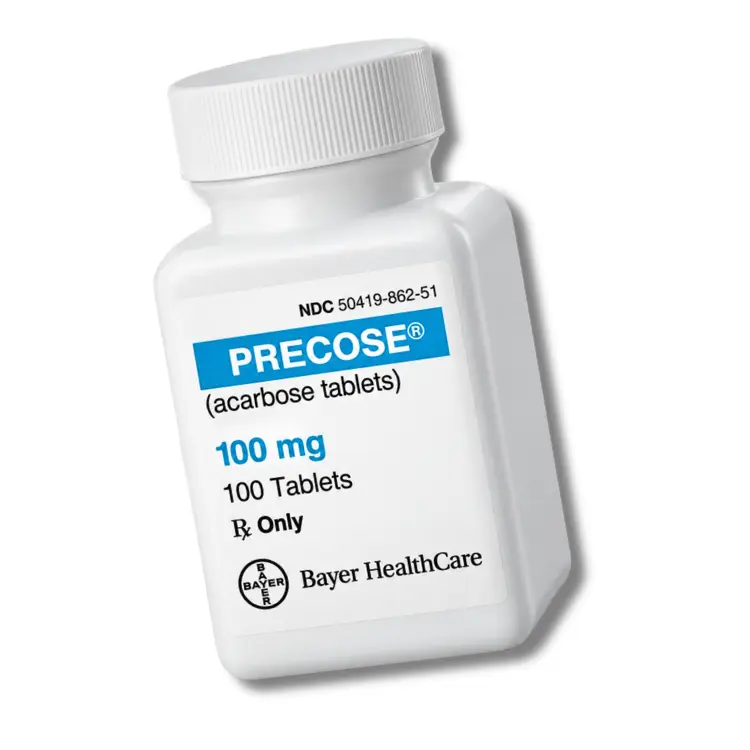
Precose: Uses, Dosage & Safety Information

Precose

Precose

Precose

Acarbose
Meal-time pill whose original brand from 1995 is discontinued, now sold as generics, that slows carbohydrate digestion to blunt blood-sugar peaks after eating in grown-ups. Wind and loose stools are very common, and low sugar alongside other drugs needs glucose, not table sugar.
  • ActiveIngredient: Acarbose
  • DosageForm: Tablet
  • Dosage: 25 mg, 50 mg, 100 mg
  • Indications: Type 2 diabetes mellitus
  • Manufacturer: Multiple ANDA holders
  • Storage: 20–25°C (68–77°F)
  • Drug Status: Discontinued

What is Precose?

Precose was Bayer’s brand of acarbose, an alpha-glucosidase inhibitor taken with the first bite of each main meal to blunt the rise in blood sugar after eating in adults with type 2 diabetes. The Precose brand is listed as discontinued, and acarbose is now supplied as generic tablets. It works in the gut by slowing carbohydrate digestion, so wind, diarrhoea and abdominal pain are very common. On its own it should not cause low blood sugar, but if low sugar occurs with other medicines it must be treated with glucose, not table sugar.1

Precose brand discontinued; generics available
Precose tablets (NDA 020482, approved September 1995) are listed as discontinued; generic acarbose tablets remain FDA-approved.2

Approved products and generic therapeutic-equivalence ratings are listed in the FDA Orange Book.3

Acarbose competitively and reversibly inhibits pancreatic alpha-amylase and intestinal alpha-glucosidase enzymes, delaying the breakdown of complex carbohydrates into absorbable sugars and so blunting the rise in blood glucose after meals.1

Because it acts on carbohydrate digestion rather than on insulin release, acarbose taken alone should not cause hypoglycaemia in the fasting or after-meal state.

Its gastrointestinal effects come from undigested carbohydrate reaching the lower gut; they tend to lessen with time and are worse if the prescribed diet is not followed.

Small reductions in haematocrit, and low serum calcium and vitamin B6 levels, have been associated with acarbose.

Acarbose is one of the diabetes medicines; miglitol is another alpha-glucosidase inhibitor, and it can be combined with metformin.

How to Take Precose

With the first bite

Take acarbose with the first bite of each main meal, three times a day.1

Treat low sugar with glucose

If you have low blood sugar while also taking insulin or a sulfonylurea, use glucose tablets or gel; ordinary table sugar works poorly with acarbose.

Stick to your diet

Wind, diarrhoea and stomach pain are common and get worse if you do not follow your prescribed diet; they usually ease over time.

Digoxin

If you take digoxin, your doctor may check its level, because acarbose can reduce how much is absorbed.

Blood tests

Your doctor may check blood enzyme levels from time to time, as raised levels can occur, especially at higher doses.

Who should not take it

Tell your doctor if you have inflammatory bowel disease, bowel ulcers, a blocked or narrowed bowel, as acarbose must not be used in these conditions.

Only with meals

Acarbose works on the food in your gut, so it is taken only with main meals, not between them.

What Are the Side Effects of Precose?

Gastrointestinal effects are the most common reactions and follow from how acarbose works; in a one-year diary study, abdominal pain and diarrhoea tended to return to baseline and wind lessened over time.

Acarbose vs Placebo: GI Effects
FrequencyEffectNotes
Very common — 74% (placebo 29%)FlatulenceUS placebo-controlled trials
Very common — 31% (placebo 12%)DiarrhoeaUS placebo-controlled trials
Very common — 19% (placebo 9%)Abdominal painUS placebo-controlled trials
Very common — 14% (placebo 7%)Liver enzymes above normal (doses up to 300 mg three times daily)Year-long US studies
Common — 3% (placebo 1%)Liver enzymes above 3 × normalYear-long US studies

Source: 1

Seek immediate medical attention if:
  • Severe abdominal pain, bloating or vomiting (possible bowel obstruction)
  • Yellowing of the skin or eyes, or dark urine
  • Confusion or shakiness from low blood sugar when combined with other medicines
  • Severe or persistent diarrhoea
Clinical details

At doses up to the approved maximum, liver enzyme rises were no more frequent than with placebo; after marketing, 62 cases of marked elevation, 29 with jaundice, were reported over about 3 million patient-years.

What is Precose Used For?

Acarbose tablets are indicated as an adjunct to diet and exercise to improve glycaemic control in adults with type 2 diabetes.1

Starting low and slowly

Acarbose is taken three times daily with the first bite of each main meal. It is started at a low dose, sometimes once a day at first, and increased every four to eight weeks according to after-meal glucose or HbA1c, mainly to limit gastrointestinal side effects; the maximum depends on body weight.

Effect on HbA1c

In six fixed-dose monotherapy studies involving 769 patients, acarbose lowered HbA1c by about 0.4–1.0 points more than placebo, with no significant differences between the usual and higher doses.

Kidney function and older adults

People with severe kidney impairment reach much higher acarbose levels, and long-term trials in people with significantly raised creatinine have not been done, so treatment is not advised in that group. In US studies, 27% of participants were 65 or older, with no overall differences in safety or effectiveness.

Liver enzymes

In year-long US studies at doses above the maximum now approved, raised liver enzymes were more frequent than with placebo, but at approved doses rates were similar; rare cases with jaundice have been reported after marketing.

Children

Safety and effectiveness in children have not been established.

Interactions Alcohol:

Consult your doctor
Alcohol can affect blood sugar; ask your doctor how much is safe.

Interactions Other Medications:

Use with caution
Sulfonylureas, insulin and digoxin need care; some drugs reduce glucose control.

Special Groups Pregnancy:

Consult your doctor
Safety in pregnant women has not been established.

Special Groups Breastfeeding:

Use with caution
Human milk data are lacking; discuss with your doctor.

Special Groups Elderly:

Safe if prescribed
No overall differences in safety or effectiveness were seen in older participants.

Special Groups Children:

Unsafe
Safety and effectiveness in children have not been established.

Effects on Activities Driving:

Safe if prescribed
Acarbose alone should not cause low blood sugar; with other diabetes medicines, check your sugar before driving.

Effects on Activities Operating Machinery:

Safe if prescribed
Alone it should not impair alertness; take care if combined with insulin or sulfonylureas.

Gut effects are the price of the mechanism

Flatulence affected 74% versus 29% on placebo and diarrhoea 31% versus 12%, because undigested carbohydrate reaches the lower gut; starting low and following the prescribed diet reduces them.1

Glucose, not sugar, for hypos

Acarbose blocks the breakdown of table sugar, so low blood sugar during combination treatment is treated with glucose (dextrose), which it does not affect.

Brand discontinued

Precose is listed as discontinued, so acarbose is dispensed as generic tablets, which must be bioequivalent to their reference product.4

Where it comes from

Acarbose is prescription-only in the US; the FDA’s BeSafeRx guidance lists four signs of a lawful pharmacy website.5

Critical Warnings for Precose Use

Contraindications

Acarbose is contraindicated with hypersensitivity, diabetic ketoacidosis, cirrhosis, inflammatory bowel disease, colonic ulceration, partial or predisposition to intestinal obstruction, and chronic intestinal diseases affecting digestion or absorption.1

Hypoglycaemia with other drugs

Acarbose alone should not cause low blood sugar, but with a sulfonylurea or insulin it can; glucose, not sucrose, is used to treat it.

Liver enzymes

Raised liver enzymes occurred at doses above the approved maximum and rarely with jaundice after marketing.

Kidney impairment

Severe kidney impairment produces several-fold higher acarbose levels, and treatment is not advised when creatinine is significantly raised.

Macrovascular outcomes

No clinical studies have established conclusive evidence of macrovascular risk reduction with acarbose.

See Interactions for the full list of drug combinations.

Dosage

Precose Products
FormulationActive IngredientsClinical Note
TabletsAcarbose25, 50, 100 mg
StartAcarbose25 mg three times daily with the first bite of each meal (or once daily, building up)
TitrationAcarboseEvery 4–8 weeks by after-meal glucose or HbA1c
Maximum: body weight ≤60 kgAcarbose50 mg three times daily
Maximum: body weight >60 kgAcarbose100 mg three times daily
Kidney: significantly raised creatinineAcarboseNot advised
Liver: cirrhosisAcarboseContraindicated

Source: 1

Exceeding the dose
Unlike sulfonylureas or insulin, an acarbose overdose will not cause low blood sugar; it may cause short-lived wind, diarrhoea and abdominal discomfort, and carbohydrate-containing food and drinks are avoided for the next four to six hours.1

Marketed strengths and their labelers are listed in the FDA National Drug Code Directory.6

What Does Precose Interact With?

Interactions by Severity
Interacting SubstanceEffect and RiskSeverityDocumentation
Sulfonylureas, insulinFurther glucose lowering; hypoglycaemiaModerateGood — labelled
DigoxinReduced digoxin levels; dose adjustment may be neededModerateGood — labelled
Thiazides, corticosteroids, thyroid drugs, oral contraceptives, phenytoin and othersLoss of glucose controlMinorGood — labelled

Source: 1

The Precose brand of acarbose, approved in 1995, is listed as discontinued, but generic acarbose tablets remain FDA-approved in 25, 50 and 100 mg strengths. Generics must contain the same active ingredient and be bioequivalent to the original. Treatment is still taken three times a day with the first bite of each main meal, at the dose your prescriber set.
Acarbose is taken three times a day with the first bite of each main meal, because it works on the carbohydrate in that meal. It is started at a low dose, sometimes once a day at first, and increased every four to eight weeks. The maximum depends on body weight: 50 mg three times daily up to 60 kg and 100 mg above that.
Acarbose slows carbohydrate digestion, so undigested carbohydrate reaches the lower gut, where it causes wind, diarrhoea and abdominal pain. In US trials, flatulence affected 74% versus 29% on placebo and diarrhoea 31% versus 12%. These effects tend to ease over time and get worse if the prescribed diet is not followed; tell your doctor if they become distressing.
Use glucose (dextrose) tablets or gel, not table sugar, while taking acarbose. Acarbose blocks the breakdown of sucrose, so ordinary sugar raises blood glucose too slowly. Acarbose alone should not cause low blood sugar, but it can with a sulfonylurea or insulin. Severe episodes may need intravenous glucose or glucagon, so keep glucose tablets with you.
Raised liver enzymes occurred in year-long US studies of acarbose at doses up to 300 mg three times daily. That is above today’s maximum, and at approved doses enzyme rises were no more frequent than with placebo. Rare cases of marked enzyme rises, some with jaundice, have been reported after marketing. Acarbose is contraindicated in cirrhosis; report yellowing of the skin or eyes or dark urine.

Evidence scope

What we know
  • Acarbose lowered HbA1c by about 0.4–1.0 points more than placebo.
  • Flatulence affected 74% versus 29% on placebo.
  • Alone, it should not cause low blood sugar.
  • The Precose brand is discontinued.
What remains uncertain
  • Safety and effectiveness in children.
  • Safety in pregnancy, which has not been established.
  • Long-term safety in people with significantly raised creatinine; no trials exist.

Source: 1

What has been reported to the FDA

As of the FAERS data cut of 2026-07-30, the FDA Adverse Event Reporting System held 3,848 reports naming acarbose, of which 3,324 were classed as serious.

Most Reported Terms
Coded termReportsReading
Hypoglycaemia275Usually with sulfonylureas or insulin; see Interactions
Nausea208Listed gastrointestinal effect
Blood glucose increased206Often the condition being treated
Dizziness168Non-specific
Diarrhoea158Listed gastrointestinal effect
Vomiting154Listed gastrointestinal effect
Drug interaction145Reported interaction; see Interactions
Drug ineffective144Treatment did not work; not a safety finding
Acute kidney injury141Non-specific
Off label use140Use outside approved indications

Source: 7

How to read this set

Reports are voluntary and unverified; they cannot show that acarbose caused an event or how often it occurs.

Who was this medicine studied in?

Six fixed-dose monotherapy studies included 769 people on acarbose, and US placebo-controlled trials 1,255 on acarbose and 999 on placebo.1

Who this is and is not appropriate for

Not for diabetic ketoacidosis, cirrhosis, inflammatory bowel disease, colonic ulceration, bowel obstruction or chronic malabsorption.

Adults with type 2 diabetes whose blood sugar rises mainly after meals, alone or with other diabetes medicines.

Where to report and verify

Routing to Official Registries
What you needWhere to go
Report a side effectFDA MedWatch
Pregnancy-specific dataMotherToBaby
Full prescribing informationDailyMed
Verify a pharmacy websiteFDA BeSafeRx · LegitScript

References

  1. FDA label, Acarbose Tablets USP 25, 50, 100 mg (Strides Pharma; ANDA 090912)
    Revised 2026-07 · Accessed 2026-10-24
    Used for: indication, dosing and maximum by weight, contraindications, precautions incl. hypoglycaemia and liver enzymes, adverse reactions, interactions, overdose, clinical trials.
    dailymed.nlm.nih.gov — acarbose SPL
  2. Drugs@FDA
    Record accessed 2026-10-24
    Used for: application and marketing status.
    accessdata.fda.gov — Drugs@FDA
  3. FDA Orange Book
    Accessed 2026-10-24
    Used for: reference and generic listings.
    accessdata.fda.gov — Orange Book
  4. FDA — Generic Drugs: Questions & Answers
    Accessed 2026-10-24
    Used for: requirements for generic equivalence (same active ingredient, strength, bioequivalence).
    fda.gov — Generic Drugs Q&A
  5. FDA BeSafeRx — signs of a safe pharmacy website (flyer)
    Accessed 2026-10-24
    Used for: four signs of a lawful pharmacy website.
    fda.gov — BeSafeRx
  6. FDA National Drug Code Directory
    Directory accessed 2026-10-24
    Used for: marketed products and strengths.
    accessdata.fda.gov — NDC Directory
  7. FDA Adverse Event Reporting System (openFDA)
    Data cut 2026-07-30 · Accessed 2026-10-24
    Used for: report totals and the ten most frequent terms.
    open.fda.gov — drug adverse event API

How this page was sourced

Clinical, dosing and safety facts come from current FDA labelling for generic acarbose tablets.

Brand status comes from Drugs@FDA; report counts from openFDA FAERS.

Disclaimer: The information on this site is provided for informational purposes only and is not medical advice. It does not replace professional medical consultation, diagnosis, or treatment. Do not self-medicate based on the information presented on this site. Always consult with a doctor or other qualified healthcare professional before making any decisions about your health.