Roxicodone: Uses, Dosage & Safety Information

Roxicodone

Roxicodone

Roxicodone

Oxycodone hydrochloride
Roxicodone is SpecGx's brand of immediate-release oxycodone, a Schedule II opioid for severe pain when other treatments are inadequate. It now comes only as 15 mg and 30 mg tablets, strengths at or above the top of the usual starting range, and its 15 mg tablet is the FDA reference standard for generic oxycodone tablets.
  • ActiveIngredient: Oxycodone hydrochloride
  • DosageForm: Immediate-release tablet
  • Dosage: 15 mg, 30 mg
  • Indications: Pain severe enough to require an opioid analgesic when alternatives are inadequate
  • Manufacturer: SpecGx LLC
  • Storage: Store at 25°C (77°F) in a tight, light-resistant container; protect from moisture; keep secured
  • Drug Status: Controlled Substance

What is Roxicodone?

Only the higher strengths remain
Roxicodone is now labelled only in its two higher strengths, both above the range used to start a first opioid, so lower starting doses come from generic immediate-release tablets. For people switching from another opioid, the labelling states it is safer to underestimate the daily dose than to overestimate it.1

Roxicodone contains oxycodone hydrochloride, a full opioid agonist and Schedule II controlled substance, released immediately rather than over many hours. The rules that apply to the molecule — interactions through the liver enzyme CYP3A4, organ impairment and the full boxed warning — are set out on the oxycodone page; this page covers the Roxicodone tablets.1

The FDA approved Roxicodone tablets under NDA 021011 on 31 August 2000; the holder is SpecGx. An extended-release Roxicodone approved in 1998 under a separate application has been discontinued.2

The lower-strength Roxicodone tablet is the reference standard that generic immediate-release oxycodone tablets are tested against, and the Roxicodone tablets carry an AB therapeutic-equivalence rating.52 Roxicodone’s labelling makes no abuse-deterrence claim.1

▶Clinical detailshow the tablets compare
Single
DosePeak levelTime to peakHalf-life
Three 5 mg tablets22.3 ng/mL1.8 hours3.7 hours
One 15 mg tablet22.2 ng/mL1.4 hours3.6 hours
One 30 mg tablet39.3 ng/mL2.6 hours3.9 hours

The 15 mg and 30 mg tablets are bioequivalent to the 5 mg tablet, with relative bioavailability of 96% and 101%. Source: 1

How to Take Roxicodone

By mouth, as needed

Roxicodone tablets are swallowed every 4 to 6 hours as needed for pain, and the prescriber adjusts the dose according to your response. The labelling gives no instruction about food.1

Starting and switching

Someone not already taking an opioid starts at 5 mg to 15 mg every 4 to 6 hours as needed, which is below or at the lowest Roxicodone strength. When switching from another opioid, its relative potency is factored in and the dose errs on the low side with close observation; when switching from a combination tablet such as oxycodone with acetaminophen, a decision is made whether to continue the non-opioid painkiller separately.1

Changing pain

If pain flares between regular doses, extra doses and a change in the daily dose may be needed; this is agreed with the prescriber.1

What not to do

Do not take more, or more often, than prescribed, and do not stop on your own after regular use: ask for a gradual reduction. Keep the tablets where no one else can take them.1

What Are the Side Effects of Roxicodone?

Roxicodone tablets were studied in open-label trials in people with cancer and non-cancer pain, and their side effects resemble those of other opioids; the commonest appear when treatment starts and rise with the dose.1

Reactions in Roxicodone Studies
FrequencyEffectLabelled figure
CommonNausea and constipation, the two most frequent3% or more of 191 patients with dosing data
CommonVomiting, headache and itching3% or more of 191 patients
CommonInsomnia, dizziness, weakness and sleepiness3% or more of 191 patients
Frequency not establishedAnaemia, low white-cell count, palpitations, heart failure, fever, infections including urinary tract infectionLess frequent reactions reported with opioid analgesics including Roxicodone

Source: 1

Seek immediate medical attention if:
  • Breathing becomes very slow or shallow
  • The person cannot be woken or is unusually confused
  • Someone has taken a Roxicodone tablet not prescribed for them
  • A very slow pulse or fainting
  • Swelling of the face or throat, or a severe rash

What is Roxicodone Used For?

Labelled Indication
UseRestriction written into the labelling
Management of pain severe enough to require an opioid analgesicReserved for patients for whom alternative treatments are ineffective, not tolerated or would otherwise be inadequate

Source: 1

Roxicodone is meant to be prescribed by clinicians experienced with opioids and with managing their risks, and the choice of opioid takes into account the type and severity of pain and any history of substance abuse or addiction.1

Addiction cannot be predicted for any one person and can develop at prescribed doses in patients using Roxicodone appropriately. Because opioids are also diverted from legitimate prescriptions, the labelling advises prescribing the smallest appropriate quantity.1

Roxicodone has not been evaluated in children. In its clinical studies, about a fifth of participants were 65 or older, without overall differences in safety or effectiveness.1

Interactions Alcohol:

Unsafe
Drinking while taking Roxicodone risks dangerous sedation and stopped breathing.

Interactions Other Medications:

Unsafe
Several medicine groups interact seriously with Roxicodone, including sedatives and drugs that alter CYP3A4. Details are in the Interactions table.

Special Groups Pregnancy:

Consult your doctor
Long-term use in pregnancy can cause withdrawal in the newborn; Roxicodone is advised against during or just before labour.

Special Groups Breastfeeding:

Consult your doctor
Oxycodone reaches breast milk; infants should be watched for sleepiness and breathing problems.

Special Groups Elderly:

Use with caution
Some older people are more sensitive to oxycodone; dosing begins at the low end.

Special Groups Children:

Consult your doctor
Roxicodone has not been evaluated in children, and a single tablet swallowed by a child can be fatal.

Effects on Activities Driving:

Unsafe
Roxicodone can impair driving; do not drive unless tolerant to it and aware of how it affects you.

Effects on Activities Operating Machinery:

Unsafe
Avoid dangerous machinery on the same terms. Liver and kidney guidance is in the Dosage table.

Critical Warnings for Roxicodone Use

Boxed warning
Roxicodone carries the opioid boxed warnings: risk of addiction, abuse and misuse leading to overdose and death; breathing that slows to a dangerous or fatal degree, above all at the start and after dose increases; fatal overdose if a child swallows even one dose; deep sedation, coma and death with benzodiazepines, other depressants or alcohol; withdrawal in newborns after long use in pregnancy; and oxycodone level changes with CYP3A4 inhibitors and inducers. It is covered by the opioid analgesic REMS.1

Breathing already depressed

Roxicodone is contraindicated when breathing is significantly depressed.1

Asthma

Acute or severe bronchial asthma is a contraindication unless the patient is monitored with resuscitation equipment available.1

Blocked bowel

A known or suspected blockage of the gut, including paralytic ileus, rules out use.1

Allergy to oxycodone

Previous hypersensitivity to oxycodone, such as anaphylaxis, rules out use.1

Head injury and consciousness

Roxicodone is avoided in coma or impaired consciousness; in raised intracranial pressure, brain tumours or head injury, sedation and breathing are monitored.1

Medicines that interact are in Interactions.

Dosage

Roxicodone Tablets
FormulationActive IngredientsClinical Note
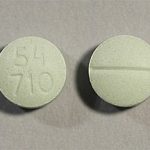
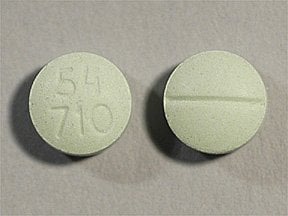
Tablet 15 mgOxycodone hydrochloride 15 mgGreen, scored, marked 54 710; bottles of 100; FDA reference standard
Tablet 30 mgOxycodone hydrochloride 30 mgBlue, scored, marked 54 199; bottles of 100
Hepatic impairmentOxycodone hydrochlorideLower starting dose and careful titration
Renal impairmentOxycodone hydrochlorideLower starting dose and careful titration

Source: 135

Exceeding the dose
Too much Roxicodone can stop breathing. Signs include extreme drowsiness or unresponsiveness, pinpoint pupils, slow heartbeat, low blood pressure and snoring-like breathing. Call emergency services; naloxone or nalmefene reverses opioid effects, and airway support comes first.1

What Does Roxicodone Interact With?

Interactions by Severity
Interacting SubstanceEffect and RiskSeverityDocumentation
Alcohol and central nervous system depressants, including benzodiazepines, sleep aids, antipsychotics, gabapentin and pregabalinAdditive depression of breathing and consciousness; may be fatalMajorGood — observational mortality data
Erythromycin, ketoconazole, ritonavir and other CYP3A4 inhibitorsRaised oxycodone exposure, with the effect stronger if a CYP2D6 inhibitor is also takenMajorGood — boxed warning, pharmacokinetic basis
Rifampin, carbamazepine, phenytoinReduced effect or withdrawal; exposure climbs when they are stoppedMajorGood — boxed warning, pharmacokinetic basis
MAO inhibitors now or in the past 14 daysPossible serotonin syndrome, coma or breathing depression; advised againstMajorFair — labelled on mechanism
Antidepressants and other serotonergic drugsSerotonin syndromeMajorFair — case reports
Buprenorphine, butorphanol, nalbuphine, pentazocineBlunted pain relief or sudden withdrawal; avoid togetherMajorFair — pharmacological mechanism
Cyclobenzaprine, metaxalone and similar muscle relaxantsDeeper respiratory depressionModerateFair — pharmacological mechanism
Diuretics; anticholinergic medicinesWeaker diuresis; urinary retention or constipation leading to ileusModerateFair — pharmacological mechanism

Source: 1

The current Roxicodone labelling describes only 15 mg and 30 mg tablets. Lower-strength immediate-release oxycodone is available from other manufacturers.
Generic immediate-release oxycodone tablets are compared against the 15 mg Roxicodone tablet as the FDA reference standard, and AB-rated generics are considered therapeutically equivalent.
Both strengths carry a score line. The labelling describes the scoring but gives no specific instructions on splitting, so ask your pharmacist or prescriber before breaking a tablet.
No abuse-deterrence claim appears in its labelling. It carries the same addiction, abuse and misuse warnings as other opioids.
Yes. An extended-release Roxicodone was approved in 1998 under a separate application and has been discontinued; today’s Roxicodone is immediate-release.

Evidence Scope

What we know
  • The 15 mg and 30 mg Roxicodone tablets are bioequivalent to the 5 mg tablet, and dose proportionality was shown from 5 mg to 30 mg.1
  • The 15 mg tablet is the FDA reference standard for generic immediate-release oxycodone tablets.5
  • In studies of 538 subjects, safety and effectiveness did not differ overall between people 65 and over and younger adults.1
What remains uncertain
  • How often side effects occur. Roxicodone’s trials were open-label and the labelling gives no percentages.
  • Exact conversion from other opioids. Potency varies between patients and formulations, so any conversion is an estimate.
  • Effect of liver impairment. Too few patients were studied to quantify it.
  • Use in children. It has not been evaluated.

Reports in the FDA Adverse Event Reporting System

FDA adverse event reports are counted by active ingredient rather than by brand, so the figures for Roxicodone are part of those for single-ingredient oxycodone, shown with their limitations on the oxycodone page.

Who was this medicine studied in?

No FDA Drug Trials Snapshot exists: Roxicodone was approved in 2000, and the programme covers novel drugs approved from 2015.42 Its open-label trials enrolled patients with cancer and non-cancer pain; of 538 subjects in its clinical studies, 20.8% were 65 or older and 7.2% were 75 or older.1

Who this is and is not appropriate for

Typically considered for: adults with severe pain needing an opioid, for whom a 15 mg or 30 mg immediate-release tablet suits the prescribed dose.

Not appropriate for: anyone with significantly depressed breathing, unmonitored acute or severe asthma, a blocked bowel or oxycodone allergy; children; and people needing a starting dose below 15 mg, for whom other products supply lower strengths.1

Where to report and verify

Routing to Official Registries
What you needWhere to go
Report a side effectFDA MedWatch
Pregnancy-specific dataMotherToBaby
Full prescribing informationDailyMed
Verify a pharmacy websiteFDA BeSafeRx · LegitScript

References

  1. FDA Prescribing Information, Roxicodone (oxycodone hydrochloride) tablets USP, 15 mg and 30 mg (SpecGx, NDA 021011) — Boxed Warning, Indications and Usage, Dosage and Administration 2.1–2.3, Dosage Forms and Strengths, Contraindications, Warnings and Precautions, Adverse Reactions 6.1, Drug Interactions 7, Use in Specific Populations 8.1–8.7, Drug Abuse and Dependence 9, Overdosage, Clinical Pharmacology 12.3, How Supplied
    Label effective 2026-04-24 · Accessed 2026-09-27
    Used for: the tablet strengths, colours and markings; starting doses and conversion from other opioids; the boxed warnings and contraindications; trial adverse reactions; interactions; pregnancy, lactation, paediatric and geriatric use; overdose; bioequivalence and single-dose pharmacokinetics; storage.
    dailymed.nlm.nih.gov — DailyMed
  2. Drugs@FDA — application records for Roxicodone tablets (NDA 021011) and Roxicodone extended-release tablets (NDA 020932)
    Records accessed 2026-09-27
    Used for: the 31 August 2000 approval and holder, the AB ratings of the tablets, and the discontinued status of the extended-release product.
    accessdata.fda.gov — Drugs@FDA
  3. FDA National Drug Code Directory — listings for Roxicodone
    Directory current · Accessed 2026-09-27
    Used for: confirmation that Roxicodone is listed by SpecGx at 15 mg and 30 mg.
    accessdata.fda.gov — NDC Directory
  4. FDA — Drug Trials Snapshots programme scope
    Programme current · Accessed 2026-09-27
    Used for: confirmation that Snapshots cover novel drugs approved from 2015, explaining the absence of one for Roxicodone.
    fda.gov — Drug Trials Snapshots
  5. FDA Orange Book — Approved Drug Products with Therapeutic Equivalence Evaluations, oxycodone hydrochloride tablets
    Current edition · Accessed 2026-09-27
    Used for: the designation of Roxicodone 15 mg as the reference standard for generic immediate-release oxycodone tablets.
    accessdata.fda.gov — Orange Book

How this page was sourced

This page describes the Roxicodone tablets; molecule-wide material such as interactions through liver enzymes is covered in full on the oxycodone page and summarised here in the required table.

The strengths shown are those in the current labelling; an application record listing an earlier 5 mg strength was not treated as evidence that it is currently supplied under the brand.

Review cycle. Clinical review completed 28 September 2026. Next review due by 28 September 2027, or earlier if the labelling is revised.

Disclaimer: The information on this site is provided for informational purposes only and is not medical advice. It does not replace professional medical consultation, diagnosis, or treatment. Do not self-medicate based on the information presented on this site. Always consult with a doctor or other qualified healthcare professional before making any decisions about your health.

Medicine graph

Boxed warning

  • WARNING: SERIOUS AND LIFE-THREATENING RISKS FROM USE OF ROXICODONE

Contraindications (FDA label)

  • Significant respiratory depression.
  • Acute or severe bronchial asthma in an unmonitored setting or in the absence of resuscitative equipment or hypercarbia.
  • Known or suspected gastrointestinal obstruction, including paralytic ileus.

FDA label: NDA021011