Silagra: Uses, Dosage & Safety Information

Silagra

Silagra

Silagra

Sildenafil citrate
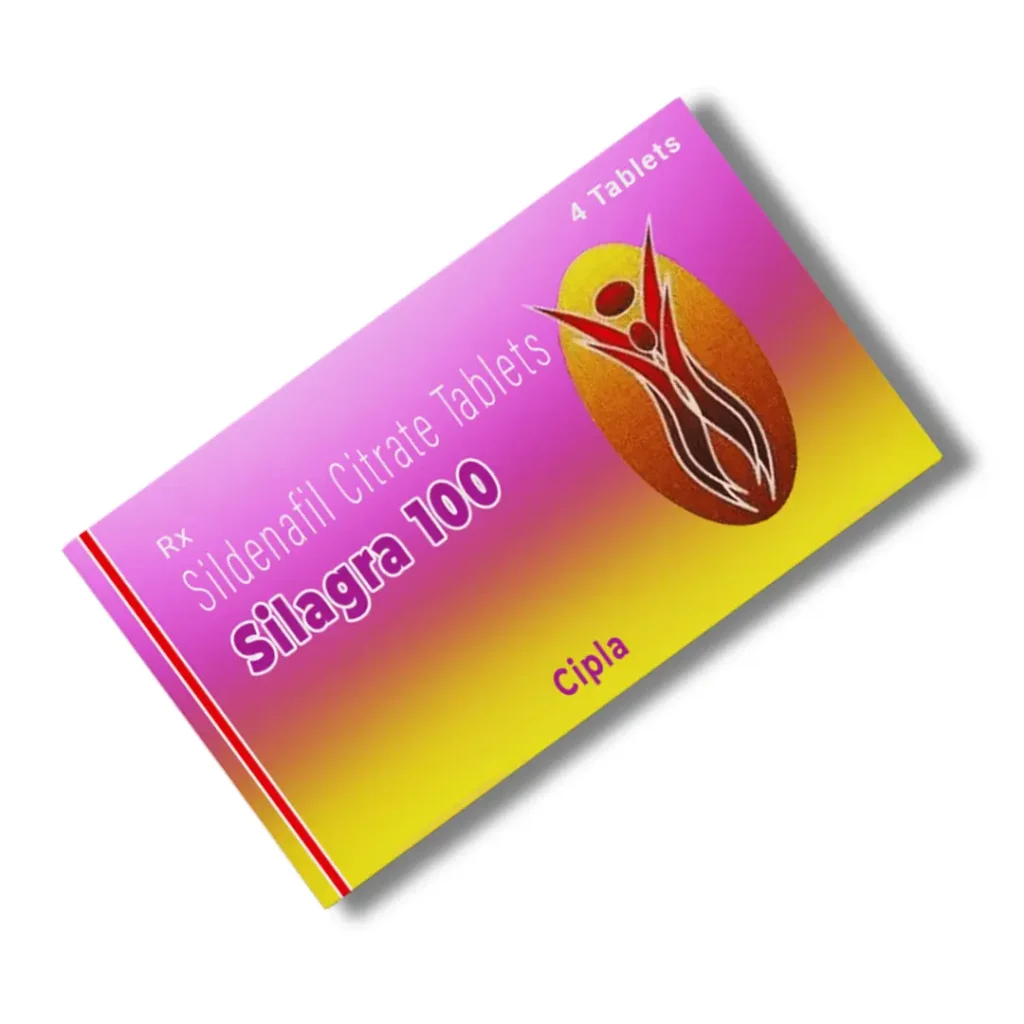
Silagra is an unapproved sildenafil tablet attributed to Cipla, a company that also markets FDA-approved generic sildenafil in the United States. Only the approved product has shown bioequivalence to Viagra and carries FDA-reviewed labelling; sildenafil must never be combined with nitrates.
  • ActiveIngredient: Sildenafil citrate
  • DosageForm: Oral tablet
  • Dosage: 50 mg, 100 mg
  • Indications: Erectile dysfunction
  • Manufacturer: Cipla Ltd
  • Storage: Store below 30°C
  • Drug Status: Not Approved

What is Silagra?

“Generic” is not a description of a tablet — it is the name of a test that was passed. An approved generic must show that the 90 per cent confidence interval for its peak concentration and total exposure falls between 80 and 125 per cent of the original. Silagra has never been through that test; its own manufacturer’s approved sildenafil has.

What a generic approval actually certifies
Bioequivalence is demonstrated by dosing volunteers with both products and comparing two measurements: the peak concentration reached, and the total exposure over time. The 90 per cent confidence interval for each ratio must sit within 80 to 125 per cent of the reference product.
That is the whole content of the claim “same as the original”. It is a numerical result from a study on human subjects, not an assertion about the ingredient on the packet.

Silagra is attributed to Cipla and sold as sildenafil citrate, in two strengths.2

The same company markets FDA-approved sildenafil in the United States in several strengths, under product codes 69097-951, 69097-952 and 69097-953. Those tablets carry a bioequivalence finding. Silagra carries none, and appears in no FDA record.34

The molecule and its approved dosing are covered under approved sildenafil. Listed under erectile dysfunction.

How to Take Silagra

How approved sildenafil is taken

An approved generic follows the same labelling as the brand: usually 50 mg about an hour before sex, from 25 to 100 mg, no more than once a day.5

Ask what the product has been compared against, and how. “Contains sildenafil” and “behaves like Viagra” are different claims, and only the second requires a study.

An approved generic is the cheaper option, not the expensive one. Sildenafil has been off patent for years and is marketed by many labelers.

Keep the strip if a dose behaves unexpectedly — batch markings are what make any later question answerable.

Nitrates remain an absolute bar, regardless of which version of the molecule is involved.

Checking an approved generic

An approved generic carries a US National Drug Code and FDA-reviewed labelling; the pharmacist can confirm both at the counter. Its tablets also carry an imprint that can be matched to the listing.3

What Are the Side Effects of Silagra?

No profile exists for this brand. Sildenafil’s documented reactions follow exposure, which is the quantity a bioequivalence study measures and an unapproved product leaves open.5

Reactions and Their Dependence on
ReactionDepends on exposure?
HeadacheYes
FlushingYes
Nasal congestionYes
Impaired colour discriminationYes, most strongly
DyspepsiaPartly — also a local effect
Sudden vision or hearing lossRare, and not predictable from dose

Source: 5

An exposure 30 per cent above the reference would still be within the acceptance window for an approved generic. An unapproved tablet has no window at all, in either direction.

Emergency – seek care
  • Chest pain during or after sex — say what you took and when
  • Fainting or collapse
  • Sudden loss of vision in one or both eyes, or sudden hearing loss
  • An erection lasting more than four hours

What is Silagra Used For?

No approved use under this brand. What follows is the substance behind the word that sells it.4

What is compared, and what is not

The Two Measurements Behind a
MeasurementWhat it capturesAcceptance range
Peak concentrationHow high the drug level rises90% confidence interval within 80–125% of the reference
Total exposure over timeHow much drug the body sees in totalSame
Active ingredient, strength, dosage form, routeMust match the reference productIdentical
Manufacturing standardsAssessed separately, with inspectionGood manufacturing practice

Source: 1

Notice what the first two rows are not. They are not a statement that the tablets are chemically identical, and not a promise that every batch performs the same. They are the outcome of measurements in people, with a stated margin, on the batches submitted — plus an ongoing obligation to manufacture to the standard that was inspected.

Why the margin exists and why it is narrower than it looks

The 80 to 125 per cent window sounds wide until you see what has to fit inside it: not the average result, but the confidence interval around it. A product whose average is close to the reference but whose variability is high will fail, because the interval spreads past the boundary. The test is as much about consistency as about the mean.

What an unapproved product has instead

A statement. The ingredient is named, the strength is printed, and the comparison with the original is asserted rather than measured. Nothing in that chain is false on its face — it is simply the claim without the study that would make it a finding.

Interactions Alcohol:

Unsafe
Alcohol adds to the blood-pressure lowering of sildenafil, and the exposure this tablet delivers has never been measured against the reference product.

Interactions Other Medications:

Unsafe
Nitrates and guanylate cyclase stimulators are absolute contraindications. The 25 mg reductions required with ritonavir or a strong CYP3A4 inhibitor are statements about exposure, which is the quantity no study has established here.

Special Groups Pregnancy:

Unsafe
Not applicable — sildenafil has no approved use in women for this indication.

Special Groups Breastfeeding:

Unsafe
Not applicable to the stated indication.

Special Groups Elderly:

Unsafe
The labelled starting dose over 65 is 25 mg, and a reduced dose only means something if the delivered exposure is known.

Special Groups Children:

Unsafe
Not indicated for this purpose under 18.

Effects on Activities Driving:

Unsafe
Dizziness and impaired colour discrimination follow exposure, which is unestablished for this product. Do not drive until the effect of a dose is known.

Effects on Activities Operating Machinery:

Unsafe
The same applies, for the same reason.

Silagra is sildenafil citrate attributed to Cipla, sold at 50 and 100 mg. No record of it exists in any FDA system.24

The concern is not that the word “generic” is being used loosely. It is that the word has a precise and checkable meaning, and that meaning is the reason approved generics can be trusted at a fraction of the brand price. Two measurements in human volunteers, a confidence interval that has to land between 80 and 125 per cent, and a manufacturing standard that was inspected rather than asserted.

Cipla’s own approved sildenafil went through that process and is marketed in the United States at three strengths with public product codes. Silagra is sold on the reputation the process created, without the process.

That distinction is worth holding onto beyond this page, because it is the single most useful thing a user can know about any product described as a generic: the claim is either a finding with numbers behind it or a sentence on a website, and the two are easy to tell apart if you know to look.

Critical Warnings for Silagra Use

No bioequivalence finding exists for this product

Nothing establishes how its exposure compares with the reference sildenafil, in either direction.

The manufacturer’s approved sildenafil is a different product

A bioequivalence result belongs to the tablet tested and the facility inspected. It does not transfer to another line or another market.

Dose adjustments still apply

25 mg over 65, in hepatic impairment, in severe renal impairment and alongside strong CYP3A4 inhibitors — instructions that assume a known delivered dose.

Nitrates

Sildenafil is contraindicated with nitric oxide donors such as organic nitrates or nitrites in any form.5

Guanylate cyclase stimulators

Sildenafil is contraindicated with guanylate cyclase stimulators such as riociguat.5

Sildenafil hypersensitivity

Contraindicated in known hypersensitivity to sildenafil or any tablet component.5

See Interactions.

Dosage

A dose instruction is a statement about blood levels, not about milligrams
The approved 50 mg start and 100 mg ceiling describe concentrations that were measured. A tablet stamped 100 mg without a bioequivalence finding asserts the number; nothing establishes the exposure it produces.51
Approved Sildenafil Dosing
SituationDose
Standard start50 mg, about an hour before activity
Over 65, hepatic impairment, severe renal impairment25 mg
With a strong CYP3A4 inhibitor25 mg
With ritonavir25 mg maximum in 48 hours
Maximum100 mg, once in 24 hours

Source: 5

▶Clinical detailstechnical detail

Sildenafil is a poorly water-soluble compound, which is why formulation decides how much of a nominal dose dissolves in time to be absorbed. Two tablets with identical amounts of active ingredient can deliver different exposures if their excipients, compression or particle size differ — and that, rather than any doubt about chemistry, is the specific question a bioequivalence study is designed to answer.

It is also why the answer does not transfer between products. A bioequivalence finding belongs to the tablet that was tested, made in the facility that was inspected, to the specification that was filed. It says nothing about a different tablet containing the same molecule, even one made by the same company on a different line for a different market.

What Does Silagra Interact With?

An approved generic carries the same interaction limits as the brand; that is part of what bioequivalence certifies.

Interactions by Severity
Interacting SubstanceEffect and RiskSeverityDocumentation
Organic nitrates or nitrites in any formDangerous fall in blood pressureContraindicatedExcellent — labelled contraindication
Guanylate cyclase stimulators such as riociguatLow blood pressureContraindicatedExcellent — labelled contraindication
RitonavirMuch higher sildenafil exposure; no more than 25 mg in 48 hoursMajorExcellent — labelled interaction
Strong CYP3A4 inhibitors such as ketoconazole, itraconazole, erythromycinHigher exposure; a 25 mg starting dose consideredMajorGood — labelled interaction
Alpha-blockers and other blood pressure medicinesAdditive fall in blood pressure; start at 25 mg with alpha-blockersModerateGood — labelled interaction

Source: 5

That it passed a bioequivalence study: volunteers take both products, and the 90 per cent confidence interval for peak concentration and total exposure must fall between 80 and 125 per cent of the reference. It also has to match the original in ingredient, strength, form and route, and be made to inspected standards.
It applies to the confidence interval, not the average. A product whose mean is close to the reference but whose results vary widely will fail, because the interval spreads past the limit. The test measures consistency as much as strength.
No. A bioequivalence finding belongs to the tablet that was tested, made in the facility that was inspected, to the specification that was filed. It does not transfer to a different product for a different market.
Sildenafil dissolves poorly in water, so excipients, compression and particle size determine how much dissolves in time to be absorbed. Two tablets with identical milligrams can deliver different exposures, which is exactly what the study checks.
An approved product has a product code that resolves in the FDA drug registry and prescribing information published under its own name. An unapproved one has a sentence on a website.

Evidence Scope

Established
  • An approved generic must show that the 90 per cent confidence interval for peak concentration and total exposure falls within 80 to 125 per cent of the reference product.1
  • It must also match the reference in active ingredient, strength, dosage form and route, and be made to inspected manufacturing standards.1
  • Cipla USA markets FDA-approved sildenafil at 25, 50 and 100 mg under product codes 69097-951 to 69097-953.3
  • No record of this brand exists in any FDA system.
Unknown, and why
  • What exposure this tablet delivers. Unknown because no bioequivalence study has been performed on it; the comparison with the original is asserted rather than measured.
  • How consistent it is between batches. Unknown because consistency is what the inspected manufacturing standard secures, and no such assessment applies here.
  • Whether anyone has been harmed. A product delivering too little produces a disappointing evening rather than a reportable event, and one delivering too much produces reactions attributed to sildenafil in general.

FDA adverse event reports

No reports are filed under the name Silagra at the 2026-07-30 data cut; cases involving sildenafil are recorded under the molecule or an approved brand, and a count of reports is not a rate.4

Who was this medicine studied in?

No one, under this brand. The exposure figures behind approved sildenafil dosing come from studies in healthy volunteers and in men with erectile dysfunction; approved generics add bioequivalence studies of their own tablets against that reference.51

Who this is and is not appropriate for

No one, on the available evidence. It suits least anyone whose labelled dose is 25 mg, since a reduced dose is a statement about exposure and exposure here is unestablished.5

Approved sildenafil, including generics that have passed the test described above, is covered under approved sildenafil.

Where to report and verify

Routing to Official Registries
What you needWhere to go
Report a side effectFDA MedWatch
Pregnancy-specific dataMotherToBaby
Full prescribing informationDailyMed
Verify a pharmacy websiteFDA BeSafeRx · LegitScript

References

  1. US Food and Drug Administration — guidance on bioequivalence and the requirements for abbreviated new drug applications
    Current guidance · Accessed 2026-09-23
    Used for: the 80 to 125 per cent acceptance range for the 90 per cent confidence interval of peak concentration and total exposure, the requirement to match active ingredient, strength, dosage form and route, and the separate assessment of manufacturing standards.
    fda.gov — guidance for industry
  2. Vendor and manufacturer product listings for Silagra
    Commercial listings, not regulatory records · Accessed 2026-09-23
    Used for: the manufacturer attribution to Cipla, the strengths offered and the description of the product as equivalent to the original. Reproduced as claims.
  3. FDA National Drug Code Directory — Cipla USA sildenafil products
    Directory accessed 2026-09-23
    Used for: the approved sildenafil marketed by this manufacturer at 25, 50 and 100 mg with product codes 69097-951, 69097-952 and 69097-953.
    accessdata.fda.gov — NDC Directory
  4. openFDA — Drugs@FDA, labelling, NDC Directory and FAERS queries for SILAGRA
    Data cut 2026-07-30 · Accessed 2026-09-23
    Used for: the absence of any application, product code, labelling or adverse event record under this brand name.
    open.fda.gov — drug adverse event API
  5. FDA Prescribing Information, VIAGRA (sildenafil citrate) — Sections 2.1–2.4, 4.1, 6, 7, 12.2–12.3 and 14
    Revised 2025-08 · Accessed 2026-09-23
    Used for: the approved dosing and reductions, the nitrate contraindication, adverse reactions and their relation to exposure, and the solubility and absorption characteristics that make formulation decisive.
    dailymed.nlm.nih.gov — VIAGRA SPL

How this page was sourced

The acceptance criteria quoted here are taken from the regulator’s own guidance rather than from a description of it, because the numbers are the point: a reader who knows the window can ask whether a product has been through it.

The manufacturer’s approved product is identified by its public product codes so the comparison can be verified in a few seconds rather than taken on trust.

Nothing is asserted about what this tablet delivers. The page distinguishes between a measured finding and an unmeasured claim, which is the whole of its argument.

Review cycle. Clinical review completed 28 September 2026. Next review due by 28 September 2027, or earlier if the labelling is revised.

Disclaimer: The information on this site is provided for informational purposes only and is not medical advice. It does not replace professional medical consultation, diagnosis, or treatment. Do not self-medicate based on the information presented on this site. Always consult with a doctor or other qualified healthcare professional before making any decisions about your health.