
During my professional and academic career, I have focused on clinical and collaborative studies in the fields of lung transplantation and pulmonary arterial hypertension [PAH]. Unifying these two fields has been rewarding since many patients with refractory PAH will ultimately require bilateral lung transplantation. The clinical successes of our UCLA Lung Transplant Program have been realized by our own center’s studies which demonstrated, firstly, that a modified leukocyte-depleted and nutrient enriched allograft reperfusion strategy could ameliorate or prevent ‘reperfusion lung injury’ [Ardehali A, et al. Modified reperfusion and ischemia-reperfusion injury in human lung transplantation. Thorac Cardiovasc Surg 2003.]. Secondly, that utilizing this strategy, liberalization of the traditional arbitrarily strict ‘donor lung criteria’ permitted maintenance of outstanding clinical outcomes with benefit of increased donor availability and shortened ‘waiting times’ for transplantation …[Whiting D, et al. Liberalization of donor criteria in lung transplantation. Am Surg 2003]. Our transplant program presently performs approximately 50-60 cases per annum and ranks UCLA Medical Center among the top programs in the nation. Since its inception in 1990 through July 1, 2006; our program has performed 313 lung and heart-lung transplant procedures on a spectrum of cardiopulmonary maladies such as interstitial pulmonary fibrosis, chronic obstructive pulmonary disease, cystic fibrosis, pulmonary arterial hypertension, sarcoidosis and collagen vascular diseases. Our program is among only just a few in the nation, who routinely evaluate and transplant the complex patients afflicted with scleroderma and other collagen vascular diseases [Saggar R, et al. American College of Rheumatology, 2006.]. Our median waiting time for transplantation is 4.6 months which compares quite favorably to 19.9 months for our UNOS Region 5 and 31 months for the national median waiting time. This foreshortened waiting time has resulted in a reduction in our mortality rate while awaiting transplantation – 5.4% at 18 months for our center as compared to a national mortality of 17.5% for ‘actively UNOS listed’ transplant candidates [Scientific Registry of Transplant Recipients, SRTR, 2006]. Our center’s lung transplant recipient survival statistics for the most recent analysis of the interval 7/1/02-12/31/04 (N=78 cases) for 1-month, 1-year, 3-year were 94%, 88%, 78% as contrasted to national rates of 95%, 84% and 64% while the 3-year survival rate was statistically higher for our center (p<;.05). With the clinical availability of the pulmonary vasodilator, inhaled nitric oxide [iNO], our studies further demonstrated that the prophylactic use of iNO could not prevent acute lung injury but significantly increased the total cost of transplantation [Ardehali A, et al. A prospective trial of inhaled nitric oxide in clinical lung transplantation. Transplantation 2001]. This study resulted in an evidence-based modification of our clinical pathways such that iNO is currently only utilized for established reperfusion acute lung injury after transplantation. Collaborative studies with the basic sciences have also been promoted with our lung transplant program. As coordinated John Belperio, M.D, bronchoalveolar lavage fluid [BALF] obtained on protocol routinely after clinical lung transplantation has been interrogated for sundry mediators of airway inflammation and remodeling to thereby advance our understanding of the immunology of both acute and chronic allograft rejection. To date these studies have focused on C-C chemokines (e.g. MCP-1/CCR2, RANTES), interleukin-1 receptor antagonist, interleukin-13 and the C-X-CR3 related chemokines as putatively contributing to allograft dysfunction. Further, collaboration with Tomas Ganz, M.D., Ph.D. and Alexander Cole, Ph.D. in the Will Rogers Institute for Pulmonary Research has highlighted a novel and potential role for the innate immune system (e.g. Beta-2-defensins) in pathogenesis of chronic lung allograft rejection [Ross DJ,
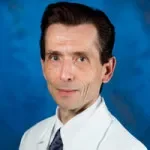
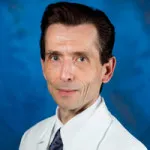
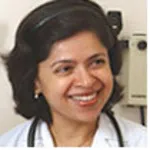
Dr. David Joseph Ross, MD
0
The iMedixStars rating goes beyond a simple average of reviews. It’s calculated based on various factors, including the quantity, recency, and reliability of the reviews. Read More
Overwiew
Doctor Organizations
- Santa Monica Medical Center
Doctor Education
Medical School
1983
Keck School Of Medicine Of The University Of Southern California
Work Place
Santa Monica Medical Center
1250 16th St
Santa Monica
CA
90404
USA
+13108259111
Insurance Plans
- Blue Cross CA California Care Large Group HMO
- PHCS PPO
- Blue Cross CA Pathway X PPO
- First Health PPO
- BC CA California Care Small Group HMO
- UHC SignatureValue Flex1
- Blue Cross CA PPO Prudent Buyer Small Group
- Blue Cross CA Select Plus HMO
- CIGNA HMO
- Blue Cross CA PPO Prudent Buyer Large Group
- Blue Shield CA Access Plus HMO
- Blue Cross CA PPO Prudent Buyer Individual
- Blue Cross CA Advantage PPO Preferred DirectAccess Plus
- Health Net CA Individual and Family PPO
- Anthem BC Pathway X EPO Network
- Aetna Managed Choice POS Open Access
- BCBS Blue Card PPO
- Multiplan PPO
- PHCS PPO Kaiser
- Blue Cross CA Select PPO
- CIGNA Open Access Plus
- UHC Options PPO
- Aetna Savings Plus of CA
- UHC West SignatureValue HMO
- Health Net CA HMO Employer Group
- Oscar Insurance CA
- Health Net CA PPO
- Blue Cross CA Vivity
- CIGNA PPO
- UHC Choice Plus POS
- Aetna Signature Administrators PPO
- Aetna Choice POS II
Conditions
- Pulmonary Tuberculosis (TB)
- Obstructive Sleep Apnea
- Bronchial Asthma
- Pulmonary Embolism
- Sarcoidosis
- Chronic Bronchitis
- Viral Pneumonia
- Acute Sinusitis
- Acute Bronchitis
- Reviews
- Q&A
0 total
- 5 0 %
- 4 0 %
- 3 0 %
- 2 0 %
- 1 0 %
There are no questions!












Leave a comment