
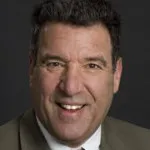
Born in 1948 in Manchester, England, Jonathan Finlay received his undergraduate and medical school education at the University of Birmingham, graduating in 1973. He undertook residency training in Pediatrics in Birmingham, ending with training in Pediatric Oncology at the Christie Hospital and Holt Radium Institute, Manchester, before moving to the United States in 1976. He undertook Fellowship training, first in Pediatric Immunology (1976-78) and then in Pediatric Hematology and Oncology (1978-80) at the University of Wisconsin-Madison.
During his first faculty position (Assistant Professor of Pediatrics) at Stanford University (1980-82), Dr. Finlay initiated a long-standing interest in and commitment to the problems of children with brain tumors. Upon return to Madison, Wisconsin in 1982, Dr. Finlay established the Mid-West Pediatric Brain Tumor Center, striving to coordinate the care of children with brain tumors across the region of Wisconsin, Northern Illinois and Eastern Iowa. …
In 1985, Dr. Finlay was appointed as Chairman of the Brain Tumor Strategy Group of the nation-wide Children’s Cancer Group (CCG). Representing over half of all pediatric cancer centers in the United States, he oversaw the development of national treatment programs to improve the outcome for children with brain tumors. He held this position until 1992, and continues as a member of the Steering Committee for the COG Brain Tumor Strategy Group.
Dr. Finlay moved to the Children’s Hospital of Philadelphia in 1987, as a Senior Physician and Associate Professor of Pediatrics of the University of Pennsylvania, continuing to develop and conduct innovative therapeutic programs for children with brain tumors, focusing on the use of myeloablative chemotherapy followed by autologous hematopoietic progenitor cell “rescue”.
In 1989, Dr. Finlay moved to New York as Vice Chairman of the Department of Pediatrics at Memorial Sloan-Kettering Cancer Center (MSKCC) and Associate Professor of Pediatrics at Cornell University Medical College. During that time, he initiated innovative treatment programs for the youngest children with malignant brain tumors (The “Head Start” protocols). Additionally, he established a multi-center, multi-national consortium, the International CNS Germ Cell Tumor Study Group, which has since conducted three serial clinical trials on these rare tumors.
In October 1997, Dr. Finlay relocated to New York University Medical Center, where he became the Director of the Division of Pediatric Oncology and of the Hassenfeld Center for Cancer and Blood Diseases of Childhood, and a tenured Professor of Pediatrics at New York University. In 2002, Dr. Finlay was awarded the Julie and Edward J. Minskoff Chaired Professorship in Pediatrics (Neuro-oncology) at New York University. During his six years at New York University, the innovative treatment programs developed at MSKCC continued and expanded under his direction.
In October of 2003, Dr. Finlay moved to California as the Director of the Neural Tumors Program at Childrens Hospital Los Angeles and Professor of Pediatrics, Neurology and Neurosurgery at the Keck School of Medicine, University of Southern California. This Program is one of the largest brain tumor programs for children in North America, and is additionally one of the leading centers for the chemotherapeutic management of childhood brain tumors, with the continuing development of innovative programs, for example, (1) to avoid the use of radiation therapy for children less than six years of age newly diagnosed with malignant brain tumors, (2) to treat the rare family of brain tumors, known as germ cell tumors, in an international study (involving Argentina, Australia, the United Kingdom, Canada and the U.S.) with chemotherapy alone, and (3) to treat otherwise incurable brain tumors that have recurred following initial treatments, with myeloablative chemotherapy and autologous hematopoietic progenitor cell rescue.
Dr. Finlay is internationally recognized as a leading authority in the management of children with brain tumors.


Dr. Jonathan Lester Finlay, MD
0
The iMedixStars rating goes beyond a simple average of reviews. It’s calculated based on various factors, including the quantity, recency, and reliability of the reviews. Read More
Overwiew
Doctor Organizations
- Nationwide Childrens Hospital
Doctor Education
Medical School
1973
University Of Birmingham College Of Medical And Dental Sciences
Work Place
Nationwide Childrens Hospital
700 Childrens Dr
Columbus
OH
43205
USA
+16147224460
Specialties
Procedures performed
- Chemotherapy
Insurance Plans
- Humana ChoiceCare Network PPO
- CIGNA PPO
- CIGNA Open Access Plus
- Aetna Choice POS II
- Aetna HMO
- MMOH SuperMed PPO Plus
- BCBS Blue Card PPO
- Anthem Blue Access PPO
- Anthem Blue Preferred HMO
- First Health PPO
- UHC Choice Plus POS
- UHC Options PPO
- Aetna Managed Choice POS Open Access
- Anthem Blue Preferred Plus POS
- UHC Navigate HMO
- Humana Choice POS
- Aetna Health Network Option Open Access
- Aexcel PPO
- Anthem Bronze Pathway X - OH
- Anthem Catastrophic Pathway X - OH
- Anthem Silver Pathway X - OH
- CareSource Ohio
- MEDICA CHOICE WITH UNITEDHEALTHC
- MMOH SuperMed HMO
- Oscar HMO
- Silver Pathway Group HMO
- UHC NAVIGATE PLUS POS
- Aetna Elect Choice EPO Open Access
- Aetna Innovation Health Aetna Premier Care Network Plus
- Aetna Open Choice PPO
- Aetna Premier Care Network APCN Choice POS II OAMC
- Anthem Blue Preferred POS OH
- Anthem Pathway X HMO - OH
- Anthem Pathway X HMO Tiered Catastrophic - OH
- Anthem Pathway X HMO Tiered Gold - OH
- Anthem Silver Pathway Group HMO
- BCBSA Blue Card High Performance Network
- Humana / ChoiceCare Network PPO
- Humana/ChoiceCare+ Network PPO
- Molina Marketplace CA
- SummaCare Select Fully Insured
- Highmark BCBS MY Direct Blue EPO
- Reviews
- Q&A
0 total
- 5 0 %
- 4 0 %
- 3 0 %
- 2 0 %
- 1 0 %
There are no questions!
















Leave a comment