
Key Facts
- An enlarged prostate (BPH) itself does not directly cause erectile dysfunction. It’s primarily a urinary problem.
- The medications used to treat BPH symptoms are often the real source of sexual side effects.
- Some BPH drugs can affect erections, libido (sex drive), or the way you ejaculate.
- You don’t have to choose between urination relief and a healthy sex life. We can often adjust treatments to find the right balance.
- Open communication with your urologist is the key to managing both your BPH and your sexual health.
On This Page:
A Plumbing Problem, Not a Performance Problem
This is a topic that comes up daily in my clinic. A man comes in with urinary symptoms—a weak stream, frequent nighttime trips to the bathroom—and we diagnose him with benign prostatic hyperplasia, or BPH. That’s just the medical term for an enlarged prostate. Almost immediately, the next question is, “Doc, is this what’s causing my erection problems?”
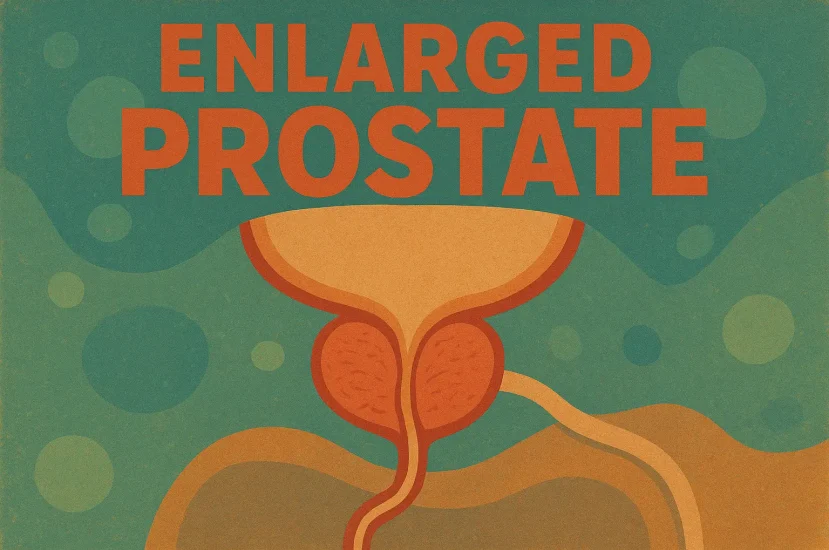
Let me clear this up right away: In almost all cases, the answer is no. Think of your urethra—the tube that carries urine out of your body—as a garden hose. Your prostate wraps around it. As the prostate enlarges with age, it’s like someone is slowly stepping on that hose. It squeezes the urethra, causing all those frustrating urinary issues. This is a plumbing problem. The nerves and blood vessels responsible for an erection are in a different part of the neighborhood, and BPH itself doesn’t typically interfere with them.
The Real Culprit: How BPH Treatments Affect Sex
So if BPH isn’t the direct cause, why is there so much confusion? Because the very effective medications we use to treat the plumbing problem can sometimes cause side effects in the bedroom. It’s a classic trade-off we have to navigate together. There are two main classes of BPH medications that work in very different ways.
| Medication Class | How It Helps BPH | Potential Sexual Side Effect |
|---|---|---|
| Alpha-blockers (e.g., tamsulosin/Flomax) | They relax the muscle tissue in the prostate and bladder neck, essentially “taking the foot off the hose” to improve urine flow. | By relaxing blood vessels, they can sometimes make it harder to get or maintain a firm erection. They are also known to cause changes in ejaculation. |
| 5-alpha reductase inhibitors (e.g., finasteride/Proscar) | They work hormonally to actually shrink the prostate over time by blocking the conversion of testosterone to a more potent form called DHT. | Because they affect hormones, they can sometimes lower your sex drive (libido) and contribute to erectile dysfunction. |
What About Ejaculation Changes?
One of the most common side effects, particularly with alpha-blockers like tamsulosin, is something called retrograde ejaculation. This is often called a “dry orgasm.” The medication relaxes the muscle at the neck of the bladder so well that during orgasm, the semen travels backward into the bladder instead of forward out of the penis. It’s not harmful in any way, but it can certainly be an unsettling change if you’re not expecting it. The sensation of orgasm remains, but with little to no ejaculate.
You Have Options: Finding the Right Balance
When a patient experiences sexual side effects from a BPH medication, my first message is always: let’s talk about it. Don’t just stop taking your medicine. You have options.
- Assess the Trade-Off: Is the relief you’re getting from your urinary symptoms worth the side effect? For some men, finally sleeping through the night without getting up six times is a worthy trade. For others, it’s not.
- Adjust or Switch Medication: Sometimes we can try a different drug within the same class or a different class entirely to see if it causes fewer side effects for you.
- Treat Both Issues: One of the most interesting developments is that we can now use a single medication to treat both BPH and ED. The daily, low-dose version of tadalafil (Cialis) is FDA-approved for both conditions. It helps relax the prostate to improve urine flow AND helps improve blood flow for erections.
- Treat the ED Separately: If your BPH medication is working perfectly for your urinary symptoms, we can keep you on it and simply add a standard ED treatment if needed.
The bottom line is that an enlarged prostate is a normal part of aging for many men, but it doesn’t have to mean the end of a satisfying sex life. The key is to have an open conversation about your priorities so we can tailor a treatment plan that addresses all of your concerns, both in and out of the bathroom.