
Key Facts
- “Over-the-counter” (OTC) simply means you don’t need a prescription. It does NOT mean the medicine is harmless.
- There’s a secret code to the pharmacy layout. Some things are on the shelf, and some are behind the counter for a reason.
- Your pharmacist is the most underutilized free health resource you have. Their job is to keep you safe. Ask them questions!
- OTC medicines can have serious interactions with your prescription drugs or health conditions.
- Just because you can buy it easily doesn’t mean you should take it lightly.
On this page:
The Illusion of the Open Shelf
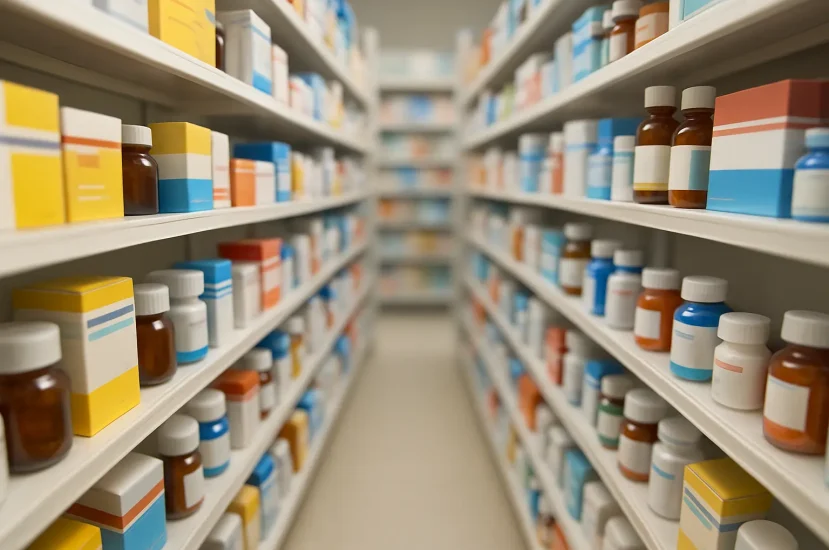
You walk into a pharmacy with a headache and a stuffy nose. You’re faced with an entire wall of brightly colored boxes, all screaming promises of “fast relief.” It’s overwhelming. So you do what we all do: you grab the one you saw on TV or the one your mom used to buy. It’s on an open shelf, next to the shampoo. How risky can it be?
This is the illusion of the open shelf. In my work, I see people treat over-the-counter (OTC) medicines like they’re just another grocery item. But these are still powerful chemical compounds that can have profound effects on your body. The only difference is that for these specific issues—a mild ache, a seasonal allergy, an upset stomach—the government has decided you’re safe enough to make the choice on your own… with a few catches.
The Pharmacy’s Secret Code: The Three Tiers of Access
Have you ever noticed that you can buy a small pack of paracetamol at the gas station, but for a bigger box, you have to go to a pharmacy? Or why some allergy meds are on the shelf, but for others you have to talk to the pharmacist? It’s not random. It’s a carefully designed safety system. Let’s decode it.
- General Sale (The Supermarket Shelf): These are the lowest-risk medicines in the smallest pack sizes. Think a small box of painkillers, throat lozenges, or some vitamin C. They’re considered safe for most people to use for a short time without any professional advice.
- Pharmacy Medicine (The Pharmacy Shelf): This is the next step up. Here you’ll find things like cough and cold remedies, standard antihistamines, and reflux medicines. You can still pick them up yourself, but the idea is that you’re in a pharmacy where a qualified professional is available if you have a question.
- Pharmacist-Only Medicine (Behind the Counter): This is the most important tier. These medicines are still OTC (no prescription needed), but they have a higher risk profile. You can’t just grab them; you have to ask the pharmacist for them. This is a deliberate step to force a conversation. The pharmacist is legally required to ask you a few questions to make sure the medicine is safe and appropriate for YOU. Examples include stronger painkiller combinations, emergency contraceptives, or your blue “reliever” asthma puffer.
The Danger of Self-Diagnosing in Aisle 5
So why all the rules? Because of the risks. You might grab an ibuprofen for your stomach ache, not realizing it can make stomach problems worse. You might pick up a decongestant that’s dangerous to take with your blood pressure medication. You might be taking two different branded products without realizing they both contain the same active ingredient, putting you at risk of an accidental overdose.
Just because you don’t need a doctor’s note doesn’t mean there aren’t things to consider. Your other health conditions, your other medications, whether you’re pregnant or breastfeeding—all of these things matter. A lot.
Your New Best Friend: The Pharmacist
I am begging you to use your pharmacist. They are highly trained medical professionals who spend their days steeped in this knowledge. And their advice is free! Instead of guessing, just walk up to the counter and say:
“Hi, I have a tickly cough and a stuffy nose. I’m also breastfeeding and I take medication for my thyroid. What can I safely take?”
That one sentence is the key to unlocking a world of safe, effective relief. They can cross-check for interactions, point you to the right product, and tell you what warning signs to look out for. They are your personal safety net in the confusing world of over-the-counter medicines. Use them.