
Key Facts
- Paracetamol (you might know it as Tylenol) is our go-to for simple pain and fevers. It’s a great tool.
- But—and I can’t say this loudly enough—it is not harmless. An overdose is incredibly dangerous for your liver.
- The biggest trap? It’s hidden in countless other products, especially cold and flu remedies. It’s so easy to double-dose by accident.
- Always follow the dosage instructions on the packet. They are not suggestions; they are safety limits.
- If you think you’ve taken too much, this is a medical emergency. You call for help immediately, even if you feel fine.
On this page:
The Old, Familiar Friend in the Cabinet
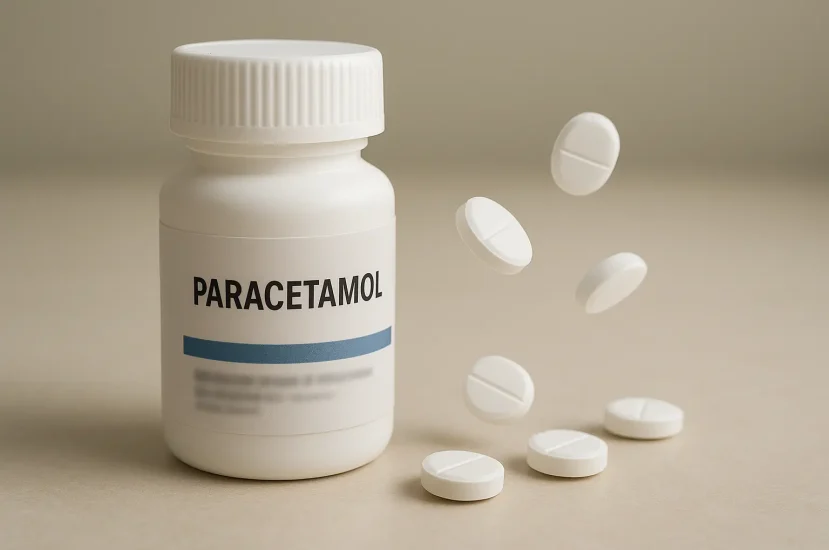
There’s a bottle of it in almost every home in the country. Paracetamol. It’s the first thing we reach for when a headache strikes, when our child feels hot to the touch, or when body aches set in. It’s like an old, reliable friend. And because it’s so familiar, so easy to buy, we’ve stopped being afraid of it. We’ve stopped treating it with respect. And that’s where the danger lies.
As a health professional, I love paracetamol. It’s one of our safest and most effective tools for simple pain and fever when—and this is the critical part—when it is used correctly. But I’ve also seen the devastating consequences when it’s not. So let’s have a little chat about our old friend, and make sure we’re treating it right.
How It Does Its Magic (Mostly)
You’ll laugh, but after more than 70 years of use, we’re still not 100% sure exactly how paracetamol works. The leading theory is that it works mainly in the brain, telling it to “turn down the volume” on pain signals. It doesn’t do much for inflammation, which is why it’s different from an NSAID like ibuprofen. It’s a pure pain and fever reducer. It usually starts working within about 30 minutes and gives you a good 4 to 6 hours of relief.
The Hidden Danger: The Accidental Overdose
This is the part that keeps me up at night. The number one way people get into trouble with paracetamol is by taking too much by accident. And it happens in one main way: they don’t realize they’re taking it from multiple sources.
Think of your daily dose of paracetamol like a salt allowance. You have a strict, safe limit for the day. Now, imagine you take two tablets for your headache. That’s some of your salt allowance. A few hours later, you take a “multi-symptom cold and flu” tablet. You don’t realize it, but that tablet also contains a full dose of paracetamol. Then, before bed, you take a “nighttime” remedy to help you sleep… which also has paracetamol in it.
Suddenly, you’ve used up three or four times your daily salt allowance. But with paracetamol, the consequence isn’t just high blood pressure. It’s potential liver failure. Your liver is what processes the drug, and it can only handle so much at once. Overwhelm it, and you cause serious, sometimes irreversible, damage. This is not a theoretical risk; it is the most common cause of acute liver failure in the Western world.
The Simple Rules That Keep You Safe
Okay, enough of the scary stuff. How do we prevent this? It’s so simple.
- Become a Label Reader. Make it a habit. Before you take ANY cold, flu, or pain medicine, flip the box over and look for the active ingredients. If you see “paracetamol” or “acetaminophen” (the name used in the US), you know it counts towards your daily total.
- Follow the Clock. The instructions say “every 4 to 6 hours.” They mean it. Don’t eyeball it. Set a timer on your phone if you have to. Giving your body enough time between doses is crucial.
- Know Your Daily Limit. For most adults, the maximum is 4 grams (4000 mg) in 24 hours. That’s usually eight extra-strength tablets. Know the number and respect it.
- Call for Help. If you even think you might have taken too much, you must act. Don’t wait to feel sick. The damage can be happening silently. Call the Poison Control Center or go to the emergency room. There is an antidote, but it works best when given early.
A Special Word on Kids, Pregnancy, and Breastfeeding
This is my world. And the rules are even more important here.
For Kids: The dose is always, always, ALWAYS based on their weight. Not their age. A kitchen spoon is not a measuring device. Use the syringe that comes in the box. Full stop.
For Pregnancy: Paracetamol is considered the safest pain reliever to use during pregnancy. But that’s not a free pass. The mantra is: lowest effective dose, for the shortest possible time.
For Breastfeeding: The same rule applies. It’s the first choice of painkiller for nursing mothers. A tiny, insignificant amount gets into the milk, and it’s very unlikely to affect your baby. It’s a safe choice when you need it.
Let’s keep our old friend in its rightful place: as a helpful tool we use with knowledge and respect.