
iMedix Medical Content Engine 3.13.37

Hello,

Sign up to join our community!

Welcome Back,

Please sign in to your account!

Forgot Password,

Lost your password? Please enter your email address. You will receive a link and will create a new password via email.

Sorry, you do not have permission to ask a question, You must login to ask a question.

Scoliosis: Understanding Causes and Key Risk Factors - iMedix

Scoliosis

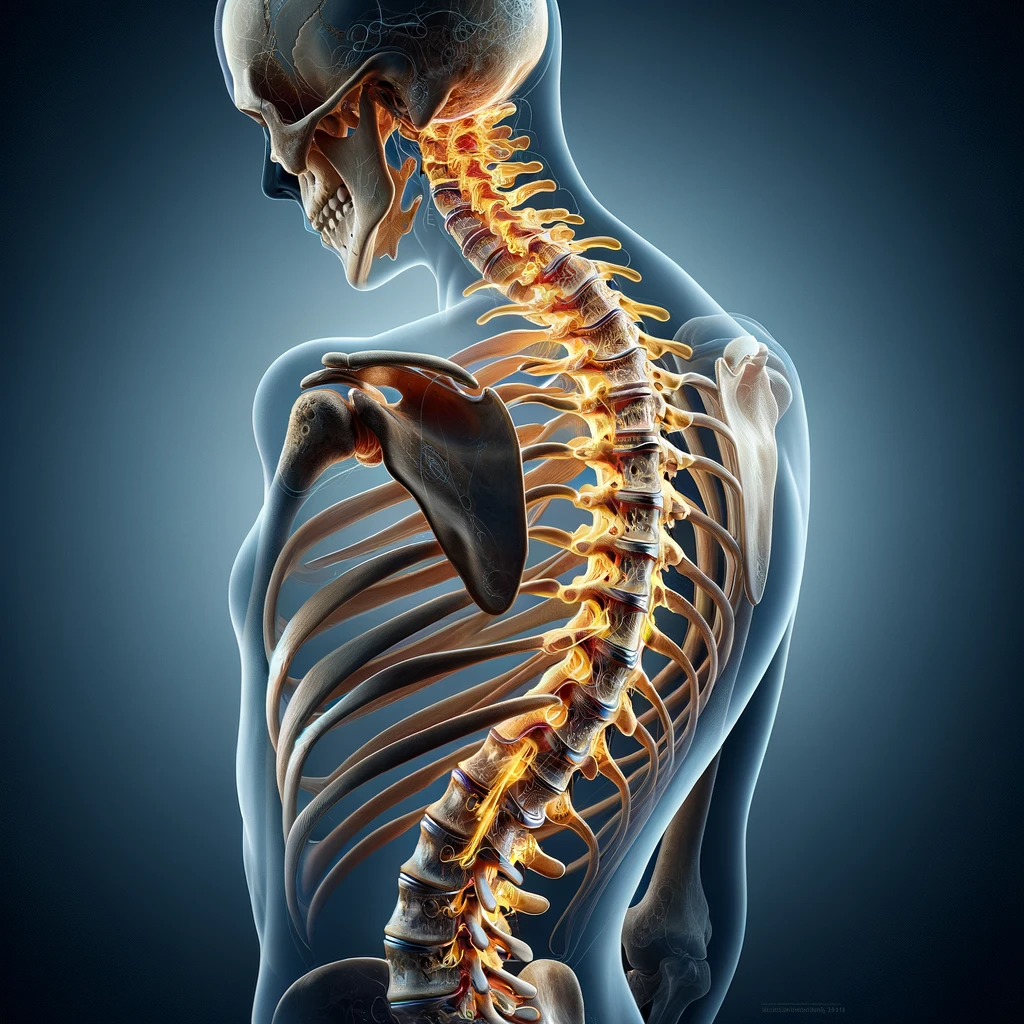
An abstract illustration of Scoliosis
  • 0 comments

Scoliosis

0 comments

Scoliosis describes a condition where the spine develops a lateral, or side-to-side, curvature. This deviation from the typical straight alignment of the backbone can range from a very slight bend to a more pronounced, visible curve. In many instances, the condition is mild and requires only observation, but significant curves can impact posture and, in rare cases, respiratory function.

What is Scoliosis?

Scoliosis represents a three-dimensional abnormality in the alignment of the vertebral column. While a healthy spine possesses natural front-to-back curves, scoliosis involves the development of a sideways bend, often forming an ‘S’ or ‘C’ shape when viewed from behind. Critically, this lateral displacement is typically accompanied by a rotational component, where the individual vertebrae twist on one another like a corkscrew.

The condition is broadly classified according to its context. The most widespread form is idiopathic scoliosis, which emerges in otherwise healthy children and adolescents. Congenital scoliosis describes a curvature present at birth due to vertebral malformations. A third major type, neuromuscular scoliosis, develops as a secondary issue related to conditions affecting the body’s muscular or nervous systems.

Causes:
The development of a spinal curve can be traced to several distinct underlying origins. While the most common form has no single identifiable trigger, other types are direct consequences of specific structural or systemic issues.
  • Idiopathic Origin: In the vast majority of cases, particularly those that appear during adolescence, the cause is classified as idiopathic. This term signifies that there is no single, definite cause known. It is widely believed to be a multifactorial process, where a combination of inherited genetic tendencies, subtle differences in growth patterns, and hormonal changes during puberty likely play a role in its development.
  • Congenital Spinal Abnormalities: This form of scoliosis is present at birth and is caused by the malformation of the vertebrae during fetal development. One or more vertebrae may not form completely or may fail to separate properly from each other. This creates a structural imbalance in the spine from the very beginning, which forces the column to grow in a curved manner.
  • Underlying Neuromuscular Disorders: In these cases, the scoliosis is a secondary symptom of another medical condition that affects the nerves and muscles. Disorders such as cerebral palsy, muscular dystrophy, or spina bifida can result in muscular weakness or an imbalance of the muscles that support the spine, preventing them from holding the spine straight.
  • Age-Related Degeneration: This type, often called degenerative or "de novo" scoliosis, appears in adults. It develops due to the gradual wear and tear on the spine's components. The breakdown of the intervertebral discs and the development of arthritis in the facet joints can lead to instability, causing the spine to shift and curve over time.
Risk Factors:
While a spinal curve can develop at any point in life, the likelihood of being diagnosed with the most common form of scoliosis is strongly linked to a person's age, genetics, and biological sex.
  • Timing of a Growth Spurt: The period of rapid growth that occurs just before puberty, typically between the ages of 10 and 15, is the most common time for idiopathic scoliosis to first appear and then progress.
  • Female Sex: Although both boys and girls develop mild scoliosis curves at similar rates, girls have a substantially higher probability of the curve worsening to a degree that requires bracing or surgical correction.
  • A Family History of Scoliosis: The condition frequently runs in families, indicating a strong hereditary component. An individual with a parent, sibling, or other close blood relative who has scoliosis is more likely to develop a spinal curve themselves.

Commonly Used Medications for Scoliosis

Medications are not used to correct the spinal curve itself but may be recommended to manage associated pain, particularly in adults with degenerative scoliosis. Treatment decisions should always be made with a doctor.

  • Ibuprofen: This over-the-counter nonsteroidal anti-inflammatory drug (NSAID) is often used to help alleviate mild to moderate back pain or muscle discomfort.
  • Naproxen: Another common NSAID that can provide longer-lasting relief from the aches and pains that may accompany a spinal curvature.
  • Acetaminophen: This pain reliever works through a different mechanism than NSAIDs and can be an alternative for managing general back pain.

Where to Find More Information?

For in-depth and trusted information regarding the diagnosis and management of scoliosis, these organizations are primary sources.

Support

Managing scoliosis involves expert medical oversight, and for some, physical and emotional support systems are also beneficial.

  • Orthopaedic Spine Specialist Care: The cornerstone of support is regular monitoring by an orthopaedic surgeon who specializes in spinal deformities to track curve progression and determine the appropriate course of action, from observation to intervention.
  • Scoliosis-Specific Physical Therapy: In some cases, a structured program of scoliosis-specific exercises guided by a trained physical therapist may be recommended to improve posture, core muscle strength, and motor control.
  • Peer and Community Support Groups: Connecting with national or local scoliosis support organizations can provide valuable emotional encouragement and shared experiences for both patients and their families.

Disclaimer: The information on this site is provided for informational purposes only and is not medical advice. It does not replace professional medical consultation, diagnosis, or treatment. Do not self-medicate based on the information presented on this site. Always consult with a doctor or other qualified healthcare professional before making any decisions about your health.

  • Q&A
There are no questions!

You must login to add a comment.

Popular Questions

Top Members

Join the discussion

Comments are published after moderation. User opinions do not constitute medical advice.

We sincerely appreciate you taking the time to share your feedback. Every user's perspective is valuable to us.

Ask to get answers.

Claim your

By clicking the button below, you accept WebMD's terms of use and
privacy policy. All fields are required unless designated as optional.