
iMedix Medical Content Engine 3.13.37

Hello,

Sign up to join our community!

Welcome Back,

Please sign in to your account!

Forgot Password,

Lost your password? Please enter your email address. You will receive a link and will create a new password via email.

Sorry, you do not have permission to ask a question, You must login to ask a question.

Stendra: Uses, dosage, side effects, warnings & patient reviews

Stendra

Stendra

Stendra

Avanafil
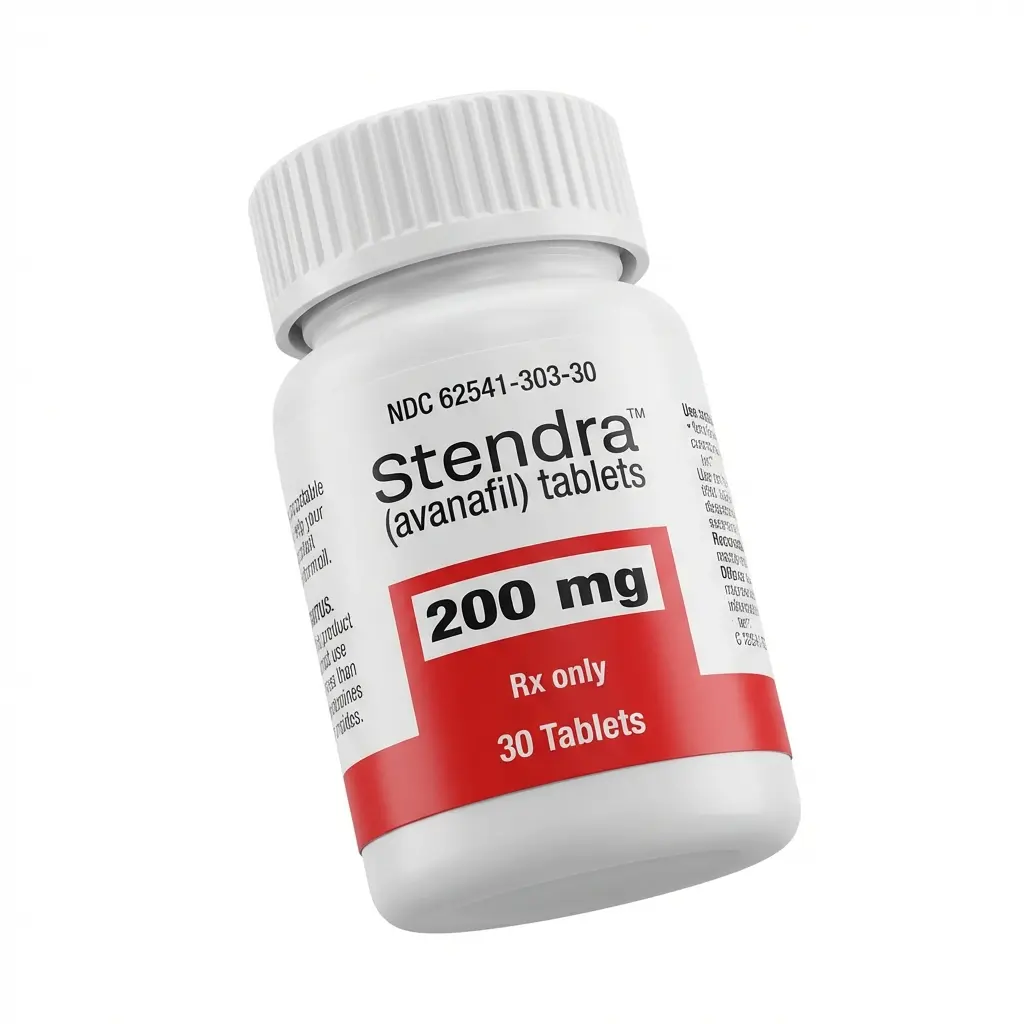
Stendra is a prescription medication containing the active ingredient avanafil. It belongs to the class of drugs known as phosphodiesterase type 5 (PDE5) inhibitors and is indicated for the treatment of erectile dysfunction in men.
  • ActiveIngredient: Avanafil
  • DosageForm: Oral tablets
  • Dosage: 50 mg, 100 mg, 200 mg.
  • Indications: Treatment of erectile dysfunction (ED).
  • Manufacturer: Vivus LLC (licensed to Metuchen Pharmaceuticals LLC), Various Generic Manufacturers
  • Storage: Store at room temperature 20°C–25°C (68°F–77°F); protect from moisture and light.
  • Drug Status: Prescription Only

What is Stendra (Avanafil)?

Stendra is an oral medication prescribed for the treatment of erectile dysfunction (ED). Its active pharmaceutical ingredient is avanafil. Like other drugs in its class, Stendra works by enhancing blood flow to the penis during sexual stimulation, which helps to facilitate an erection. The active ingredient is also available under the generic name Avana.

Mechanism of Action

Stendra is a selective inhibitor of the phosphodiesterase type 5 (PDE5) enzyme. During sexual arousal, nitric oxide is released in the penile tissue, leading to the production of cyclic guanosine monophosphate (cGMP). cGMP causes smooth muscle relaxation and increased blood flow. PDE5 is the enzyme that breaks down cGMP. By inhibiting PDE5, Stendra helps to maintain higher levels of cGMP, thereby supporting the erectile response.

Key Pharmacological Features

  • Rapid Onset: Stendra is characterized by a relatively fast onset of action. It may be effective for some patients as early as 15 minutes after administration.
  • Enzyme Selectivity: Avanafil demonstrates greater selectivity for the PDE5 enzyme compared to other phosphodiesterases like PDE6 (found in the retina) and PDE11 (found in skeletal muscle). This selectivity profile may influence its side effect pattern.

How to Take Stendra

Stendra should be used exactly as prescribed by a healthcare professional. The following instructions provide general guidance.

Administration and Timing

The recommended starting dose is 100 mg taken orally approximately 15 to 30 minutes before sexual activity. The medication may be taken with or without food, as a high-fat meal does not significantly delay its absorption, unlike some other PDE5 inhibitors. The maximum recommended dosing frequency is once per 24-hour period.

For advice on optimizing the timing of ED medications, see our related article: How to Take Cialis for Maximum Effect: A Doctor’s Guide.

Dose Adjustment

Based on efficacy and tolerability, the dose may be increased to 200 mg or decreased to 50 mg. The 50 mg dose is also the recommended starting dose for patients who are taking certain interacting medications, such as specific alpha-blockers or potent CYP3A4 inhibitors.

Missed Dose

Stendra is not intended for daily scheduled use; it is taken on an as-needed basis prior to anticipated sexual activity. Therefore, the concept of a “missed dose” does not apply. Do not take more than one dose within a 24-hour period.

Side Effects of Stendra

All medications, including Stendra, can cause side effects. The incidence and severity may vary. For a broader understanding of what to expect from ED medications, a useful resource is: ED Pill Side Effects: A Urologist’s Guide to What’s Normal.

Reported Side Effects of Stendra (Avanafil)
FrequencySide EffectsNotes
Common
  • Headache
  • Flushing (redness of the face)
  • Nasal congestion or rhinorrhea (runny nose)
  • Back pain
  • Dyspepsia (indigestion)
These are often mild to moderate in intensity.
Less Common
  • Visual disturbances (non-arteritic anterior ischemic optic neuropathy has been reported with PDE5 inhibitors)
  • Dizziness
  • Nausea
  • Myalgia (muscle pain)
Seek medical advice if persistent or bothersome.
Serious (Seek Immediate Medical Attention)
  • Priapism (an erection lasting more than 4 hours)
  • Sudden loss of vision in one or both eyes
  • Sudden decrease or loss of hearing
  • Signs of a severe allergic reaction (e.g., rash, hives, swelling of the face/lips/tongue, difficulty breathing)
  • Signs of a cardiovascular event (e.g., chest pain, shortness of breath)
Discontinue Stendra and seek emergency care. Priapism is a urological emergency.

What is Stendra Used For?

FDA-Approved Indication

Stendra (avanafil) is indicated for the treatment of erectile dysfunction (ED). It is intended for use by adult men with ED, a condition characterized by the consistent inability to achieve or maintain an erection sufficient for satisfactory sexual performance.

Mechanism in ED

The medication’s efficacy is contingent upon sexual stimulation. It does not increase libido but facilitates the physiological process of erection by enhancing blood flow to the corpus cavernosum of the penis. Treatment should be part of a comprehensive medical evaluation for ED to identify and manage any underlying causes.

For more information on treatments within this category, visit: Erectile Dysfunction Drug Category.

Interactions Alcohol:

Consult your doctor
While avanafil may have a different interaction profile than some older PDE5 inhibitors, the combination with alcohol can still increase the risk of orthostatic hypotension, dizziness, and tachycardia. Patients are advised to discuss their alcohol consumption with their prescribing physician. For context, see: That Glass of Wine With Your Viagra: A Urologist's Honest Advice.

Interactions Other Medications:

Consult your doctor
Concomitant use of Stendra with nitrates in any form is absolutely contraindicated due to the risk of life-threatening hypotension. Caution is also required with alpha-blockers, antihypertensives, and potent CYP3A4 inhibitors. A complete medication review is mandatory.

Special Groups Pregnancy:

Unsafe
Stendra is not indicated for use in women and is not intended for use during pregnancy.

Special Groups Breastfeeding:

Unsafe
Stendra is not indicated for use in women and is not intended for use during breastfeeding.

Special Groups Elderly:

Use with caution
No overall differences in safety or efficacy were observed between older (≥65 years) and younger patients. However, a greater sensitivity in some older individuals cannot be ruled out. Particular caution is advised in elderly patients with cardiovascular conditions.

Special Groups Children:

Unsafe
Stendra is not indicated for use in pediatric populations.

Effects on Activities Driving:

Use with caution
Stendra can cause dizziness and visual disturbances. Patients should be aware of how they react to the medication before driving or operating machinery.

Effects on Activities Operating Machinery:

Use with caution
For the same reasons as driving, caution should be exercised when engaging in activities requiring mental alertness and motor coordination.

Important Safety Concerns and Considerations

Cardiovascular Status

Erectile dysfunction and cardiovascular disease share common risk factors. Sexual activity itself poses a potential cardiac risk. Therefore, physicians should consider the cardiovascular status of a patient prior to initiating any treatment for ED, including Stendra. The drug is not a treatment for cardiovascular disease.

Priapism

Prolonged erection lasting more than 4 hours (priapism) has been reported with PDE5 inhibitor use. This condition requires immediate medical intervention to prevent permanent damage to penile tissues and long-term erectile dysfunction.

Effects on the Eye

Non-arteritic anterior ischemic optic neuropathy (NAION), a condition associated with sudden vision loss, has been reported rarely in temporal association with PDE5 inhibitor use. Patients who experience sudden vision loss should stop taking Stendra and seek immediate medical attention.

Sudden Hearing Loss

Sudden decrease or loss of hearing has been reported in temporal association with PDE5 inhibitor use. Patients who experience such symptoms should discontinue Stendra and consult a physician promptly.

Concomitant Use with Alpha-Blockers

Both Stendra and alpha-blockers are vasodilators that lower blood pressure. Concomitant use can lead to symptomatic hypotension. Patients should be stable on their alpha-blocker therapy before initiating Stendra at the lowest recommended dose.

Critical Warnings for Stendra Use

Nitrate Contraindication

Stendra is contraindicated in patients who are using any form of organic nitrate or nitric oxide donor, either regularly or intermittently. This includes nitroglycerin, isosorbide mononitrate, isosorbide dinitrate, and recreational drugs called “poppers” (amyl or butyl nitrite). Coadministration can cause a severe, life-threatening drop in blood pressure.

Cardiovascular Warnings

Stendra is not for use in men for whom sexual activity is inadvisable due to underlying cardiovascular conditions. Physicians should evaluate the patient’s cardiovascular status before prescribing. Stendra offers no protective effect against heart disease, stroke, or arrhythmia.

Hypotension

Stendra causes mild, transient decreases in systemic blood pressure. There is a potential for symptomatic postural hypotension (dizziness, lightheadedness) particularly when initiating treatment.

Drug Interactions

As previously noted, interactions with nitrates, alpha-blockers, and drugs that affect the CYP3A4 enzyme pathway are clinically significant and require dose adjustments or avoidance.

Stendra Dosage Information

The dosage of Stendra must be individualized based on efficacy and tolerability under the supervision of a healthcare provider.

Stendra (Avanafil) Dosage Guidelines
Dosage StrengthRecommendationKey Considerations
50 mgRecommended starting dose for patients taking concomitant alpha-blockers or potent CYP3A4 inhibitors.May also be used if the 100 mg dose is not tolerated.
100 mgThe recommended starting dose for most patients.Take approximately 15-30 minutes before sexual activity.
200 mgMaximum recommended dose. Consider if the 100 mg dose is well-tolerated but insufficiently effective.Do not exceed one 200 mg dose in a 24-hour period.

Administration Notes

  • Frequency: Maximum once daily.
  • Onset: The relatively rapid onset of action is a distinguishing feature. Efficacy has been demonstrated in some patients as early as 15 minutes post-dose.
  • Duration: The window of opportunity for efficacy is approximately 6 hours following administration.

Drug Interactions with Stendra

Stendra’s metabolism and effects can be altered by other substances, and it can also affect other drugs. Disclosure of all medications and supplements to the prescribing physician is essential.

Significant Drug Interactions with Stendra (Avanafil)
Interacting Substance ClassExamplesPotential Effect and Management
Nitrates (Contraindicated)Nitroglycerin, isosorbide dinitrate/mononitrate, amyl nitrite (“poppers”).Profound hypotension, potentially fatal. Concurrent use is absolutely contraindicated.
Alpha-Adrenergic Blocking AgentsTamsulosin, doxazosin, terazosin.Additive blood pressure-lowering effects. Patients should be stable on alpha-blocker therapy before initiating Stendra at a 50 mg dose.
Potent CYP3A4 InhibitorsKetoconazole, ritonavir, clarithromycin, grapefruit juice.Can significantly increase avanafil plasma concentration. A starting dose of Stendra 50 mg is recommended; avoid 200 mg dose.
Moderate CYP3A4 InhibitorsErythromycin, aprepitant, diltiazem, verapamil.May increase avanafil exposure. Caution is advised.
CYP3A4 InducersRifampin, carbamazepine, phenytoin, St. John’s Wort.May decrease avanafil plasma levels, potentially reducing efficacy.
AntihypertensivesACE inhibitors, beta-blockers, calcium channel blockers, diuretics.Potential additive hypotensive effect. Monitor blood pressure.

FAQs

Stendra is noted for its relatively fast onset of action. While individual responses vary, Stendra may become effective for some patients as early as 15 minutes after dosing. In contrast, the onset for sildenafil (Viagra) is typically 30 to 60 minutes. The rapid onset is a distinguishing feature of avanafil.
The primary differences among PDE5 inhibitors involve onset of action, duration of effect, and side effect profiles. Stendra is characterized by fast onset (15-30 min) and a duration of about 6 hours. Tadalafil (Cialis) has a longer duration of action (up to 36 hours). The choice depends on individual patient factors and preferences. For a detailed comparison, see: Viagra vs. Cialis: A Urologist's Guide to ED Pills.
No. Stendra (avanafil) is currently only approved for and supplied as an on-demand medication taken prior to anticipated sexual activity. It is not approved for daily administration.
Super Avana is a combination tablet containing both avanafil (for ED) and dapoxetine (for premature ejaculation). It is a separate medication with distinct indications, dosing, and safety considerations and should only be used under direct medical supervision.
Patients should consult their doctor. While avanafil may be less affected by alcohol than some other ED medications, combining alcohol with vasodilators can increase the risk of dizziness, low blood pressure, and increased heart rate. Moderation is critical.

Additional Information

Storage and Handling

Store Stendra tablets at room temperature between 20°C to 25°C (68°F to 77°F), with excursions permitted between 15°C to 30°C (59°F to 86°F). Keep the medication in its original container, protected from light and moisture, and out of the reach of children and pets.

Reporting Side Effects

Patients and healthcare providers are encouraged to report negative side effects of prescription drugs to the relevant national regulatory authority (e.g., the FDA in the United States). Reporting contributes to ongoing drug safety monitoring.

Availability and Status

Stendra (avanafil) is a prescription-only medication. It is available as film-coated tablets in 50 mg, 100 mg, and 200 mg strengths.

References and Medical Sources

  1. U.S. Food and Drug Administration (FDA). Stendra (avanafil) Prescribing Information. [Updated 2020]. https://www.accessdata.fda.gov/drugsatfda_docs/label/2018/202276s018lbl.pdf
  2. MedlinePlus. Avanafil. U.S. National Library of Medicine. https://medlineplus.gov/druginfo/meds/a613017.html
  3. American Urological Association (AUA). Erectile Dysfunction: AUA Guideline (2018). https://www.auanet.org/guidelines/guidelines/erectile-dysfunction-(ed)-guideline

Disclaimer: The information on this site is provided for informational purposes only and is not medical advice. It does not replace professional medical consultation, diagnosis, or treatment. Do not self-medicate based on the information presented on this site. Always consult with a doctor or other qualified healthcare professional before making any decisions about your health.

You must login to add a comment.

Popular Questions

Top Members

Join the discussion

Comments are published after moderation. User opinions do not constitute medical advice.

We sincerely appreciate you taking the time to share your feedback. Every user's perspective is valuable to us.

Ask to get answers.