
iMedix Medical Content Engine 3.13.37

Hello,

Sign up to join our community!

Welcome Back,

Please sign in to your account!

Forgot Password,

Lost your password? Please enter your email address. You will receive a link and will create a new password via email.

Sorry, you do not have permission to ask a question, You must login to ask a question.

Bimat: Uses, dosage, side effects, warnings & patient reviews

Bimat

Bimat

Bimat

Bimatoprost
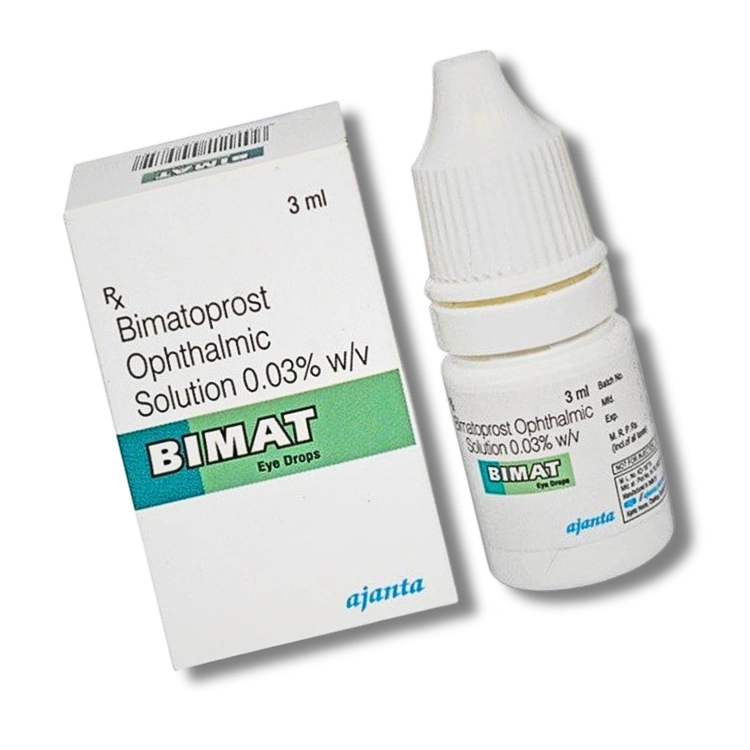
Bimat is a brand name for an ophthalmic solution containing the active ingredient bimatoprost. It is used to lower high eye pressure in glaucoma and, in a lower concentration, to enhance eyelash growth by increasing their length, thickness, and darkness.
  • ActiveIngredient: Bimatoprost
  • DosageForm: Ophthalmic Solution (Eye Drops)
  • Dosage: 0.03% (0.3 mg/mL)
  • Indications: Reduction of elevated intraocular pressure (IOP) in individuals with open-angle glaucoma or ocular hypertension.
  • Manufacturer: Ajanta Pharma
  • Storage: Store at 2°C to 25°C (36°F to 77°F). Protect from light. Keep the bottle tightly closed.
  • Drug Status: Prescription Only

What is Bimat (Bimatoprost)?

Bimat is a prescription medication containing bimatoprost, a synthetic prostaglandin analog. It is formulated as an ophthalmic solution (eye drops) and is primarily used to treat two distinct conditions: elevated intraocular pressure associated with glaucoma, and hypotrichosis (inadequate eyelashes) for cosmetic enhancement.

It is manufactured by Ajanta Pharma, an established international pharmaceutical company. As a generic medication, Bimat offers a therapeutically equivalent option to brand-name products like Lumigan (for glaucoma) and Latisse (for eyelashes) at a lower cost.

Mechanism of Action

Bimatoprost works by increasing the outflow of aqueous humor (fluid) from the eye, thereby reducing intraocular pressure in glaucoma patients. For eyelash growth, its exact mechanism is not fully understood, but it is believed to extend the growth phase (anagen phase) of the eyelash hair cycle and increase the number of hairs that grow.

How to Use Bimat Eye Drops

Correct administration is crucial for effectiveness and to minimize side effects. The method differs slightly based on the intended use (glaucoma vs. eyelash growth).

For Glaucoma Treatment (e.g., Bimat 0.03%)

  1. Wash your hands thoroughly before use.
  2. Tilt your head back and pull down your lower eyelid to form a small pocket.
  3. Hold the dropper directly over the eye and instill one drop into the conjunctival sac. Do not let the dropper tip touch your eye, fingers, or any other surface.
  4. Close your eye gently for 1-2 minutes. Press a finger lightly against the inner corner of your eye (near the nose) to reduce systemic absorption.
  5. Use the drops exactly as prescribed, typically once daily in the evening. Do not use more frequently than directed.

For Eyelash Growth

  1. Ensure your face is clean, makeup is removed, and contact lenses are out.
  2. Using the sterile, single-use applicator provided, place one drop of solution on it.
  3. Carefully apply the solution in a thin line along the skin of the upper eyelid at the base of the eyelashes. Avoid direct application into the eye.
  4. Dispose of the applicator after each use to prevent contamination and infection.
  5. Apply once daily, typically in the evening. Do not apply to the lower eyelid.

For proper understanding of medication instructions, refer to our guide on reading medication information.

Side Effects of Bimat

Like all medications, Bimat can cause side effects. It’s important to understand what is common and what requires medical attention. For a general perspective, see our guide to medication side effects.

Common and Serious Side Effects of Bimatoprost
FrequencySide EffectsAction to Take
Very Common
  • Eye redness, itching, or dryness
  • Darkening of the eyelid skin
  • Growth or thickening of eyelashes
  • Mild eye irritation or foreign body sensation
These are often mild and may lessen with continued use. Eyelid skin darkening may be reversible upon discontinuation.
Serious (Consult a Doctor)
  • Permanent darkening of the iris (eye color change to brown)
  • Eye pain, swelling, or inflammation
  • Sudden vision changes or worsening vision
  • Signs of eye infection (increased redness, discharge, severe pain)
  • Growth of fine hairs on skin areas where solution frequently drips
  • Cyst formation on the eyelid margin (melbomian gland dysfunction)
Contact your healthcare provider promptly. Iris darkening is permanent and may occur gradually over months to years.

What is Bimat Used For?

Bimat (bimatoprost) is approved for two primary uses, each with a specific concentration and application method.

1. Treatment of Glaucoma and Ocular Hypertension

The 0.03% ophthalmic solution is used to lower elevated intraocular pressure (IOP) in patients with open-angle glaucoma or ocular hypertension. High IOP is a major risk factor for optic nerve damage and vision loss. By increasing fluid drainage, Bimat helps protect the optic nerve.

2. Treatment of Hypotrichosis of the Eyelashes

The 0.03% solution (marketed for this purpose) is applied topically to the upper eyelid to promote eyelash growth in individuals with inadequate or not enough lashes. It increases lash length, thickness (fullness), and darkness.

Important Distinction

While the same concentration (0.03%) may be used for both purposes, the application method differs critically. For glaucoma, the drop is instilled into the eye. For eyelash growth, it is carefully applied to the skin at the lash base, avoiding direct contact with the eye to minimize side effects.

Interactions Alcohol:

Safe if prescribed
There is no known direct interaction between Bimat eye drops and alcohol. However, excessive alcohol consumption could potentially affect overall health and medication adherence.

Interactions Other Medications:

Consult your doctor
Inform your doctor about all other eye drops or medications you are using. Using multiple prostaglandin analogs or eye drops containing thimerosal (a preservative) together may increase the risk of side effects. A doctor will advise on proper administration timing.

Special Groups Pregnancy:

Consult your doctor
Bimatoprost is a prostaglandin analog. Its use during pregnancy is generally not recommended unless the potential benefit justifies the potential risk to the fetus. For cosmetic use, it should be avoided. Refer to general guidance on medication safety in pregnancy.

Special Groups Breastfeeding:

Use with caution
It is unknown if bimatoprost passes into breast milk in significant amounts when applied to the eye or skin. Use with caution and only if clearly needed. Discuss risks and benefits with your doctor.

Special Groups Elderly:

Safe if prescribed
No dosage adjustment is generally needed for elderly patients. However, they may be more susceptible to dizziness or eye-related side effects.

Special Groups Children:

Consult your doctor
The safety and effectiveness of Bimat for glaucoma in pediatric patients have not been established. Its use for eyelash growth in children is not indicated.

Effects on Activities Driving:

Use with caution
Bimat may cause temporary blurred vision, dizziness, or other visual disturbances immediately after application. Do not drive or use machines until your vision is clear.

Effects on Activities Operating Machinery:

Use with caution
The same caution as for driving applies. Ensure your vision is not impaired before engaging in activities that require clear eyesight.

Important Safety Concerns and Considerations

Permanent Changes in Eye and Skin Color

The most notable concern with long-term bimatoprost use is permanent darkening of the iris (the colored part of the eye). This change occurs slowly (months to years) and is irreversible. The eyelid skin may also darken, and this effect may be partially reversible upon stopping the medication. Increased brown pigment in the iris can make it harder to detect changes in the eye later.

Risk of Eye Infections and Contamination

Using contaminated droppers or applicators is a serious risk. For eyelash growth, it is critical to use a new sterile applicator each time. Reusing applicators or allowing the dropper tip to touch the eye, skin, or any surface can introduce bacteria, leading to serious eye infections.

Potential for Unwanted Hair Growth

If the solution repeatedly drips or is applied onto the cheek or other skin areas near the eyes, it may stimulate the growth of fine, dark hairs in those areas. Careful application and blotting any excess solution are important to prevent this.

Use with Contact Lenses

Bimat contains benzalkonium chloride, a preservative that can be absorbed by soft contact lenses and may irritate the eye. Remove contact lenses before application and wait at least 15 minutes before reinserting them.

Underlying Eye Conditions

Patients with inflamed eyes (e.g., conjunctivitis, uveitis), a torn or damaged lens, or certain other eye conditions should use bimatoprost with caution and under close medical supervision, as it may exacerbate inflammation.

Critical Warnings for Bimat Use

Permanent Iris Darkening

Patients must be informed that bimatoprost can cause a gradual increase in brown pigment in the iris. This change is permanent and may not be noticeable for months or years. The long-term consequences of increased iris pigmentation are unknown. Eye color change occurs more frequently with direct instillation into the eye (glaucoma treatment) but is also a risk with topical application for eyelashes if the product enters the eye.

Intraocular Inflammation

Bimat should be used with caution in patients with active intraocular inflammation (e.g., uveitis). It may worsen inflammation. Inform your doctor of any history of eye inflammation.

Macular Edema

Bimat may cause macular edema, including cystoid macular edema, particularly in patients with a torn posterior lens capsule (aphakia) or those with a ruptured lens capsule after cataract surgery. Patients with known risk factors should be monitored closely.

Herpetic Keratitis

Reactivation of herpes simplex viral infection of the eye (herpetic keratitis) has been reported with prostaglandin analogs. Use with caution in patients with a history of herpetic keratitis.

Application for Eyelash Use

Do not apply to the lower eyelid. Applying to the lower lid increases the chance of the solution getting into the eye or onto other skin areas, raising the risk of side effects like iris darkening and unwanted hair growth. Apply only to the base of the upper eyelashes.

Bimat Dosage Information

The dosage depends entirely on the condition being treated. Always follow your doctor’s or the product’s specific instructions.

Bimatoprost Dosage Guidelines
ConditionRecommended Dosage & StrengthAdministration Details
Open-Angle Glaucoma / Ocular HypertensionOne drop of Bimat 0.03% ophthalmic solution in the affected eye(s) once daily in the evening.Applying more than once daily has been shown to decrease the IOP-lowering effect. Do not exceed the prescribed dose.
Hypotrichosis (Eyelash Growth)One drop of Bimat 0.03% solution applied nightly to the skin of the upper eyelid.Using the sterile applicator, apply a thin line along the base of the upper eyelashes. Avoid direct contact with the eye. Results are typically seen after 2-4 months of continuous use.

Important Notes

  • Missed Dose (Glaucoma): If you miss a dose, apply it as soon as you remember. If it is nearly time for the next dose, skip the missed dose and continue with the regular schedule. Do not double the dose.
  • Missed Dose (Eyelashes): If you miss an application, resume the normal schedule the next night. Do not apply extra to catch up.
  • Duration: For glaucoma, use is ongoing as directed by your doctor. For eyelash growth, continued application is necessary to maintain results; lashes are expected to return to their previous appearance within weeks to months after stopping treatment.

Drug Interactions with Bimat

Systemic drug interactions with topical bimatoprost are unlikely but possible. The primary interactions of concern involve other medications applied directly to the eye.

Potential Drug Interactions with Bimatoprost
Interacting SubstanceEffect of InteractionRecommendation
Other Eye Medications
(e.g., other prostaglandins, beta-blockers, carbonic anhydrase inhibitors)
Concomitant use of multiple intraocular pressure-lowering agents is common in glaucoma management. The combined effect is generally additive in lowering IOP.If using multiple eye drops, administer them at least 5 minutes apart to prevent one from washing out the other. Follow your doctor’s specific sequence.
Eye Drops Containing Thimerosal
(a mercury-based preservative)
Physical incompatibility can cause precipitation when bimatoprost (containing benzalkonium chloride) is mixed with formulations containing thimerosal.If using such eye drops, administer them at least 5 minutes before instilling Bimat.
Systemic Beta-Blockers
(e.g., propranolol for blood pressure)
Theoretically, there may be an additive effect on lowering heart rate and blood pressure, but this risk is low with topical eye application.Inform your doctor of all systemic medications you are taking.

FAQs

Yes, Bimat and Careprost are both brand names for ophthalmic solutions containing the same active ingredient, bimatoprost 0.03%. They are therapeutically equivalent and used for the same purposes (glaucoma and eyelash growth). The primary difference is the manufacturer and branding.
Improvements in eyelash prominence are typically observed gradually. Initial changes may be seen after about 4 weeks of nightly application, with full results generally apparent after 12 to 16 weeks of continuous use.
No. The increased length, thickness, and darkness of eyelashes are not permanent. If you stop using Bimat, your eyelashes will gradually return to their previous appearance over several weeks to months.
Yes, but you must remove your soft contact lenses before applying the drops. The preservative in Bimat (benzalkonium chloride) can be absorbed by the lenses and may irritate your eyes. Wait at least 15 minutes after application before reinserting your lenses.
Bimat is a prescription medication in many countries, even for cosmetic use. You should only purchase it with a valid prescription from a licensed healthcare provider. Be extremely cautious of online sellers that do not require a prescription, as they may supply counterfeit or contaminated products. For safety, read our guide on buying medicines online safely.

Additional Information

Obtaining Bimat Safely

Due to its popularity for cosmetic purposes, Bimat is often sought online. It is crucial to obtain it through legitimate channels with a prescription to ensure you receive a genuine, sterile, and effective product. Counterfeit versions may lack the active ingredient or contain harmful contaminants.

Historical Fact

The eyelash-enhancing effect of bimatoprost was discovered as an unexpected side effect in patients using the drug Lumigan (bimatoprost 0.03%) for glaucoma treatment. Patients reported longer, thicker, and darker eyelashes. This observation led to the development and FDA approval of Latisse (bimatoprost 0.03% ophthalmic solution) specifically for treating inadequate eyelashes in 2008.

References and Medical Sources

The information on this page is compiled from reputable medical sources and prescribing information.

  1. U.S. Food and Drug Administration (FDA). Latisse (bimatoprost ophthalmic solution) 0.03% Prescribing Information. [Updated 2020]. https://www.accessdata.fda.gov/drugsatfda_docs/label/2011/021275s022lbl.pdf
  2. MedlinePlus. Bimatoprost Ophthalmic. U.S. National Library of Medicine; [Updated 2022]. https://medlineplus.gov/druginfo/meds/a602030.html
  3. American Academy of Ophthalmology (AAO). Eye drop medicines are helpful in treating glaucoma. [Reviewed 2023]. https://www.aao.org/eye-health/diseases/glaucoma-eyedrop-medicine
  4. Drugs.com. Bimatoprost Ophthalmic Professional Monograph. Drugs.com; [Updated 2024]. https://www.drugs.com/mtm/bimatoprost-ophthalmic.html

Disclaimer: The information on this site is provided for informational purposes only and is not medical advice. It does not replace professional medical consultation, diagnosis, or treatment. Do not self-medicate based on the information presented on this site. Always consult with a doctor or other qualified healthcare professional before making any decisions about your health.

1 User Review

  1. Okay, I was SO skeptical about Bimat, thought it was just another one of those internet fads, you know? But my friend’s lashes were looking incredible, and she swore by it. So, I caved. Been using it for maybe… ten weeks now? I just put a teeny drop on a thin brush and run it along my top lash line before bed. For the first few nights, the skin there felt a little bit tingly, nothing bad, and it went away. But holy moly, the difference now! My lashes are definitely longer and thicker. I actually feel like I have eyelashes when I don’t wear mascara! Such a game-changer for me.

You must login to add a comment.

Popular Questions

Top Members

Join the discussion

Comments are published after moderation. User opinions do not constitute medical advice.

We sincerely appreciate you taking the time to share your feedback. Every user's perspective is valuable to us.

Ask to get answers.