iMedix Medical Content Engine 3.13.37

Hello,

Sign up to join our community!

Welcome Back,

Please sign in to your account!

Forgot Password,

Lost your password? Please enter your email address. You will receive a link and will create a new password via email.

Sorry, you do not have permission to ask a question, You must login to ask a question.

Geodon: Uses, dosage, side effects, warnings & patient reviews

Geodon

Geodon

Geodon

Ziprasidone hydrochloride (capsules); Ziprasidone mesylate (injection).
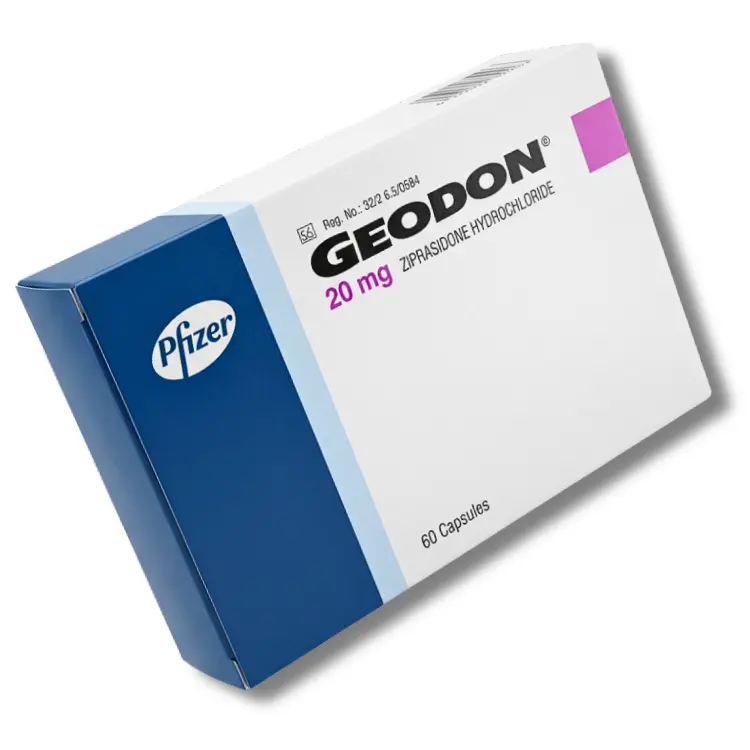
Geodon is a prescription antipsychotic medication containing the active ingredient ziprasidone. It is used to treat symptoms of schizophrenia in adults and to treat manic or mixed episodes associated with bipolar I disorder in adults.
  • ActiveIngredient: Ziprasidone hydrochloride (capsules); Ziprasidone mesylate (injection).
  • DosageForm: Oral capsules, intramuscular injection.
  • Dosage: Capsules: 20 mg, 40 mg, 60 mg, 80 mg. Injection: 20 mg/mL.
  • Indications: Treatment of schizophrenia; Acute treatment as monotherapy of manic or mixed episodes associated with bipolar I disorder; Maintenance treatment of bipolar I disorder as an adjunct to lithium or valproate.
  • Manufacturer: Pfizer Inc. (Brand); generic manufacturers include Teva Pharmaceuticals, Aurobindo Pharma, and Sun Pharmaceutical.
  • Storage: Store at 25°C (77°F); excursions permitted to 15°C–30°C (59°F–86°F).
  • Drug Status: Prescription Only

What is Geodon (Ziprasidone)?

Geodon is the brand name for the medication ziprasidone. It belongs to a class of drugs known as atypical antipsychotics, which are used to manage certain mental health conditions. For a broader understanding of this medication class, you can read about antipsychotic medicines.

Ziprasidone is thought to work by affecting the activity of neurotransmitters in the brain, particularly dopamine and serotonin. It acts as an antagonist at dopamine D2 and serotonin 5-HT2A receptors and has additional effects on other serotonin receptors. This pharmacological profile differs from other antipsychotics, such as quetiapine (Seroquel).

The medication is available in two formulations: oral capsules (e.g., Geodon 20 mg, 40 mg, 60 mg, 80 mg) and an injectable form for use in acute agitation. Generic versions of ziprasidone are also available.

How to Take Geodon

Adherence to specific administration guidelines is critical for the effectiveness and safety of Geodon. The dosing instructions provided here are general; always follow the precise directions from your prescribing physician.

Administration with Food

Geodon capsules must be taken with a meal containing at least 500 calories. Taking the medication without food can reduce its absorption by up to 50%, significantly decreasing its effectiveness. This is a non-negotiable requirement for oral therapy.

Dosage Schedule

The oral dosage is typically divided into two daily doses (morning and evening). The initial dose is often low and is gradually increased by a healthcare provider based on individual response and tolerability. Do not adjust your dose or stop taking Geodon without consulting your doctor, as abrupt discontinuation can lead to a return of symptoms.

Injectable Form

Geodon injection is reserved for the acute treatment of agitation in patients with schizophrenia. It is administered intramuscularly by a healthcare professional. Oral therapy should replace the injectable form as soon as clinically possible.

Side Effects of Geodon

All medications can cause side effects. The following table categorizes potential adverse reactions associated with ziprasidone based on reported frequency and clinical significance.

Potential Side Effects of Geodon (Ziprasidone)
Frequency CategoryReported EffectsClinical Notes
Common
  • Drowsiness or sedation
  • Dizziness
  • Nausea or upset stomach
  • Akathisia (a feeling of inner restlessness and need to move)
  • Constipation
These effects may be most noticeable when starting treatment or after a dose increase. Drowsiness can impair alertness; use caution when driving or operating machinery.
Less Common
  • Extrapyramidal symptoms (EPS) such as tremor, muscle stiffness, or slowed movement (symptoms may resemble those of Parkinson’s disease)
  • Orthostatic hypotension (dizziness upon standing)
  • Rash
  • Increased saliva production
Extrapyramidal symptoms and orthostatic hypotension should be reported to a healthcare provider.
Serious (Require Immediate Medical Attention)
  • Signs of a severe heart rhythm problem: dizziness, fainting, fast/irregular heartbeat.
  • Signs of Neuroleptic Malignant Syndrome (NMS): high fever, muscle rigidity, confusion, changes in pulse or blood pressure.
  • Signs of tardive dyskinesia: involuntary, repetitive movements of the face and body.
  • Signs of a severe allergic reaction or DRESS syndrome: rash, fever, swollen lymph nodes. For more on serious skin reactions, see information on Stevens-Johnson syndrome.
  • High blood sugar (hyperglycemia): increased thirst, frequent urination, increased hunger, weakness. For context, see diabetes mellitus.
Stop taking Geodon and seek emergency medical help if you experience symptoms of NMS, a severe allergic reaction, or heart rhythm disturbances. Other serious effects require prompt medical evaluation.

Antipsychotic use is associated with metabolic changes. Patients should be monitored for potential metabolic syndrome risk factors, such as weight gain, increased blood sugar, and altered cholesterol, although the risk with ziprasidone is generally lower than with some other agents.

What is Geodon Used For?

Geodon is prescribed for the following FDA-approved indications:

  • Treatment of Schizophrenia: Geodon is indicated for the management of symptoms of schizophrenia in adults. It is used to treat both acute episodes and for maintenance therapy.
  • Treatment of Bipolar I Disorder: Geodon is indicated for the acute treatment of manic or mixed episodes associated with bipolar I disorder in adults, either as monotherapy or as an adjunct to lithium or valproate. It is also indicated for maintenance treatment to delay recurrence of mood episodes.

Geodon is not approved for the treatment of dementia-related psychosis. Its use in children and adolescents is limited and must be determined by a specialist. Any other use is considered off-label and should only be undertaken under the direct supervision of a qualified psychiatrist.

Interactions Alcohol:

Unsafe
Concurrent use of alcohol and Geodon is contraindicated. Alcohol can potentiate the central nervous system (CNS) depressant effects of ziprasidone, leading to severe drowsiness, dizziness, and impaired judgment. This combination significantly increases the risk of accidents. For more on this risk, see our article on medication-related drowsiness and driving.

Interactions Other Medications:

Consult your doctor
Geodon has numerous serious drug interactions. It is contraindicated with other drugs known to prolong the QT interval, such as certain antiarrhythmics, antibiotics like erythromycin and azithromycin (Zithromax), and some antipsychotics. Concomitant use with strong CYP3A4 inhibitors (e.g., ketoconazole) is also contraindicated. Combining Geodon with other CNS depressants, such as hydroxyzine (Atarax), can lead to profound sedation. A complete review of all medications with the prescribing physician is mandatory.

Special Groups Pregnancy:

Consult your doctor
Data on the use of ziprasidone in pregnancy are limited. Antipsychotic use during the third trimester may lead to withdrawal or extrapyramidal symptoms in the neonate. The potential benefits and risks must be carefully evaluated by a psychiatrist and obstetrician.

Special Groups Breastfeeding:

Consult your doctor
Ziprasidone is excreted in human milk. The effects on a nursing infant are unknown. A decision should be made whether to discontinue nursing or discontinue the drug, considering the importance of the drug to the mother.

Special Groups Elderly:

Use with caution
Elderly patients with dementia-related psychosis treated with antipsychotic drugs are at an increased risk of death and cerebrovascular events, including stroke. Geodon is not approved for this use. For more on cerebrovascular risks, see cerebrovascular disease. Dose adjustment may be necessary due to age-related changes in metabolism.

Special Groups Children:

Consult your doctor
The safety and effectiveness of Geodon in children and adolescents have not been established for most indications. Any use in this population requires specialist consultation and careful monitoring.

Effects on Activities Driving:

Use with caution
Geodon commonly causes drowsiness, dizziness, and may impair judgment, thinking, or motor skills. Patients should not drive, operate complex machinery, or engage in other potentially hazardous activities until they are reasonably certain that Geodon does not adversely affect their performance.

Effects on Activities Operating Machinery:

Use with caution
The same precautions as for driving apply. The sedative effects of the medication pose a significant risk when operating any kind of machinery.

Important Safety Concerns and Considerations

QT Prolongation and Cardiac Risk

Ziprasidone causes dose-related prolongation of the QT interval on an electrocardiogram (ECG). This effect can increase the risk of developing a potentially fatal abnormal heart rhythm known as torsade de pointes. The risk is higher in patients with pre-existing heart disease, a personal or family history of long QT syndrome, electrolyte imbalances (e.g., low potassium or magnesium, which can be caused by diuretics like furosemide (Lasix)), or who are taking other QT-prolonging drugs. Geodon is contraindicated in patients with a known history of QT prolongation or recent acute myocardial infarction.

Increased Mortality in Elderly Patients with Dementia-Related Psychosis

Geodon carries a Boxed Warning (the strongest FDA warning) regarding increased mortality in elderly patients with dementia-related psychosis. Analyses of placebo-controlled trials showed a risk of death approximately 1.6 to 1.7 times higher in drug-treated patients. The causes of death were primarily cardiovascular or infectious. Geodon is not approved for this patient population.

Neuroleptic Malignant Syndrome (NMS)

NMS is a rare but life-threatening neurological disorder associated with antipsychotic drugs. Symptoms include hyperpyrexia (high fever), muscle rigidity, altered mental status, autonomic instability (irregular pulse/blood pressure), and elevated creatine phosphokinase. Immediate discontinuation of the drug and intensive symptomatic treatment are required.

Tardive Dyskinesia (TD)

TD is a syndrome of potentially irreversible, involuntary, dyskinetic movements that may develop in patients treated with antipsychotic medications. The risk appears to be greater in elderly patients, especially women, and with long-term use. If signs of TD appear, discontinuation of Geodon should be considered.

Critical Warnings for Geodon Use

Boxed Warning: Elderly Patients with Dementia-Related Psychosis

Geodon is not approved for the treatment of dementia-related psychosis. Elderly patients with dementia-related psychosis treated with antipsychotic drugs are at an increased risk of death. This risk was observed in analyses of placebo-controlled trials with various atypical antipsychotics.

Contraindications

Geodon is contraindicated in patients with:

  • A known history of QT prolongation (including congenital long QT syndrome).
  • Recent acute myocardial infarction.
  • Uncompensated heart failure.
  • Concomitant use with other drugs that have demonstrated QT prolongation.
  • Known hypersensitivity to ziprasidone.

Metabolic Changes

Hyperglycemia and diabetes mellitus have been reported in patients treated with atypical antipsychotics. Patients with risk factors for diabetes should undergo baseline and periodic fasting blood glucose testing. All patients should be monitored for symptoms of hyperglycemia.

Dyslipidemia

Undesirable alterations in lipids have been observed in patients treated with atypical antipsychotics. Appropriate clinical monitoring is recommended.

Weight Gain

Weight gain has been observed with antipsychotic use. While ziprasidone is generally associated with less weight gain than some other agents, monitoring of body weight is advisable.

Suicidal Thoughts and Behaviors

Depression and other psychiatric disorders are themselves associated with an increased risk of suicide. Close supervision of high-risk patients should accompany drug therapy, particularly at the beginning of treatment and during dose changes.

Geodon Dosage Information

Dosage must be individualized and titrated under the direct supervision of a healthcare provider. The following table outlines general dosage ranges; the prescriber’s specific instructions must be followed.

General Geodon (Ziprasidone) Dosage Guidelines
IndicationInitial Dose & TitrationTarget/Maintenance Dose RangeImportant Administration Note
Schizophrenia (Oral)20 mg twice daily with food. Dose increases may occur at intervals of not less than 2 days.20 mg to 80 mg twice daily. The efficacy of doses above 80 mg twice daily has not been systematically evaluated.Must be administered with a meal of at least 500 calories. Absorption is doubled when taken with food.
Bipolar Mania (Oral)40 mg twice daily with food on Day 1. Increase to 60 mg or 80 mg twice daily on Day 2.40 mg to 80 mg twice daily.
Acute Agitation in Schizophrenia (Injectable)10 mg to 20 mg intramuscularly as needed. A dose of 10 mg may be given every 2 hours; a dose of 20 mg may be given every 4 hours.Maximum dose: 40 mg per day. Intramuscular administration for more than 3 consecutive days has not been studied.For intramuscular use only. Should be administered by healthcare personnel.

Drug Interactions with Geodon

Geodon has a significant number of clinically important drug interactions. The following table summarizes key interactions, but a comprehensive review of all concomitant medications with the prescriber is essential.

Significant Drug Interactions with Geodon (Ziprasidone)
Interacting Drug Class/ExamplePotential EffectClinical Management
Drugs that Prolong QT Interval (e.g., Class IA & III antiarrhythmics, certain antibiotics, other antipsychotics)Additive QT prolongation, increasing the risk of torsade de pointes and sudden death.Contraindicated. Do not use concurrently.
Strong CYP3A4 Inhibitors (e.g., ketoconazole, itraconazole)Markedly increases ziprasidone plasma concentrations, increasing the risk of adverse effects, including QT prolongation.Contraindicated. Do not use concurrently.
Central Nervous System (CNS) Depressants (e.g., alcohol, benzodiazepines, opioids, certain antihistamines)Additive sedative effects and impairment of judgment, thinking, and motor skills.Avoid or use with extreme caution. Monitor for excessive sedation.
Antihypertensive AgentsZiprasidone may enhance the hypotensive effect of these drugs, leading to orthostatic hypotension.Monitor blood pressure, especially during initial titration.
Levodopa and Dopamine AgonistsZiprasidone, a dopamine antagonist, may diminish the therapeutic effect of these drugs.Concomitant use is generally not recommended.

FAQs

The most critical safety information involves its effects on the heart. Geodon can cause a serious change in your heart rhythm (QT prolongation), which can be fatal. It is also not approved for use in elderly patients with dementia due to an increased risk of death. You must take it exactly as prescribed, with food, and inform your doctor of all other medications and supplements you take.
While weight gain is a potential side effect of all atypical antipsychotics, clinical studies suggest that ziprasidone is associated with a relatively lower risk of significant weight gain compared to some other medications in its class, such as olanzapine. However, individual responses vary, and monitoring of weight is still recommended.
Taking Geodon with a meal containing at least 500 calories doubles the absorption of the drug into your bloodstream. If taken on an empty stomach, your body may only absorb about half of the dose, making the medication much less effective. This is a key requirement for its proper use.
If you miss a dose of Geodon, take it as soon as you remember with food. However, if it is almost time for your next scheduled dose, skip the missed dose and take your next dose at the regular time. Do not take two doses at the same time to make up for a missed dose.
No. You should not stop taking Geodon without talking to your doctor, even if you feel better. Suddenly stopping antipsychotic medication can cause your symptoms to return or worsen. If a decision is made to discontinue Geodon, your doctor will typically advise a gradual reduction in dose (tapering) to minimize these risks.

Additional Information

Storage and Handling

Store Geodon capsules and the injection vials at room temperature between 20°C to 25°C (68°F to 77°F). Excursions are permitted between 15°C and 30°C (59°F and 86°F). Keep the medication in its original container, tightly closed, and out of reach of children and pets. Protect from light and moisture.

Availability and Forms

Geodon (ziprasidone) is available as:

  • Oral Capsules: 20 mg, 40 mg, 60 mg, and 80 mg.
  • Intramuscular Injection: 20 mg/mL single-dose vials (requires reconstitution).

Generic ziprasidone capsules are available. The injection is only available as the brand-name product.

Monitoring Requirements

Treatment with Geodon typically involves regular monitoring by a healthcare provider. This may include:

  • Assessment of treatment response and side effects.
  • Monitoring of weight and metabolic parameters (e.g., blood glucose, lipid profile).
  • Periodic evaluation of electrolyte balance, especially potassium and magnesium.
  • Baseline and periodic electrocardiogram (ECG) monitoring in patients with cardiac risk factors.

References and Medical Sources

The information on this page is based on official prescribing information and clinical guidelines.

  1. U.S. Food and Drug Administration (FDA). Geodon (ziprasidone) Prescribing Information. [Revised May 2022]. https://www.accessdata.fda.gov/drugsatfda_docs/label/2015/020825s054%2C020919s041%2C021483s014lbl.pdf
  2. MedlinePlus. Ziprasidone. U.S. National Library of Medicine; [Updated September 2022]. https://medlineplus.gov/druginfo/meds/a699062.html
  3. American Psychiatric Association (APA). The American Psychiatric Association Practice Guideline for the Treatment of Patients With Schizophrenia. 3rd ed. 2021.
  4. Yatham, L. N., et al. Canadian Network for Mood and Anxiety Treatments (CANMAT) and International Society for Bipolar Disorders (ISBD) 2018 guidelines for the management of patients with bipolar disorder. Bipolar Disorders. 2018;20(2):97-170.

Disclaimer: The information on this site is provided for informational purposes only and is not medical advice. It does not replace professional medical consultation, diagnosis, or treatment. Do not self-medicate based on the information presented on this site. Always consult with a doctor or other qualified healthcare professional before making any decisions about your health.

You must login to add a comment.

Popular Questions

Top Members

Join the discussion

Comments are published after moderation. User opinions do not constitute medical advice.

We sincerely appreciate you taking the time to share your feedback. Every user's perspective is valuable to us.

Ask to get answers.