
iMedix Medical Content Engine 3.13.37

Hello,

Sign up to join our community!

Welcome Back,

Please sign in to your account!

Forgot Password,

Lost your password? Please enter your email address. You will receive a link and will create a new password via email.

Sorry, you do not have permission to ask a question, You must login to ask a question.

Propecia (Finasteride): Uses, dosage, side effects, warnings & patient reviews

Propecia (Finasteride)

Propecia (Finasteride)

Finasteride
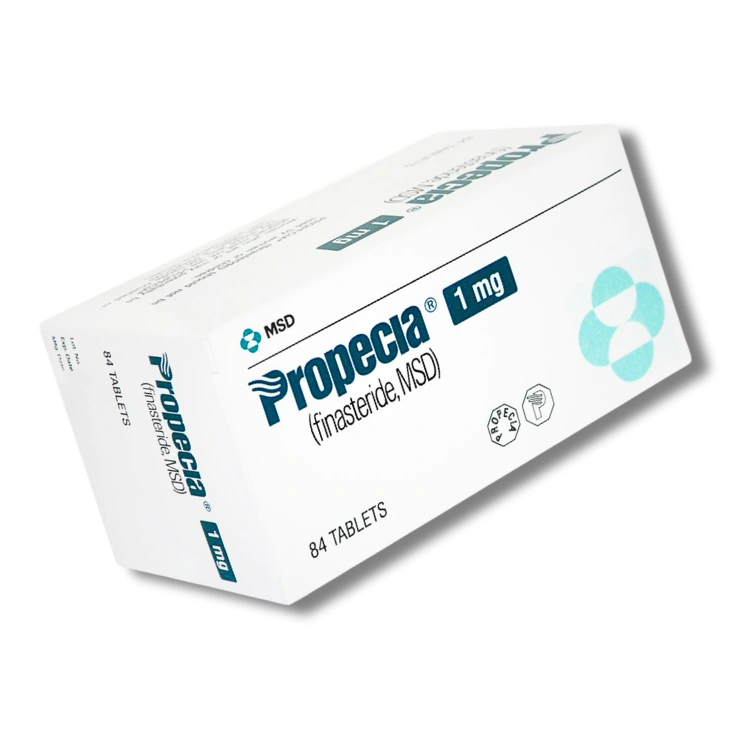
Propecia is a prescription medication containing the active ingredient finasteride. It is used to treat male pattern hair loss (androgenetic alopecia) in men by targeting a key hormone that contributes to hair follicle shrinkage.
  • ActiveIngredient: Finasteride
  • DosageForm: Oral film-coated tablet
  • Dosage: 1 mg
  • Indications: Male pattern hair loss (androgenetic alopecia) in MEN ONLY
  • Manufacturer: Merck & Co.
  • Storage: Keep at room temperature, between 15°C and 30°C (59°F and 86°F), in a tightly closed container, protected from moisture and light.
  • Drug Status: Prescription Only

What is Propecia (Finasteride)?

Propecia is the brand name for the oral medication finasteride 1 mg. It is specifically approved by the FDA for the treatment of male pattern hair loss (androgenetic alopecia) in men. A higher-dose version (5 mg) is marketed under a different brand name for the treatment of an enlarged prostate.

The medication works by inhibiting the enzyme 5-alpha reductase, which converts testosterone into dihydrotestosterone (DHT). DHT is the primary hormone responsible for shrinking hair follicles in genetically susceptible men. By lowering DHT levels in the scalp, Propecia helps to halt hair loss progression and, in many men, can stimulate regrowth.

As a branded medication, patients may have access to more affordable generic finasteride options. For an understanding of their safety and equivalence, see our guide on generic medicines.

Key Points

  • Propecia is for long-term, daily use; stopping treatment leads to a reversal of its benefits within 12 months.
  • It is approved for use in men only. Women, especially those who are or may become pregnant, must not handle crushed or broken tablets due to the risk of birth defects.
  • Visible results (Propecia before and after changes) typically take at least 3-6 months of continuous use, with maximum benefits potentially seen after 1-2 years.

How to Take Propecia

For Propecia to be effective, it must be taken consistently and correctly. Adherence to the prescribed regimen is crucial for seeing and maintaining results.

Standard Dosage and Administration

The standard Propecia dosage for male pattern hair loss is one 1 mg tablet taken by mouth once daily, with or without food. It is important to take it at approximately the same time each day to maintain steady drug levels in your body.

Do not crush, split, or chew the tablets. If a woman who is pregnant or could become pregnant comes into contact with a crushed or broken tablet, she must wash the affected area with soap and water immediately.

Duration of Treatment and Expectations

Propecia is not a quick fix. It is a maintenance treatment. You will likely need to take it for at least 3 to 6 months before noticing any change in hair loss. Some men see initial results earlier, but full Propecia results may take a year or more.

If the treatment is effective for you, you must continue taking it to maintain the benefit. Hair loss typically resumes, and any new hair gained will be lost within 6-12 months of stopping the medication.

Missed Dose

If you miss a dose, take it as soon as you remember. If it is almost time for your next dose, skip the missed dose and take your next dose at the regular time. Do not take a double dose to make up for a missed one.

Side Effects of Propecia

Like all medications, Propecia can cause side effects. It is helpful for patients to have a realistic understanding of potential side effects.

Common and Serious Side Effects of Propecia (Finasteride)
FrequencySide EffectsAction to Take
Common (May affect more than 1 in 100 users)
  • Decreased libido (sexual desire)
  • Erectile dysfunction (difficulty getting or keeping an erection)
  • Decreased volume of ejaculate
These sexual side effects are often the most concerning for users. They are typically mild and may decrease over time for some men. Discuss any persistent effects with your doctor.
Less Common / Persistent
  • Breast tenderness or enlargement (gynecomastia)
  • Skin rash
  • Depression or low mood
  • Persistent sexual side effects after stopping the drug (a condition known as Post-Finasteride Syndrome, though its incidence is debated)
Report any breast changes, skin reactions, or mood changes to your doctor. The potential for persistent side effects is a serious consideration when starting treatment.
Allergic Reaction (Seek Immediate Help)
  • Swelling of the lips, face, tongue, or throat
  • Difficulty breathing
  • Severe skin rash or hives
Stop taking Propecia and seek emergency medical attention immediately.

What is Propecia Used For?

Propecia has one primary, FDA-approved use. Its mechanism is directly tied to blocking the hormonal process that leads to hair follicle miniaturization in genetically predisposed individuals.

Treatment of Male Pattern Hair Loss (Androgenetic Alopecia)

Propecia is indicated for the treatment of male pattern hair loss in men only. This condition is characterized by a receding hairline and hair thinning on the crown (vertex) of the scalp. The medication is effective at:

  • Stopping or slowing further hair loss.
  • Stimulating regrowth of hair in some men.

Clinical studies show that after two years of use, about 83% of men taking finasteride maintained their baseline hair count or showed increased hair growth, compared to 28% of men on placebo. The question “does Propecia work” is supported by this data for the majority of users, but individual responses vary.

Important Limitations

  • Not for Women: Propecia is not approved to treat hair loss in women. Its use in women, particularly women of childbearing potential, is contraindicated due to the risk of birth defects. The search term “Propecia for women” often leads to off-label discussions, but this carries significant risk.
  • Not for Other Types of Hair Loss: It is ineffective for hair loss caused by factors such as illness, medication, iron deficiency, or childbirth (telogen effluvium). A proper diagnosis by a doctor is essential.
  • Prostate Health Connection: Finasteride was originally developed in a 5 mg dose to treat benign prostatic hyperplasia (BPH). It works by the same hormonal mechanism. For more on this, read about BPH medications.

Interactions Alcohol:

Use with caution
There is no known direct interaction between alcohol and finasteride. Moderate alcohol consumption is not expected to affect the medication's efficacy for hair loss. However, alcohol can be a factor in overall health and well-being.

Interactions Other Medications:

Consult your doctor
Propecia has few clinically significant drug interactions. However, it is always essential to inform your doctor about all medications and supplements you take. Particular caution is advised with other drugs that affect hormone levels.

Special Groups Pregnancy:

Unsafe
Propecia is contraindicated in women who are or may become pregnant. Finasteride can cause abnormalities of the external genitalia in a male fetus if a pregnant woman is exposed to even tiny amounts (e.g., by handling crushed or broken tablets). Women must avoid contact with the active ingredient. For general guidance, refer to medication safety in pregnancy.

Special Groups Breastfeeding:

Unsafe
It is not known if finasteride passes into breast milk. Due to the potential for serious adverse reactions in a nursing infant, the use of Propecia by breastfeeding women is not recommended.

Special Groups Elderly:

Safe if prescribed
Propecia is not indicated for the treatment of hair loss in elderly men. However, finasteride 5 mg is used to treat BPH in this population. Elderly patients may have other health conditions that require consideration.

Special Groups Children:

Unsafe
Propecia is not indicated for use in children. Its safety and efficacy in pediatric populations have not been established.

Effects on Activities Driving:

Safe if prescribed
Propecia is not known to cause drowsiness or impair cognitive function, so it is generally considered safe for driving.

Effects on Activities Operating Machinery:

Safe if prescribed
Similar to driving, Propecia is not expected to impair the ability to operate machinery.

Important Safety Concerns and Considerations

Impact on Prostate-Specific Antigen (PSA) Levels

This is a critical medical consideration for men over 40 or those being screened for prostate cancer. Finasteride reduces serum PSA levels by approximately 50% in men being treated for BPH. While the same precise reduction isn’t established for the 1 mg dose, doctors assume a similar effect.

Important: Any man taking Propecia must inform all his healthcare providers (especially his urologist or primary care doctor) before having a PSA test. The doctor will need to interpret the PSA result with the understanding that it is artificially low, potentially masking the detection of prostate cancer.

Post-Finasteride Syndrome (PFS)

Some men report persistent sexual, neurological, and psychological side effects (such as low libido, erectile dysfunction, depression, anxiety, and brain fog) that continue after stopping finasteride. This cluster of symptoms is referred to as Post-Finasteride Syndrome. While its exact mechanism and prevalence are debated within the medical community, it is a serious concern reported in medical literature. Patients should be aware of this potential risk when starting treatment.

Mental Health and Mood Changes

Depression and anxiety have been reported in users of finasteride. Patients with a history of mental health conditions should discuss this with their doctor before starting Propecia. It is important to monitor mood while on the medication. For related information on the interplay between mood, medication, and sexual health, see our guide on antidepressants and ED.

Risk of High-Grade Prostate Cancer

Large studies on finasteride 5 mg for prostate cancer prevention showed a reduced overall risk of prostate cancer but a slight increase in the relative risk of being diagnosed with a higher-grade (more aggressive) cancer. The relevance of this finding to men taking the 1 mg dose for hair loss is unclear but is a point of discussion in risk-benefit analyses.

Critical Warnings for Propecia Use

Pregnancy and Fetal Risk Warning

Propecia is contraindicated for use in women who are or may become pregnant. Exposure to finasteride during pregnancy—either through ingestion or skin contact with crushed tablets—can cause developmental abnormalities of the external genitalia in a male fetus. Women must not handle broken or crushed Propecia tablets if they are pregnant or could become pregnant.

PSA Monitoring Warning

As detailed in the Concerns section, Propecia lowers PSA levels. Healthcare providers must be informed of finasteride use to correctly interpret PSA test results for prostate cancer screening. Failure to do so could lead to a false sense of security.

Warning Regarding Donating Blood

Men taking Propecia should not donate blood until at least 1 month has passed since their final dose. This is to prevent administration of finasteride-containing blood to a pregnant woman, which could pose a risk to a male fetus.

Warning About Breast Changes

Patients should be advised to promptly report any changes in their breast tissue, such as lumps, pain, or enlargement (gynecomastia), to their doctor. While uncommon, these changes should be evaluated.

Effect on Semen Characteristics

Finasteride may adversely affect semen parameters (reduction in semen volume) in some men. Evaluation of infertile men should include consideration of medication history, including finasteride use.

Propecia Dosage Information

Propecia is approved for use in a single, standard dose for the treatment of male pattern hair loss. Deviating from this dose is not recommended without medical supervision.

Propecia (Finasteride) Dosage Guidelines
ConditionStandard DosageKey Information
Male Pattern Hair Loss (Androgenetic Alopecia)1 mg taken orally once daily.
  • This is the only FDA-approved dose for hair loss.
  • Treatment is long-term. Benefits are lost upon discontinuation.
  • No dosage adjustment is needed for elderly patients or those with mild to moderate kidney impairment. Use with caution in severe impairment.
Note on Higher Doses (e.g., 5 mg)5 mg taken orally once daily.
  • This is the dose approved for treating benign prostatic hyperplasia (BPH).
  • It is not the recommended dose for hair loss. Using the 5 mg tablet for hair loss increases cost and the risk of side effects without proven additional benefit for the scalp.

Important Administration Notes

  • Consistency is Key: Take the tablet at roughly the same time each day to help with adherence.
  • Do Not Split 5 mg Tablets: Attempting to split a 5 mg tablet to create a 1 mg dose is not recommended due to dose inaccuracy and the risk of exposing women to powder from the crushed tablet.
  • Duration: Continuous daily use for a minimum of 3 months is required to assess initial efficacy. Most studies evaluate efficacy at 1-2 years.

Drug Interactions with Propecia

Propecia (finasteride) has a relatively low potential for significant drug interactions. However, informing your healthcare provider of all concomitant medications remains essential.

Known and Potential Drug Interactions with Propecia
Interacting SubstancePotential EffectRecommendation
Saw Palmetto (herbal supplement)Theoretical interaction. Saw palmetto may also inhibit 5-alpha reductase. The combined effect is unknown.Concomitant use is not recommended due to a lack of safety data and potential for additive effects/side effects.
Other 5-alpha reductase inhibitors (e.g., dutasteride)Additive pharmacological effect. This combination is not indicated for any condition.Concomitant use is contraindicated.
Medications metabolized by CYP3A4Finasteride is metabolized by CYP3A4. Potent inhibitors (e.g., ketoconazole) could theoretically increase finasteride levels, but no clinically significant interactions have been reported.No action typically needed, but be aware.

Note: No clinically important interactions have been identified between finasteride and medications like acetaminophen, alpha-blockers, angiotensin-converting enzyme (ACE) inhibitors, beta-blockers, calcium channel blockers, cardiac nitrates, diuretics, H2 antagonists, or HMG-CoA reductase inhibitors.

FAQs

Visible results take time. Most men need to take Propecia daily for at least three to six months before noticing a decrease in hair loss or initial regrowth. It can take one to two years of continuous use to see maximum Propecia results. Patience and consistency are key.
The benefits of treatment are reversible. Any hair you have maintained or regrown while taking Propecia will typically be lost within 6 to 12 months of stopping the medication. Hair loss will then resume at the same rate it would have if you had never taken the drug.
In clinical trials, sexual side effects (like decreased libido and erectile dysfunction) resolved in men who stopped taking finasteride. However, there are persistent reports in medical literature and from patients of sexual, neurological, and psychological side effects that continue after stopping the drug, a condition known as Post-Finasteride Syndrome (PFS). The possibility of persistent effects should be discussed with your doctor.
No. Propecia is not approved for the treatment of hair loss in women and is contraindicated in women who are or may become pregnant due to the risk of birth defects in a male fetus. Its use in postmenopausal women with hair loss is off-label and not generally recommended due to a lack of proven efficacy and the ongoing risk profile.
Propecia is a prescription medication. It should only be purchased from a licensed pharmacy with a valid prescription from a doctor who has evaluated you. Be extremely cautious of online sources that sell prescription drugs without a prescription, as they are often sources of counterfeit products. For safe practices, refer to our guide on buying medicines online safely.

Additional Information

Storage and Handling

Store Propecia tablets at room temperature between 15°C and 30°C (59°F to 86°F). Keep the container tightly closed and protect from light and moisture. Keep out of reach of children and pets. Do not flush unused medication.

Obtaining Medication Safely and Cost Considerations

Propecia (finasteride 1 mg) is a branded medication. The active ingredient is also available as a generic, which is typically significantly less expensive and is considered therapeutically equivalent. When discussing treatment with your doctor, you can ask about generic finasteride options to reduce cost.

Given that hair loss treatment is often a long-term commitment, cost is a valid concern. However, prioritizing safety by obtaining medication through legitimate, licensed channels is paramount over seeking the lowest price from unverified online sellers.

Reporting Side Effects

If you experience a side effect, report it to your prescribing doctor. You can also report adverse drug events directly to the relevant national health authority (e.g., the FDA in the United States via the MedWatch program). This contributes to broader drug safety knowledge.

References and Medical Sources

The information on this page is compiled from reputable medical sources, prescribing information, and clinical guidelines.

  1. U.S. Food and Drug Administration (FDA). Propecia (finasteride) Prescribing Information. [Updated 2022]. https://www.accessdata.fda.gov/drugsatfda_docs/label/2012/020788s020s021s023lbl.pdf
  2. MedlinePlus. Finasteride. U.S. National Library of Medicine; [Updated 2022]. https://medlineplus.gov/druginfo/meds/a698016.html
  3. American Academy of Dermatology (AAD). Hair Loss: Diagnosis and Treatment. https://www.aad.org/public/diseases/hair-loss/treatment
  4. Drugs.com. Finasteride Professional Monograph. Drugs.com; [Updated 2024]. https://www.drugs.com/monograph/finasteride.html

Disclaimer: The information on this site is provided for informational purposes only and is not medical advice. It does not replace professional medical consultation, diagnosis, or treatment. Do not self-medicate based on the information presented on this site. Always consult with a doctor or other qualified healthcare professional before making any decisions about your health.

2 User Reviews

  1. Before ordering I would like to know if this treatment helps? Very conflicting comments on these pills in the internet

You must login to add a comment.

Popular Questions

Top Members

Join the discussion

Comments are published after moderation. User opinions do not constitute medical advice.

We sincerely appreciate you taking the time to share your feedback. Every user's perspective is valuable to us.

Ask to get answers.