
iMedix Medical Content Engine 3.13.37

Hello,

Sign up to join our community!

Welcome Back,

Please sign in to your account!

Forgot Password,

Lost your password? Please enter your email address. You will receive a link and will create a new password via email.

Sorry, you do not have permission to ask a question, You must login to ask a question.

Provera: Uses, dosage, side effects, warnings & patient reviews

Provera

Provera

Provera

Medroxyprogesterone acetate
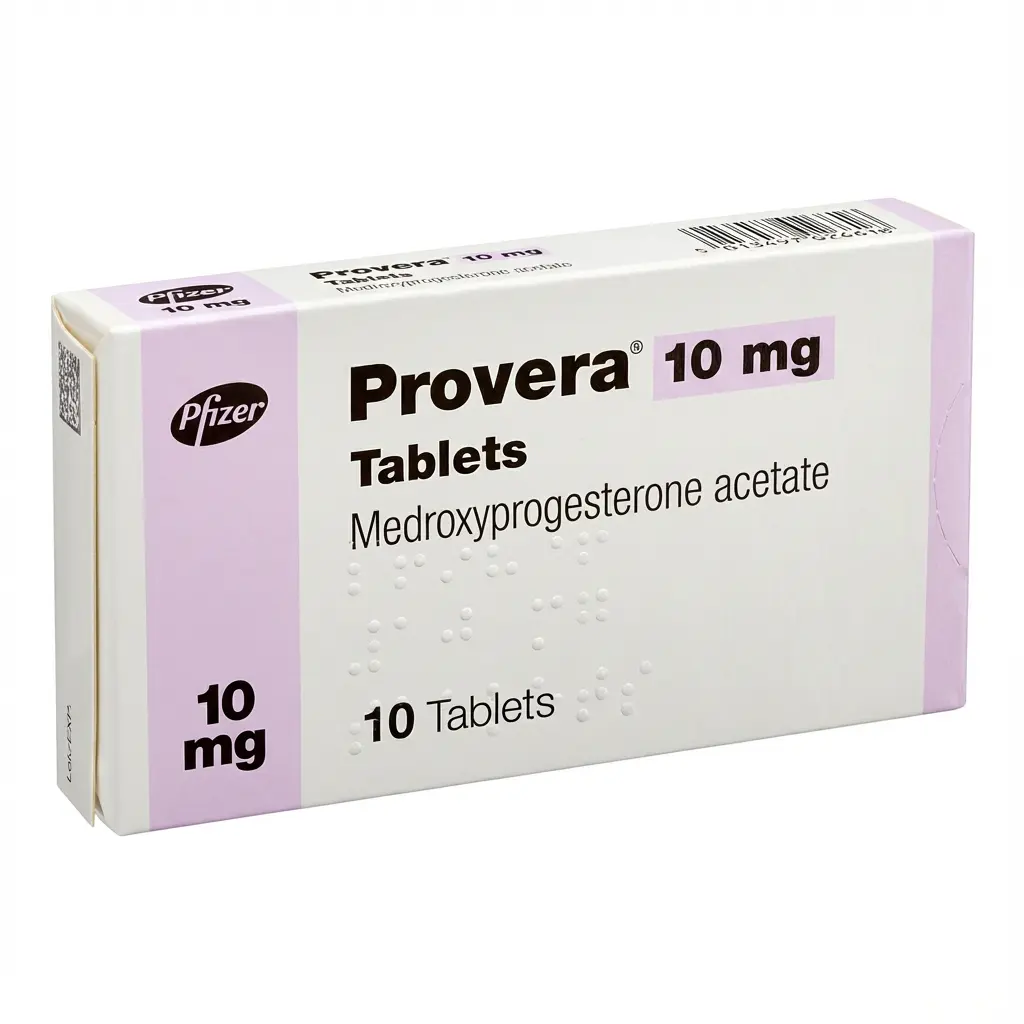
Provera is a prescription medication containing the active ingredient medroxyprogesterone acetate, a type of synthetic progesterone (progestin). It is primarily used to treat secondary amenorrhea (missed periods) and abnormal uterine bleeding caused by a hormonal imbalance, and to protect the uterine lining in women undergoing estrogen replacement therapy.
  • ActiveIngredient: Medroxyprogesterone acetate
  • DosageForm: Oral tablets
  • Dosage: 2.5 mg, 5 mg, 10 mg.
  • Indications: Secondary amenorrhea; Abnormal uterine bleeding due to hormonal imbalance (in the absence of organic pathology such as fibroids or uterine cancer); Prevention of endometrial hyperplasia in postmenopausal women receiving daily oral conjugated estrogens.
  • Manufacturer: Pfizer Inc. (Brand); generic manufacturers include Teva Pharmaceuticals, Greenstone LLC, and Amneal Pharmaceuticals.
  • Storage: Store at room temperature 20°C–25°C (68°F–77°F); protect from moisture and light.
  • Drug Status: Prescription Only

What is Provera?

Provera is the brand name for the prescription drug medroxyprogesterone acetate, a synthetic form of the hormone progesterone. It is classified as a progestin and is a member of the women’s health medication category.

Medroxyprogesterone acetate works by transforming the uterine lining (endometrium). In a woman with adequate levels of estrogen, it changes the endometrium from a proliferative state to a secretory state. This action helps regulate the menstrual cycle, stops abnormal bleeding from an overgrown lining, and induces a scheduled menstrual period. Importantly, it provides essential protection against endometrial hyperplasia (overgrowth that can lead to cancer) in postmenopausal women who are taking estrogen alone.

It is crucial to distinguish oral Provera tablets from the injectable contraceptive formulation, Depo-Provera, which contains the same active ingredient but is used for long-term birth control. Provera tablets are not FDA-approved for contraception.

How to Take Provera

Provera must be taken exactly as prescribed by a healthcare provider. The dosage and duration of treatment depend entirely on the specific medical condition being treated.

Administration Guidelines

Provera tablets are taken orally, usually once daily. They may be taken with or without food. For conditions like secondary amenorrhea or abnormal uterine bleeding, treatment is typically given for 5 to 10 days. Bleeding usually occurs within 3 to 7 days after stopping the medication.

When used in combination with estrogen therapy for menopausal hormone therapy, Provera is usually taken for 10-14 days each month (cyclic therapy) or daily (continuous therapy), following the estrogen. This regimen is critical to prevent estrogen-induced endometrial overgrowth. For information on managing menopause symptoms, see this resource on menopause.

Important Notes

  • Follow the Prescribed Schedule: Do not alter the dosing schedule or duration without consulting your doctor.
  • Missed Dose: Guidance on missed doses is included in official prescribing information. Patients should contact their healthcare provider for individual advice.
  • Completion of Course: For cyclic therapy, complete the full prescribed course to achieve the intended hormonal effect and scheduled withdrawal bleed.

Side Effects of Provera

Like all hormonal medications, Provera can cause side effects. The following table categorizes potential adverse reactions based on frequency.

Common and Serious Side Effects of Provera
FrequencySide EffectsClinical Context
Common
  • Headache
  • Breast tenderness or discomfort
  • Abdominal bloating or cramps
  • Nausea
  • Dizziness
  • Fatigue
  • Irregular vaginal bleeding or spotting
  • Mood changes (e.g., depression, irritability)
  • Acne or skin reactions
  • Changes in weight or appetite
These side effects are often transient and may diminish with continued use. Weight changes and fluid retention are common concerns. For resources on managing weight, see the weight loss category.
Less Common / Serious
  • Severe allergic reactions (rash, itching, swelling)
  • Migraine headaches
  • Severe abdominal pain (may indicate pancreatitis or gallbladder disease; see cholecystitis)
  • Jaundice (yellowing of skin/eyes) indicating liver problems
  • Sudden severe headache, vision changes, speech difficulties (signs of a thrombotic event)
  • Lumps in the breast
  • Severe depression or mood disorders
  • Signs of a blood clot (e.g., leg pain/swelling, chest pain, shortness of breath)
These require immediate medical evaluation. The risk of blood clots, stroke, and gallbladder disease is increased with progestin therapy.

Bone Health Consideration

Long-term use of progestins, particularly at higher doses, may affect bone mineral density. Adequate calcium and vitamin D intake is important. For related supplements, refer to information on adult multivitamins containing these nutrients.

What is Provera Used For?

Provera is prescribed for specific hormonal conditions in women. Its uses are based on its ability to regulate and stabilize the endometrial lining.

FDA-Approved Uses

  • Secondary Amenorrhea: Treatment of missed menstrual periods (amenorrhea) in women who have previously had cycles, where the cause is not pregnancy.
  • Abnormal Uterine Bleeding: Treatment of irregular, heavy, or prolonged uterine bleeding due to a hormonal imbalance (dysfunctional uterine bleeding) in the absence of organic pathology.
  • Endometrial Protection: Prevention of endometrial hyperplasia (a precursor to uterine cancer) in postmenopausal women who are receiving conjugated estrogen therapy. This is a critical component of menopausal hormone therapy.

Off-Label Uses (Physician-Directed)

Under medical supervision, Provera may also be used in other contexts, such as part of a treatment regimen for endometriosis or in specific fertility protocols. For instance, it is sometimes used to induce a withdrawal bleed before starting ovulation induction drugs like Clomid (clomiphene). It is not a first-line treatment for endometriosis; alternatives like Danazol may be considered for that condition.

Interactions Alcohol:

Consult your doctor
While no direct pharmacokinetic interaction is well-defined, alcohol may exacerbate certain side effects like dizziness or headache. Smoking is a major concern. Cigarette smoking while using hormone therapy dramatically increases the risk of serious cardiovascular events, including blood clots, stroke, and heart attack. This risk is age and dose-dependent. For more on stroke risks, see cerebrovascular disease.

Interactions Other Medications:

Consult your doctor
Provera may interact with drugs that induce liver enzymes (e.g., barbiturates, carbamazepine, rifampin), potentially reducing its effectiveness. Inform your healthcare provider of all medications and supplements you are taking.

Special Groups Pregnancy:

Unsafe
Medroxyprogesterone acetate may cause fetal harm if administered during the first four months of pregnancy. It is contraindicated in known or suspected pregnancy. It is not a treatment for threatened miscarriage. For general guidance, see medication safety in pregnancy.

Special Groups Breastfeeding:

Consult your doctor
Small amounts of medroxyprogesterone are excreted in breast milk. The effect on the nursing infant has not been fully determined, though the injectable form is considered compatible with breastfeeding. Use during lactation requires a careful risk-benefit assessment.

Special Groups Elderly:

Use with caution
Older women may have increased sensitivity to the drug and a higher baseline risk for cardiovascular disease and dementia, which are concerns associated with hormone therapy (see Black Box Warning). The lowest effective dose should be used.

Special Groups Children:

Unsafe
Provera is not indicated for use in pediatric populations.

Effects on Activities Driving:

Unsafe
Since Provera can cause dizziness, patients should assess their individual response before driving or operating vehicles.

Effects on Activities Operating Machinery:

Use with caution
The same caution applies to operating machinery. Individuals should be aware of potential dizziness or fatigue.

Important Safety Concerns and Black Box Warning

Provera carries significant safety considerations that must be understood before use.

Cardiovascular and Thromboembolic Risks

The FDA has issued a Black Box Warning, the strongest safety alert, for estrogen-plus-progestin therapy. It states that this therapy should not be used for the prevention of cardiovascular disease or dementia. Furthermore, it is associated with increased risks of:

  • Deep vein thrombosis (DVT) and pulmonary embolism (PE)
  • Stroke and myocardial infarction (heart attack)
  • Invasive breast cancer

These risks were identified in the Women’s Health Initiative (WHI) study. The risk-benefit profile must be individually evaluated, and therapy should be prescribed at the lowest effective dose for the shortest duration consistent with treatment goals.

Malignancy Risks

While Provera is used to prevent estrogen-induced endometrial cancer, the effect of combined hormone therapy on breast cancer risk is complex. The WHI study found an increased risk of invasive breast cancer with combined therapy. Regular breast exams and mammograms are recommended for women on hormone therapy.

Visual Disturbances

Discontinuation of progestin therapy should be considered if there is a sudden onset or change in migraine patterns, or if there is a sudden partial or complete loss of vision, sudden onset of proptosis (bulging eyes), diplopia (double vision), or other ocular disturbances.

Glucose Tolerance and Fluid Retention

Progestins may decrease glucose tolerance. Diabetic patients should be monitored closely. Because progestins may cause some degree of fluid retention, they should be used with caution in patients with conditions that might be aggravated by this effect (e.g., epilepsy, migraine, asthma, cardiac or renal dysfunction).

Critical Warnings and Contraindications

Absolute Contraindications

Provera is contraindicated in patients with:

  • Known or suspected pregnancy.
  • Current or past history of thromboembolic disorders (e.g., DVT, PE, stroke, MI).
  • Severe liver disease or liver tumors.
  • Known or suspected hormone-sensitive cancers (e.g., breast, endometrial).
  • Undiagnosed abnormal genital bleeding.
  • Known hypersensitivity to medroxyprogesterone acetate or any tablet component.

Pregnancy and Fertility Warning

Provera is not indicated for use during pregnancy. It should not be used as a diagnostic test for pregnancy. Use of the drug in early pregnancy may increase the risk of miscarriage, fetal congenital anomalies (including heart and limb defects), and low birth weight.

Bone Mineral Density (BMD)

Long-term use of the injectable form (Depo-Provera) is associated with significant loss of BMD. The effect of oral medroxyprogesterone acetate on BMD is less pronounced but should be considered, especially in women with other risk factors for osteoporosis. For non-hormonal alternatives for bone protection in postmenopausal women, see information on Evista (raloxifene).

Depression and Mood Disorders

Provera can exacerbate depression or other mood disorders. Patients with a history of depression should be closely monitored. The drug should be discontinued if serious depression occurs.

Provera Dosage Information

Dosage is highly individualized based on the condition being treated and patient response. The following table outlines standard regimens; always follow the specific prescription from your healthcare provider.

Standard Provera (Medroxyprogesterone Acetate) Dosage Guidelines
IndicationTypical Dosage RegimenNotes
Secondary AmenorrheaProvera 5 mg or 10 mg orally once daily for 5 to 10 days.Withdrawal bleeding usually occurs within 3 to 7 days after completion of therapy.
Abnormal Uterine Bleeding (Hormonal Imbalance)Provera 5 mg or 10 mg orally once daily for 5 to 10 days, beginning on Day 16 or Day 21 of the menstrual cycle.Used to regulate the cycle. Therapy may be repeated for several cycles as directed.
Endometrial Protection with Estrogen Therapy (Postmenopausal) Cyclic Therapy: Provera 5 mg or 10 mg orally once daily for the last 10-14 days of each estrogen cycle.
Continuous Therapy: Provera 2.5 mg or 5 mg orally once daily, concomitantly with estrogen.
The regimen (cyclic vs. continuous) is determined by the physician based on individual patient factors and treatment goals.

Important Administration Notes

  • Do Not Adjust Dose: Do not change your dose or stop taking Provera without consulting your doctor, as this may cause irregular bleeding or loss of therapeutic effect.
  • Monitoring: Regular follow-up with a healthcare provider is necessary to monitor response, side effects, and continued need for therapy.
  • Missed Periods: If you are taking Provera for amenorrhea and do not have a withdrawal bleed after a course, contact your doctor to rule out pregnancy or other conditions.

Drug Interactions with Provera

Medroxyprogesterone acetate may interact with other medications, potentially altering its effectiveness or increasing side effect risks. A comprehensive review of all concurrent therapies with a healthcare provider is essential.

Selected Drug Interactions with Provera
Interacting Substance Class/ExamplePotential EffectClinical Recommendation
Enzyme-Inducing Drugs
(e.g., carbamazepine, phenytoin, rifampin, St. John’s Wort)
May increase the metabolism (breakdown) of medroxyprogesterone, reducing its plasma concentration and therapeutic effect.Clinical response should be monitored. A higher dose of Provera may be required.
Anticoagulants
(e.g., warfarin)
Progestins may increase or decrease the anticoagulant effect. The net effect is unpredictable.Close monitoring of prothrombin time (INR) is recommended when starting or stopping Provera in patients on anticoagulants.
Insulin and Oral HypoglycemicsProgestins may decrease glucose tolerance, potentially increasing insulin requirements.Diabetic patients should be monitored closely for changes in glycemic control.
Other Hormonal TherapiesConcomitant use with other steroid hormones (estrogens, androgens) is the basis of combination therapy but should be medically supervised.Dosages are carefully calibrated in combination regimens (e.g., for menopausal hormone therapy).

FAQs

Withdrawal bleeding (a menstrual period) typically begins within 3 to 7 days after completing a 5- to 10-day course of Provera prescribed for secondary amenorrhea or to induce a period. If bleeding does not occur, consult your healthcare provider to rule out pregnancy or other conditions.
No. Oral Provera tablets are not FDA-approved for contraception. While medroxyprogesterone acetate is the active ingredient in the injectable contraceptive Depo-Provera, the oral tablets are prescribed for different indications related to menstrual cycle regulation and endometrial protection. They are not taken in the same continuous manner as daily birth control pills.
Estrogen therapy alone effectively relieves menopausal symptoms but significantly increases the risk of endometrial hyperplasia and cancer by stimulating the uterine lining. Adding a progestin like Provera counteracts this effect by transforming the lining, thereby providing essential protection against these risks. This is known as estrogen-progestogen therapy (EPT).
Weight change, which can include gain or loss, is a reported side effect of Provera. This may be related to fluid retention, changes in appetite, or other metabolic factors. Not all women experience this effect. Discuss any significant weight changes with your doctor.
Sudden severe headaches, migraines with new patterns, or any visual disturbances (e.g., loss of vision, double vision) are potentially serious. You should discontinue Provera immediately and contact your healthcare provider for prompt evaluation, as these could be signs of a thrombotic event (like a stroke) or other neurological issues.

Additional Information

Storage and Handling

Store Provera tablets at room temperature between 20°C to 25°C (68°F to 77°F), in a tightly closed container, and away from light, excess heat, and moisture. Keep all medications out of the reach of children and pets.

Active Ingredient and Availability

The active ingredient is medroxyprogesterone acetate. Provera is the brand-name product; generic versions are widely available. Generic medications contain the same active ingredient in the same strength and are required to be bioequivalent to the brand-name drug.

Reporting Side Effects

Patients are encouraged to report negative side effects of prescription drugs to their healthcare provider and to the relevant national regulatory authority (e.g., the FDA in the United States via MedWatch). Reporting helps monitor drug safety in the broader population.

Medical Supervision

Provera is a potent hormonal medication. Its use requires a prescription and ongoing medical supervision to ensure the indication remains appropriate, the dose is correct, and any potential risks are monitored. Regular check-ups, including gynecological exams and breast screenings as appropriate, are part of safe therapy.

References and Medical Sources

The information on this page is based on official prescribing information and authoritative medical guidelines.

  1. U.S. Food and Drug Administration (FDA). Provera (medroxyprogesterone acetate) Tablets Prescribing Information. [Revised 2018]. https://www.accessdata.fda.gov/drugsatfda_docs/label/2007/011839s071lbl.pdf
  2. American College of Obstetricians and Gynecologists (ACOG). Practice Bulletin No. 136: Management of Abnormal Uterine Bleeding Associated With Ovulatory Dysfunction. Obstetrics & Gynecology. 2013.
  3. The North American Menopause Society (NAMS). The 2022 Hormone Therapy Position Statement of The North American Menopause Society. Menopause. 2022.
  4. Drugs.com. Medroxyprogesterone Professional Monograph. [Updated 2024]. https://www.drugs.com/monograph/medroxyprogesterone.html

Disclaimer: The information on this site is provided for informational purposes only and is not medical advice. It does not replace professional medical consultation, diagnosis, or treatment. Do not self-medicate based on the information presented on this site. Always consult with a doctor or other qualified healthcare professional before making any decisions about your health.

You must login to add a comment.

Popular Questions

Top Members

Join the discussion

Comments are published after moderation. User opinions do not constitute medical advice.

We sincerely appreciate you taking the time to share your feedback. Every user's perspective is valuable to us.

Ask to get answers.