

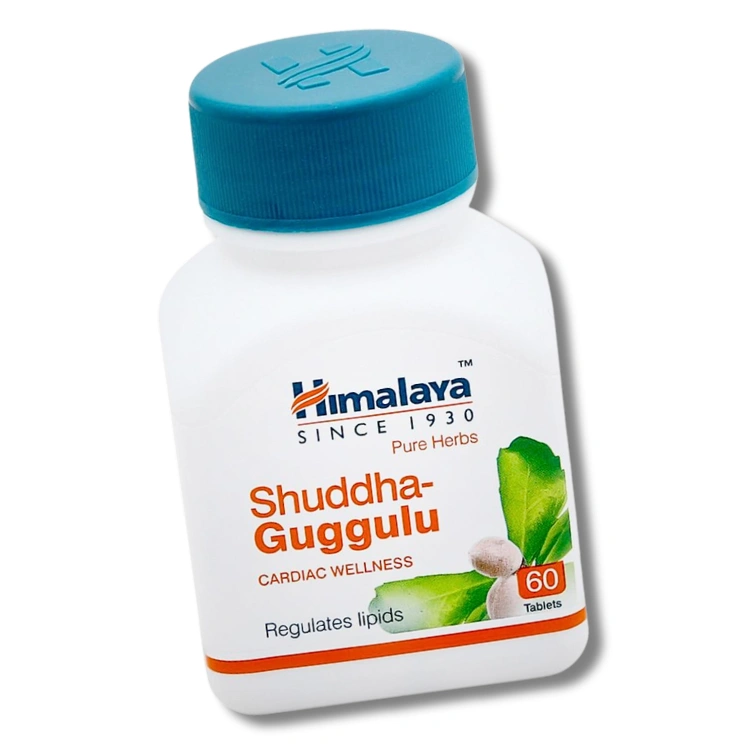
What is Shuddha Guggulu?
Shuddha Guggulu. A name that resonates with ancient echoes. It is the essence of a resin, drawn from the Commiphora wightii, a tree known in Ayurvedic lore as Indian Bdellium. The prefix “Shuddha” is key—a testament to a traditional process of refinement, a purification rite intended to coax forth its purest nature and gentle its spirit. It usually comes to us as a humble oral tablet or capsule. For untold ages, within the continuous narrative of Ayurveda, Guggulu has been a presence of note, a substance considered to hold a dialogue with the body’s subtle energies. Its traditional place in Ayurvedic thought is expansive. It has been associated with encouraging the body’s wise management of its inner resources, with fostering a sense of flowing ease in the body’s framework, with lending support to journeys of mindful equilibrium, and more broadly, with serving as an emissary of inner clarity and systemic renewal. Shuddha Guggulu is not perceived as a forceful actor upon a singular stage, but rather as a quiet whisper, inviting the body towards its own inherent state of balance and untroubled being.
Its Place in Tradition: A Reverent Gaze
To contemplate Shuddha Guggulu’s traditional significance is to peer into a worldview that values harmony and the wisdom of nature above all. Ayurveda does not speak of it in terms of isolated chemical actions. Instead, it considers the resonant signature Shuddha Guggulu carries, a quality passed down through millennia of observation and experience. What did the ancient sages perceive? Perhaps they saw in its essence a reflection of nature’s own capacity for renewal, for the gentle clearing away of the unnecessary, allowing vitality to flow unimpeded. It is not so much what Shuddha Guggulu *does* in an active, interventionist sense, but rather the *condition* it is thought to invite within the body—a condition of greater internal lucidity, of pathways made clear. Imagine an old, revered manuscript, its script obscured by the dust of ages. Shuddha Guggulu, in the traditional mind, might be likened not to a chemical that erases the dust, but to a gentle, patient hand that, over time, allows the original clarity of the script to re-emerge, its wisdom once again accessible. This fostering of an unobstructed internal environment, this invitation to inherent brightness, is perhaps the truest echo of its long-held place in Ayurvedic tradition. The guggulsterones, compounds that modern science has identified within its matrix, are, from this perspective, merely the physical conduits through which this anciently perceived potential for clarity and balance is thought to be expressed.
Brand vs. Generic Context (Herbal Supplement)
Shuddha Guggulu, being a cornerstone of Ayurvedic herbalism, is prepared and offered by a diverse array of pharmaceutical firms and individual practitioners devoted to Ayurvedic principles. While the fundamental ingredient is the refined resin of the Commiphora wightii tree, and the guiding philosophy of its preparation is rooted in classical Ayurvedic teachings, subtle variations can exist between different makers. These differences might pertain to the geographic sourcing of the raw Guggulu resin, the specific methodologies employed in its “Shuddhan” (purification process), the ultimate concentration of the extract, and the extent of standardization to key phytochemicals such as guggulsterones. Esteemed Ayurvedic brands, including Himalaya Wellness, Dabur, Baidyanath, and Patanjali Ayurved, among many others, present their own distinct formulations of Shuddha Guggulu. Within the domain of traditional herbal supplements like this one, the concept of “brand versus generic” does not align precisely with the paradigm seen in conventional pharmaceuticals. Each brand essentially provides its own carefully curated version of the herb, adhering to particular standards or traditional preparation techniques. Consumers often base their choices on the established reputation of a given brand, their trust in its purification and manufacturing practices, or specific recommendations from Ayurvedic healthcare professionals, rather than seeking a “generic equivalent” in the strict pharmaceutical sense, although all endeavor to convey the traditionally understood benefits associated with Shuddha Guggulu.
Available Forms
Shuddha Guggulu is chiefly formulated for oral administration, generally appearing as either tablets or capsules. This mode of delivery is a widely adopted convention for Ayurvedic herbal remedies, as it permits a convenient and accurately measured intake of the processed and often powdered or concentrated herbal material. These tablets or capsules are intended to be taken with water, usually in accordance with a schedule recommended by the product’s manufacturer or an Ayurvedic wellness advisor, such as one or two doses administered daily. While the physical appearance of the tablets or capsules—for instance, their color, size, or shape—may differ between various brands, the vital core is the purified Commiphora wightii resin extract, which is frequently standardized to ensure a consistent level of its active guggulsterone constituents. Packaging commonly consists of bottles or blister-style packs containing a specific number of doses, designed to support a regular course of supplementation according to traditional use.
Unique Features
Shuddha Guggulu commands a distinct and honored position within the extensive herbal pharmacopoeia of Ayurveda, marked by several truly singular attributes. Its most defining characteristic is its profound traditional reputation as an agent of “Shodhana”—a term denoting purification and clarification. It is a substance traditionally believed to possess the subtle capacity to encourage the clearing of accumulated metabolic byproducts (often referred to as “Ama” in Ayurveda) and to promote openness and clarity within the body’s myriad channels (“Srotas”). This foundational concept of fostering internal purity is traditionally regarded as the very wellspring of its broad spectrum of supportive applications, including its historical use in relation to healthy lipid metabolism and the promotion of comfort and suppleness in the joints. Another genuinely unique aspect is the classical “Shuddhan” or purification ritual that the raw Guggulu resin undergoes. This meticulous, time-honored process, explicitly detailed in ancient Ayurvedic texts, is understood not merely as a means of removing physical impurities but also as a way to significantly enhance the resin’s therapeutic potential and to mitigate any possibility of harshness or untoward effects. Furthermore, the identification by contemporary scientific research of specific bioactive compounds, such as guggulsterones E and Z, within Shuddha Guggulu provides a modern biochemical lens that often aligns with and corroborates its historically observed health benefits. This serves to create a bridge between the deep insights of ancient tradition and the validations of modern scientific inquiry, a characteristic hallmark of many of Ayurveda’s most revered and enduring herbal remedies.


My cholesterol was creeping up a bit more than I liked, yeah. Doctor suggested Shuddha Guggulu as something to try alongside cleaning up my diet. Been taking it for maybe 4-5 months now? It’s easy enough, no weird side effects or anything. And the latest blood work showed things moving in the right direction, which is a relief, tell you what. So, seems to be a good shout for me.