

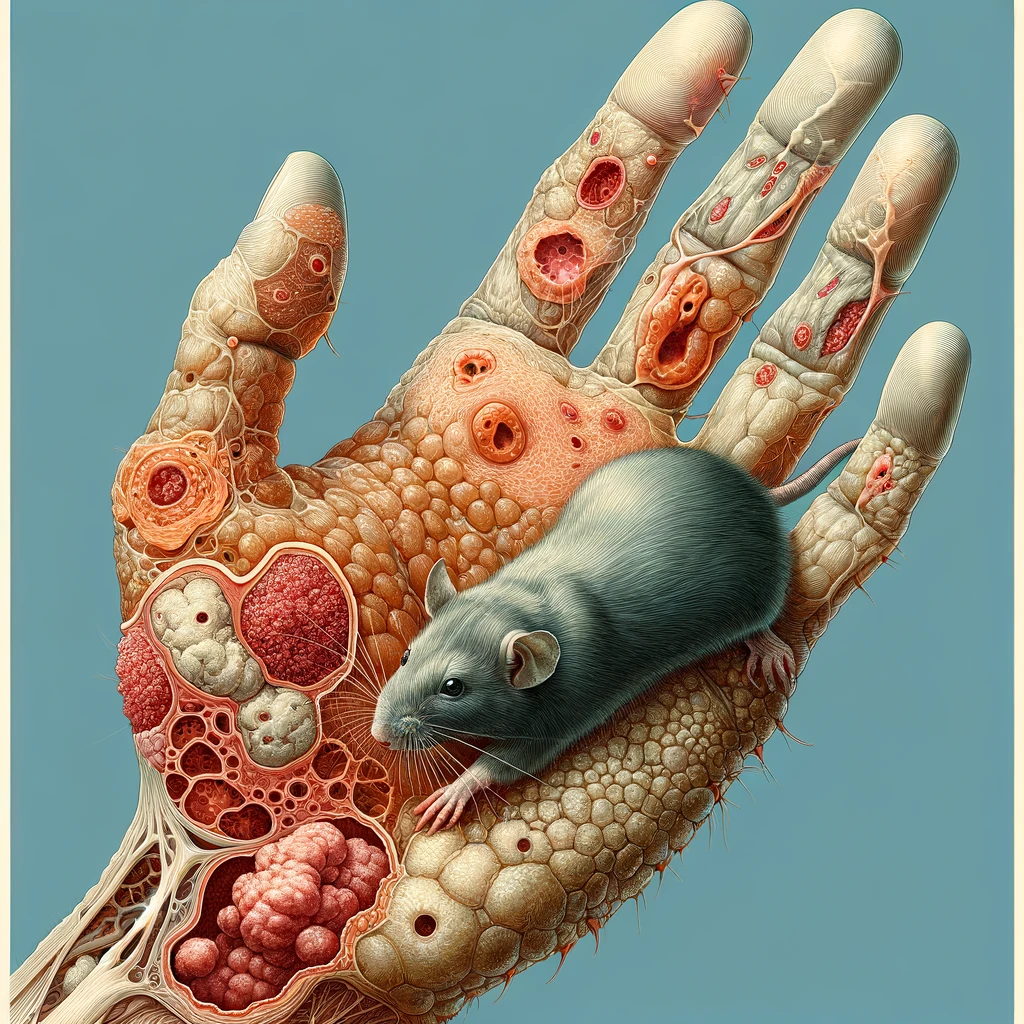
What is Rat-bite fever?
The term Rat-bite fever actually describes two separate systemic illnesses, both initiated by the introduction of bacteria from a rodent. The more prevalent form in North America is streptobacillary RBF, which results from infection by the bacterium Streptobacillus moniliformis. A different form, known as spirillary RBF or Sodoku, is more common in Asia and is produced by the bacterium Spirillum minus. In both instances, the bacteria enter the bloodstream and trigger a widespread inflammatory response, leading to a full-body illness rather than just a localized wound infection.
Causes:Rat-bite fever is initiated when specific bacteria from a rodent gain entry into the human body. The infection is not airborne; it requires direct or indirect transmission from the animal. The primary ways this happens are:
- Direct Introduction Through a Wound: The most frequent cause is a bite or scratch from an infected rodent. The bacteria, which reside in the animal's saliva and oral cavity, are directly deposited into the person's tissues and bloodstream through the break in the skin.
- Consumption of Contaminated Materials: A person can become infected by ingesting food, water, or milk that has been tainted with the urine or droppings of an infected rodent. In this scenario, the bacteria enter the body through the gastrointestinal tract.
- Contact with an Infected Animal's Environment: Handling an infected rodent, even a domestic pet, or coming into contact with its living space, such as contaminated bedding or cages, can also cause the illness. The bacteria can enter the body through small, sometimes unnoticed, cuts or abrasions on the hands.
The likelihood of contracting rat-bite fever is significantly higher for individuals whose work or living situations bring them into close proximity with rodents. These populations include:
- Owners of Domestic Rodents: Individuals who keep rats, mice, or other rodents as pets have an elevated risk due to the frequent handling, cleaning of enclosures, and potential for nips or scratches.
- Individuals in Infested Environments: People who reside in areas with poor sanitation or known wild rodent infestations, whether in urban or rural settings, face a greater chance of incidental exposure.
- Workers with Occupational Exposure: Certain professions, notably laboratory personnel who work with research animals and employees of pet stores that sell rodents, involve regular and direct contact that increases risk.
- Children: Young children, especially those under five, are more vulnerable due to their tendency to have close physical contact with pets and the potential for less consistent hand-washing hygiene.


